The latest piece of plastic paper apparently worth Five Pounds
I am not an artist as such. But I have lived like one. That is I survived on next to nothing for at least 30 years. After university, subsidised at the time, I lived in short-life housing. These were houses too appalling for normal people to live in, no heating etc. I did not go to drama school, despite gaining entry, it was too expensive. You could be in debt to the bank up to £600 at the time with no interest, and I was. Most amazingly, my rent was paid by social security and more, since they did not believe it could be so low, hence they paid the rent for the whole shared house for a couple of years, just to me. Times have changed! So I ate rice and pasta and beans, they were very cheap. Guinness became my major expenditure. I did not have the guts to tell my schools careers advisor that I wanted to be a Rock Singer, since I knew he would have laughed in my face, although eventually I did end up singing on stage. Despite editing the school magazine Image I did not realise that being an editor was an actual job, since there was no university degree in editing. My jobs to earn actual money included cress farming, refuse collector, lift operator, deckchair attendant, fairground change giver, gardener, laundry delivery, slide mounter and finally toilet cleaner for the Renault garage on the A40. I had no training for any of these jobs. Unexpectedly I did not become a teacher as advised, but a practitioner, that is I made and did things. I eventually managed to train myself for my chosen profession of photography, for free, using the Swiss Cottage Reference Library. The photographic darkroom and later the studio I shared, condemned at the time, would now cost at least 10 to 20 times more to rent. Whenever I earned money I spent it on equipment, usually cameras or computers. Remarkably I bought a very expensive Apple computer on a credit card (though I don’t recommend living via loans or credit) in the early 90s and earned back the cost within 3 months. That was a good lesson. Learn to do something that no-one else can do, then you can earn serious money. Soon I was earning £50,000 per annum, just as I demanded, though that didn’t last long. To retain my independence and self-worth I had to buy myself out. I had been working for the Capitalists aka Advertising, of course. Still it was more money than my friend earned, who had written the British Library Annual Report! Yes money is totally crazy, has no bearing on reality, and can be quite annoying. So don’t bother chasing it, take it when it comes or is maybe necessary, always remember it does not make you happy. Life is better than money. If you can try and avoid debts, avoid insurance, avoid savings and investments, just do real, original and valuable work that satisfies you. I have found bartering to be highly satisfying, that is to freely exchange one skill set for another. Just avoid money, if you can. Let’s not forget that the richest family I have ever known was also the unhappiest family I have ever known, by some distance. This real life story has been shortened to make it more exciting, but is entirely true.
Tell me that you want the kind of things, That money just can’t buy, I don’t care too much for money. Money can’t buy me love.
Atkinson Art Gallery and Library in Southport 1878
At the age of 15 I started attending the Southport Film Guild. In those days a a Film Guild was a members club which could show non certificated films and usually specialised in older historic movies and a wide range of subtitled foreign films. These films were usually unavailable to be seen elsewhere, remember there were only 3 television channels available, and certainly no video players. Thus I saw many early Russian classics like Battleship Potemkin and a great selection of Bergman films at a young age. The films were divided into 2 categories, the standard screening and the focus group, alternating every fortnight during the season. The focus group tended to show subtitled foreign films of an arthouse nature, and this was followed by a discussion. For me there was an undeniable thrill at being able to watch X Rated movies, as well as just to feel like an adult who had one over his peer group. It is more than likely I should not have been allowed to join the Film Guild due to my age, but after all my father was the Treasurer.
Entering the Atkinson Art Gallery, opened in 1878, you went past the Library up a classic curved Victorian staircase, lined with paintings, to a large landing with a few sculptures and more paintings. Tea, coffee and maybe wine were often served here. Adjoining this was the main gallery, filled with large dark oil paintings, from another century. This gallery, the main exhibition space, was spacious and vaulted giving it a classical grandeur. There was a funny triangular plywood projection booth, which could be folded up, set up at the back of the gallery. However you could still hear the Rank Aldis 16mm film projector clattering away inside it. The screen, which seemed quite large at the time, was also foldable and portable. The stacking chairs were laid out beforehand in 2 classic blocks with an aisle down the middle, and I would guess could accommodate about 100 people. You didn’t want to sit at the back since there was no rake on the flat floor. Obviously the cinema had to be returned to its normal function as an Art Gallery after the show. Watching exclusive and unusual films in a darkened art gallery certainly heightened the experience, a feeling of both reverence and breaking boundaries were inculcated. It felt like a privilege to be there.
I presume due to the excellent programming and the seriousness of the focus group Southport Film Guild became “Film Society of the Year 1970”. This was a major coup for the Film Guild which was established in 1966, particularly since the British Federation of Film Societies had only just been formed, so the SFG were the very first to win the award. Rather greedily the Film Guild entered the competiton again in 1973, but not surprisingly did not win this time. To give you some idea of the films that were shown I have to rely on my memory and that of my good friend Jonathan Purday. There was certainly a season of the French New Wave – Jules et Jim, Une Femme Mariée, Alphaville, Last Year at Marienbad, then the political classics – Z directed by Costa-Gavras and If…. by Lindsay Anderson. More unusual and unsettling were Deep End directed by Jerzy Skolimowski and The Saragossa Manuscript by Wojciech Has. It was a true education in art cinema, which I presumed to be commonplace, yet when I met some of the critics at Empire magazine in the 80s I was shocked to discover they had not seen most of the films listed above.
As well as the actual movies, the Film Guild presented interviews with famous film personalities. The most memorable for me was John Trevelyan, CBE (1903–1986) who was Secretary of the British Board of Film Censors. He looked like a wizened old Victorian, but turned out to be a very dry and witty man, he loved art movies, and is known for protecting the Ken Russell film Women in Love and Andy Warhol’s Flesh. I also got to see some X rated clips that night, so I felt it was all very worthwhile. Other notable visits were from Glenda Jackson (the aforementioned Women in Love had been shown) and Dame Janet Suzman. It still seemed odd to me that these famous people would bother to visit Southport. I had a non-parochial mindset, I just wanted to be in London, where I thought it was all happening.
Unfortunately I do not have any of the original programmes, but they are available at The Christopher Roby Archive of Film Texts, located at Edge Hill University in Ormskirk. Christopher Roby was a remarkable man who had the gall to suggest that Southport should become the hub for all film history. I was offered a research job under the Youth Opportunities Programme, but I thought this was ridiculous, just who did we think we were, trying to compete with London’s British Film Institute, never mind Hollywood itself. Hence I turned the offer down. Chris had the last laugh, receiving funding from the Merseyside Arts Association, Sefton Library and Arts Services and Granada Television. Thus the Southport Film Guild Archive became the Contemporary Cinema Archive, leading to a two day conference, Archiving the Cinema, at Edge Hill in 2003, where the Archive is now stored.
The Film Guild continued until 2019, although I am sure it was a different beast by then, since the Southport Arts Centre had opened next door in 1974, and then both buildings became The Atkinson in 2014. In any case there is now the Southport Bijou Cinema round the corner, with a proper raked auditorium showing classics old and new, independent films and dynamic world cinema. Nevertheless the excitement of seeing such films as Bergman’s The Seventh Seal in an ancient dark art gallery has never left me.
While peaceful protestors, many of them OAP’s or teachers, are being arrested for holding a sign opposing genocide, the real villains and lawbreakers are never even indicted. Here is a short list of those who appear to have escaped justice, and of course most of them are the bosses, the political classes or just plain rich people with expensive lawyers. Is this any way to govern a country allegedly based on the rule of law? Is it “structural corruption”?
Post Office Horizon Scandal The biggest miscarriage of justice in British legal history. The Post Office and Fujitsu agreed a deal 19 years ago to fix transaction errors in sub-postmasters’ accounts caused by bugs in the Horizon IT system, a document has now revealed in 2025. The Post Office lied many times about this in court and put many innocent postmasters in jail. Nobody has been arrested.
Windrush Scandal Thousands of people were wrongly detained, denied legal rights and passports, and in at least 83 cases wrongly deported from the UK by the Home Office. In 2020 the Equality and Human Rights Commission said that the Home Office had broken the law. Theresa May and Amber Rudd (who did resign for misleading parliament) were mainly responsible for the “hostile environment” policy. Nobody has been arrested.
Grenfell Tower Fire The fire caused 72 deaths due mainly to combustible cladding. On 27 July 2017, police issued a public notice to residents saying that they had “reasonable grounds” to suspect that both the Royal Borough of Kensington and Chelsea and the Kensington and Chelsea Tenant Management Organisation “may have committed” corporate manslaughter. Fire tests carried out as early as 2014 showed cladding used on Grenfell Tower failed to meet the safety standards originally claimed by its manufacturers, Arconic and Celotex-Saint-Gobain. Arconic spent £30 million on defending its role in the Grenfell fire disaster. One expert said “you wouldn’t put E (Arconic Reynobond PE cladding) on a dog kennel”. Nobody has been arrested.
Hillsborough Disaster The deadliest disaster in British sporting history. Shortly before kick-off at the 1989 FA Cup semi-final, police match commander David Duckenfield ordered exit gate C to be opened. The resulting overcrowding led to a total of 97 fatalities and 766 injuries. The first coroners verdict in 1991 returned a verdict of accidental death, due to collusion and lying by South Yorkshire Police. The second coroner’s inquest in 2016 ruled that the supporters were unlawfully killed owing to grossly negligent failures by police. In June 2017, six people were charged with offences including manslaughter by gross negligence, misconduct in public office and perverting the course of justice for their actions, during and after the disaster. After 32 years, due to various legal niceties, no policemen were ever convicted. Nobody was put in prison.
The Covid VIP Contracts Probably the biggest misspending scandal in the UK of all time. Failed pandemic-era personal protective equipment (PPE) contracts cost the British taxpayer £1.4 billion, as an interim report commissioned by the Chancellor, Rachel Reeves says in 2025. The Department for Health & Social Care said the figure was £4-9 billion! Most of this money will not be recovered. The VIP lane applications were recommended or passed on by persons deemed to be important – often senior Conservative party politicians and were given special treatment. The most infamous was Michelle Mone, Baroness Mone, who recommended her husband’s company through the VIP lane, although initially denying any connection. This company, PPE Medpro, which is being sued for £145 million, has now entered administration. You do wonder where the money went, and how they can get away with it. Some companies that had won contracts to supply PPE were later employed to dispose of it. Nobody has been arrested.
Boris Johnson lies to the Queen The supreme court stated his decision to prorogue parliament due to Brexit in 2019 was unlawful. They also stated the privy council’s decision to ask the Queen to suspend parliament was also “unlawful, void and of no effect and should be quashed”. The prime minister was abusing his powers. Of course I could have chosen several other examples regarding Boris! Nobody has been arrested.
Mi5 lies deliberately in court Mi5 lied “deliberately and repeatedly” as it tried to defend its handling of a neo-Nazi agent who abused women, the BBC has told a panel of High Court judges in 2025. There had been “copious levels of dishonesty” which had not been acknowledged in Mi5’s investigations into how it came to give false evidence. Contempt of court is a legal term for behaviour that impedes the administration of justice or creates a risk of that happening, such as publishing information that prejudices a trial or giving false statements to court. It can be punished with a fine or up to two years in prison. Nobody has been arrested.
GCHQ, Mi5 and Mi6 Mass Spying Amnesty International brought the case against the agencies, together with other rights organisations, following the disclosures about mass surveillance made by whistleblower Edward Snowden in 2013. The ruling by the Investigatory Powers Tribunal in 2025 – a secretive legal body responsible for monitoring the shadowy world of the UK secret services – said that GCHQ’s access to (and use of) private communications swept up in bulk by the National Security Agency (NSA) breached human rights laws. They have been spying on us and lying to us illegally for decades! Nobody has been arrested.
Tony Blair’s Illegal War Sir John Chilcot’s report, published in July 2016, found that the former Iraqi dictator Saddam Hussein posed “no imminent threat” at the time of the invasion of his country in 2003, and the war was fought on the basis of “flawed” intelligence. Michael Mansfield QC summarised the report’s findings as: “Saddam Hussein did not pose an urgent threat to the UK, intelligence reporting about [Iraqi] weapons of mass destruction was presented with unwarranted certainty, that the war was unnecessary and that the UK undermined the authority of the UN security council. ”He continued “Nothing could be more emphatic than these findings. It was an unlawful war.” Nobody has been arrested.
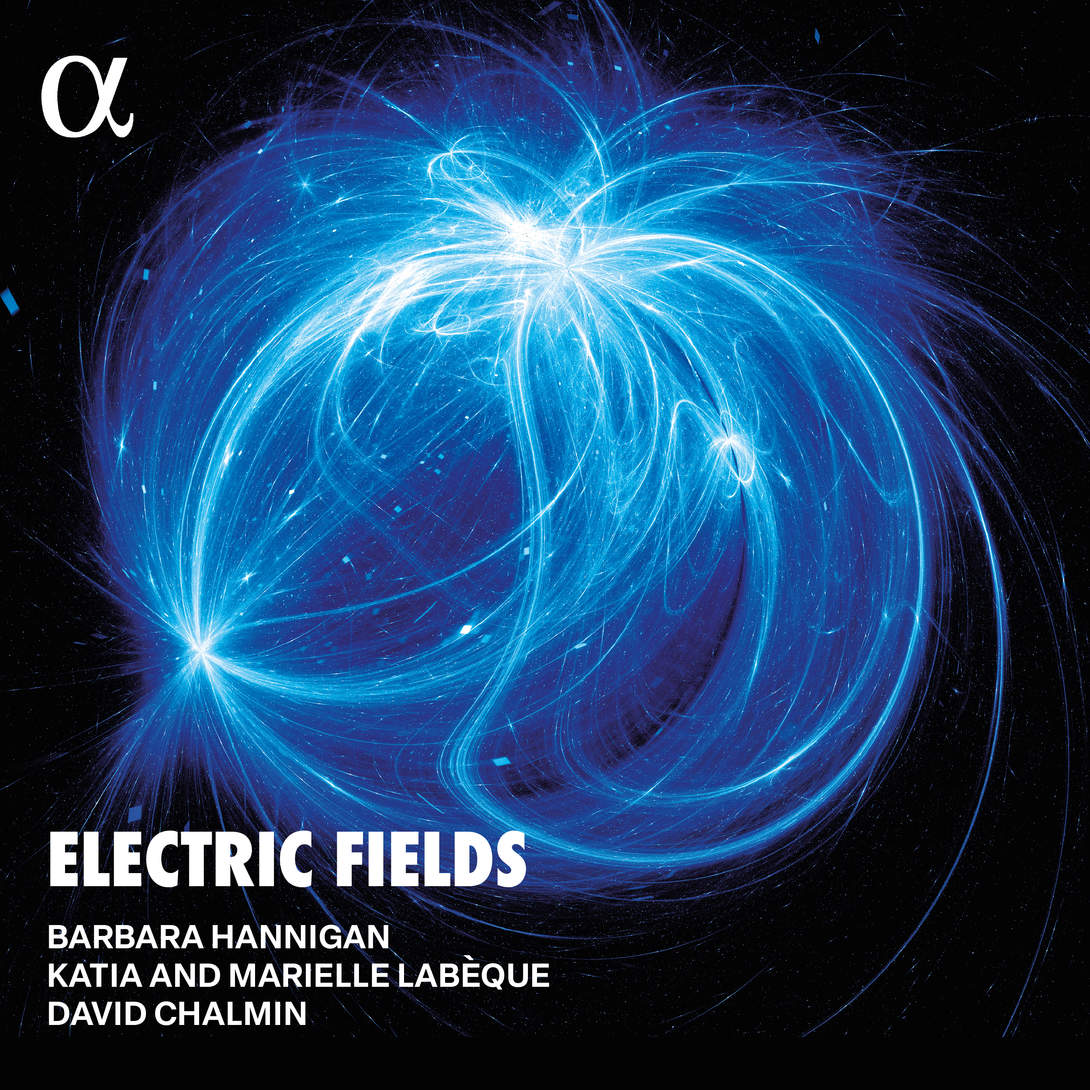
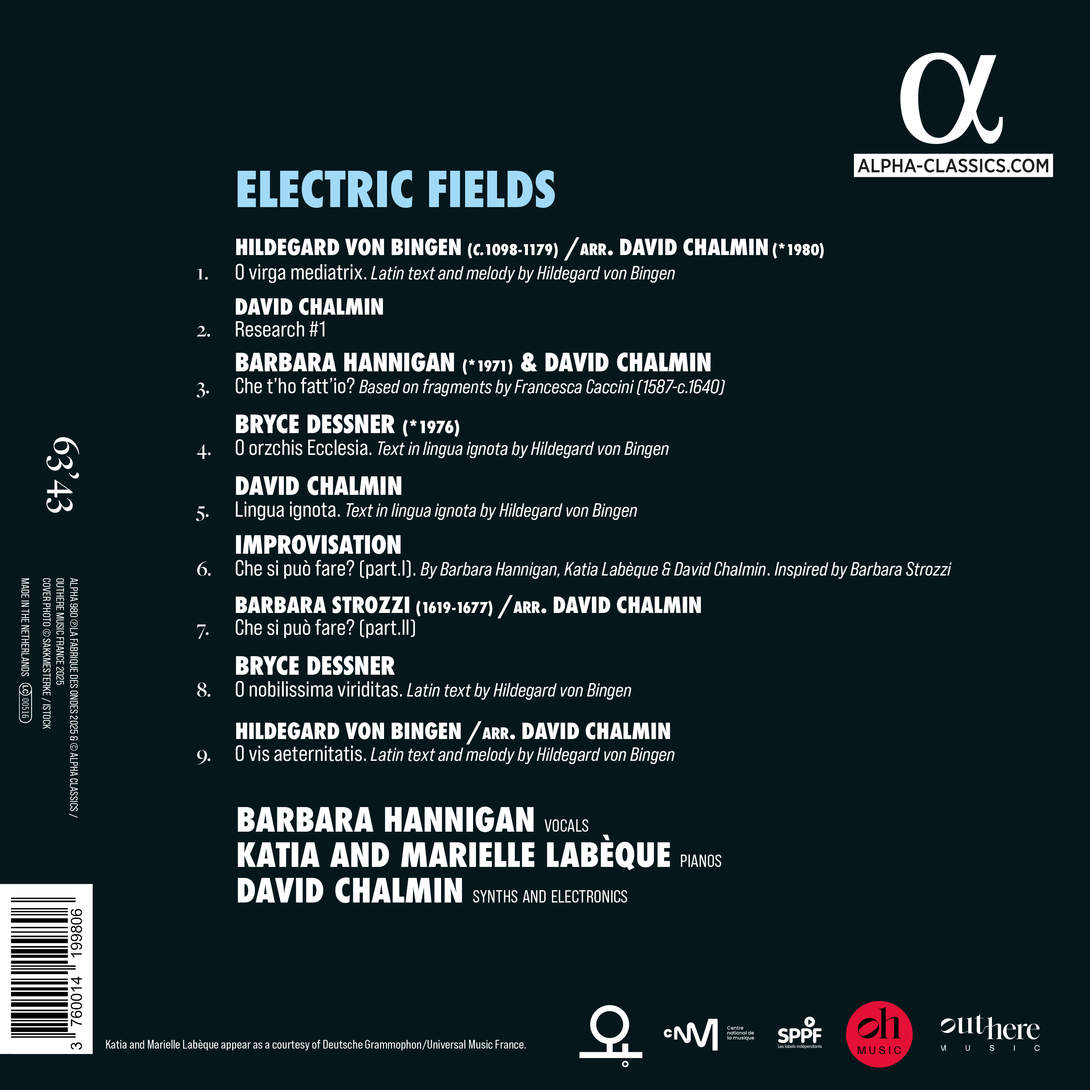
Electric Fields Barbara Hannigan, Kati and Marielle Labèque, David Chalmin
Finally a modern classical album hits the top spot, must be a sign of my maturity. While inspired by the very ancient and beautiful music of Hildegard von Bingen (1098-1179) this is an album with plenty of electronics and sophisticated mixing techniques. These elements lend the album a true sonic variety, with each track holding a unique identity, while never losing the unique and slightly spooky spectral quality. So much so that the bastion of classical music, Gramophone, appears to regard it as some sort of insult saying it is “unresolved thematically and formally crude”. I beg to differ, it is constantly engaging and surprising, and while the electronics can be disorientating, they genuinely refresh the glorious singing and piano playing, this is modern music. We are finally seeing the classical, jazz and contemporary worlds colliding to produce innovative work.
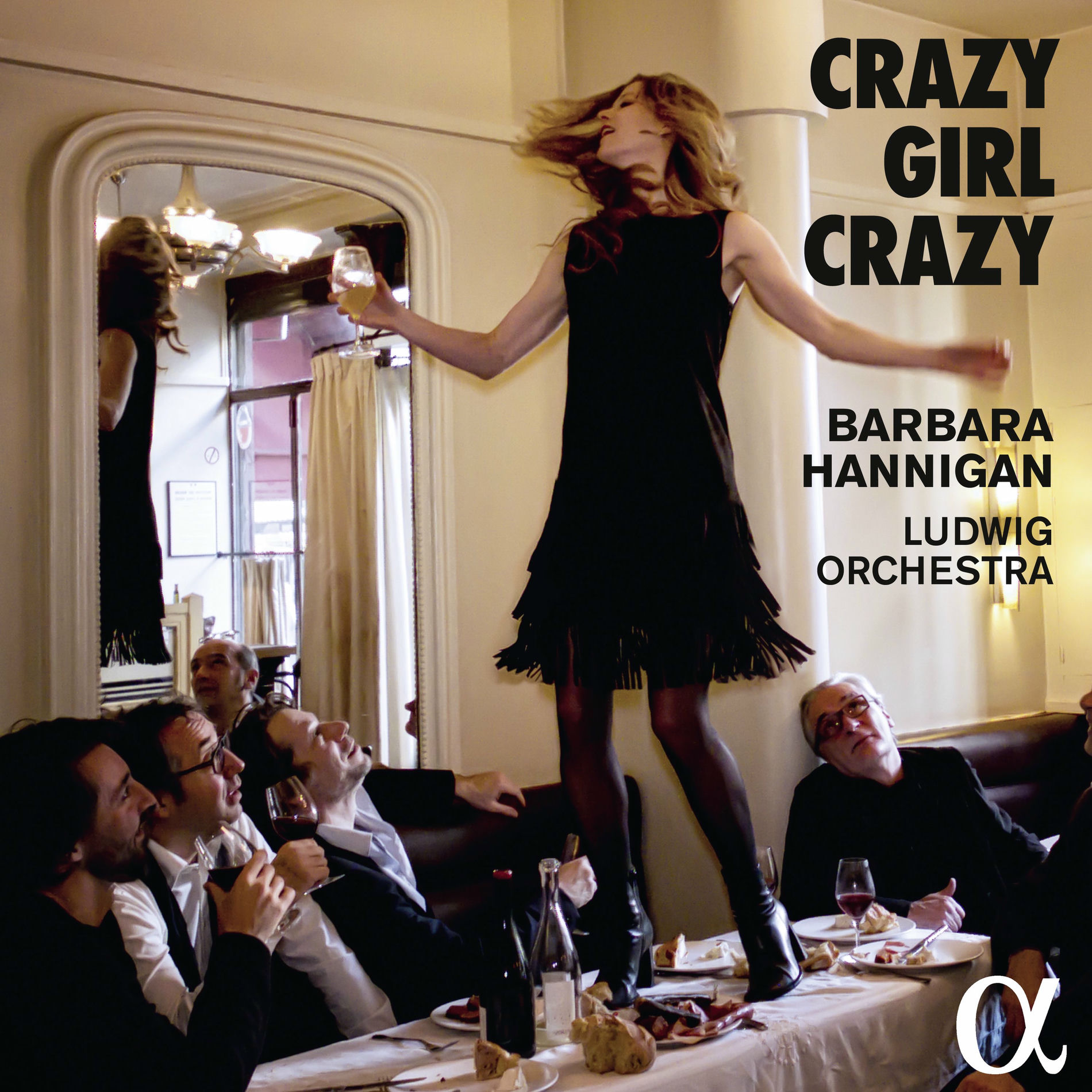
A word on these seasoned performers. This album is inspired and held together by the soprano vocals of Barbara Hannigan. She is a Canadian singer and conductor, specialising in contemporary classical. Her debut album Crazy Girl Crazy (2017) is a hoot, featuring Berio, Berg and Gershwin. She has made 2 albums covering jazz guru John Zorn, as well as being guest conductor for many famous classical orchestras including the London Symphony Orchestra. The pianists Katia and Marielle Labèque are French sisters who should need no introduction, having sold millions of records since 1969, covering both classical and contemporary repertoire. Of particular note here is their 2024 album Sonic Wires, which could nearly be a version of Electric Fields without the singing. It also features the electronics and compositions of David Chalmin, who is married to Katia Labèque.
Back in the world of popular music there appears to be nothing happening, it is all remakes, remasters and re-issues. However it has been heartening to see the success of the pseudo classical Lux by Rosalía, which strangely bears similarities to Electric Fields – she sings in fourteen languages so it is equally incomprehensible and was also inspired by Hildegard of Bingen. Perhaps my only other album of note was the fierce and gothic Iconoclasts by Anna Von Hausswolff from Sweden.
In 1985 I was a staff photographer for Sounds, a weekly music paper competing with Melody Maker and New Musical Express, promoting progressive rock. As a so called member of staff, though not on the payroll, I was invited to participate in their All Time Top 100 Albums poll. Since we each chose just our top 10, I knew that if I placed an album in the top 3, it would probably be included in the Top 100, due to the number of staff.
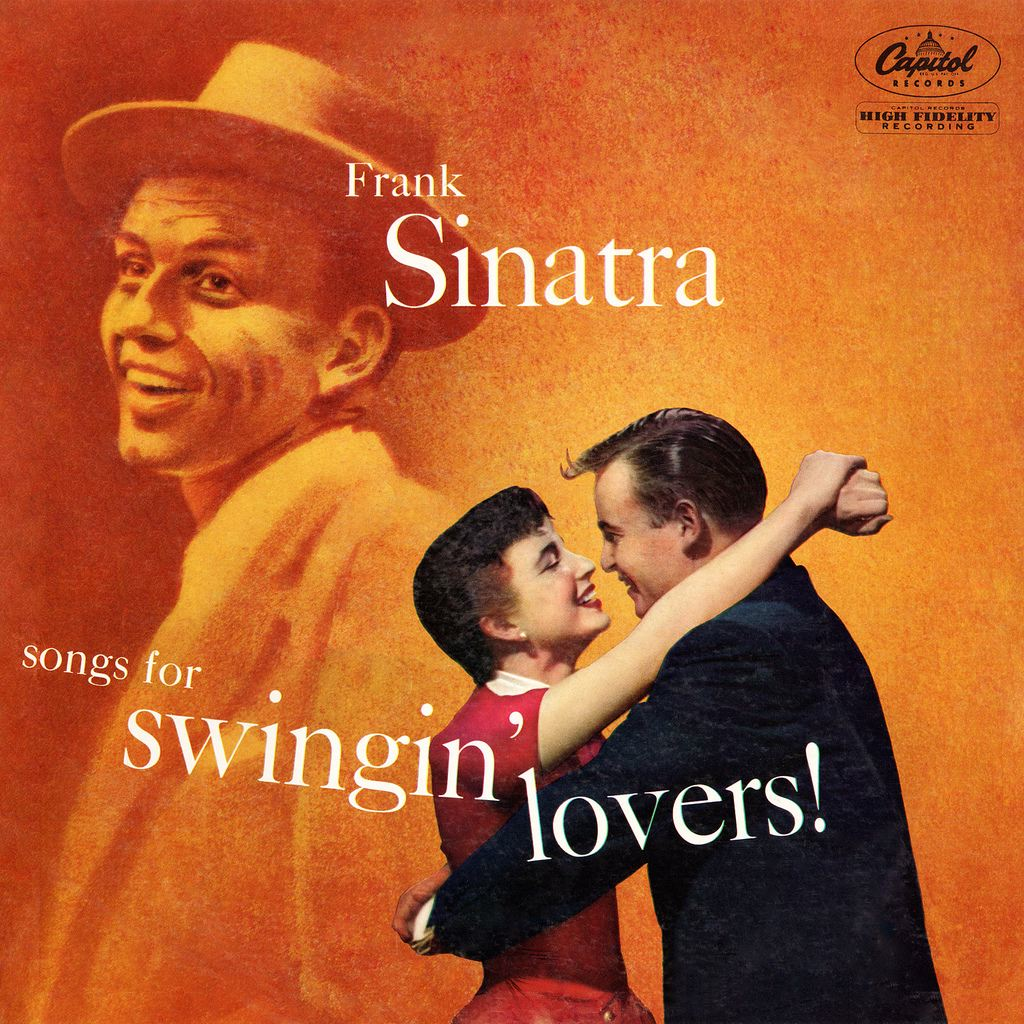
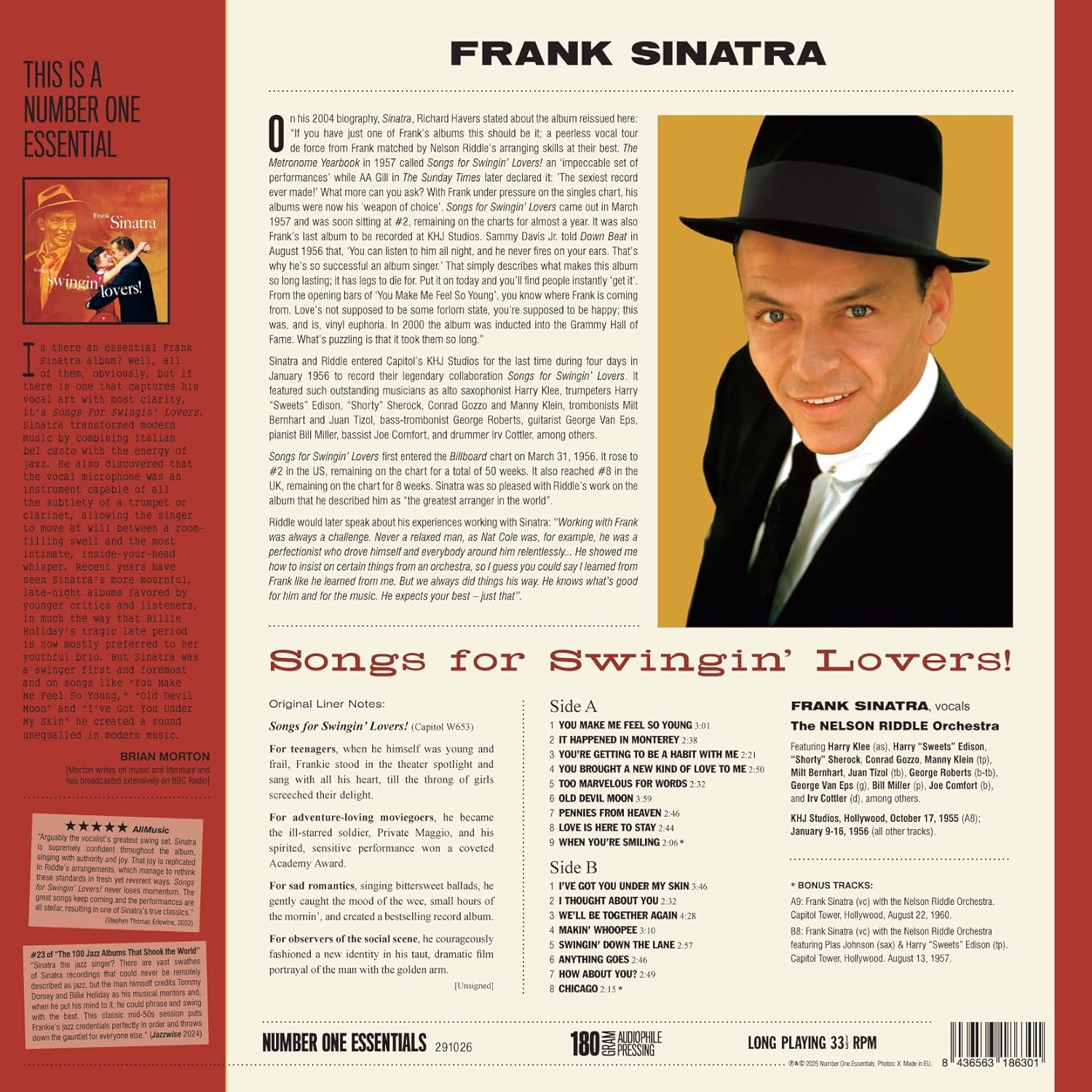
My choices were relatively normal, except I decided to put Songs for Swingin’ Lovers! by Frank Sinatra in at No.3. At the time I knew this was a bad idea, yet I thought it was the most revolutionary thing to do, in the spirit of the table turning punks we were all supposed to be. In addition I really loved this album, and still do. Let’s not forget it was the first ever album to top the new UK album chart back in 1956 and is in the Grammy Hall of Fame. Frank’s singing on this album is uniquely relaxed and expressive, yet the arrangements by Nelson Riddle are full of punch and dynamic flourishes. The selection of classic songs, many from the 30s, flow like a true lovers album, and you can sing along at will. The tone of Frank’s voice is impeccable, conversational yet full of bounce, it slurs, slides and elongates, always on the verge of some exotic excitement. It all goes down so sweet and easy…
Of course at the time it was regarded as “parent music”, so outdated it belonged to another generation and certainly not part of the “Rock Revolution” instituted by Elvis in that same year, 1956. Hence it was not an appropriate choice for a music paper trying to be at the forefront of fashion. In the final Top 100 list the oldest album was in fact from 1965, Highway 61 Revisited by Bob Dylan, in at No.20.
Thus I was escorted into the Editors office, the esteemed Tony Stewart, and told in no uncertain terms that my choices were not acceptable. I had broken with orthodoxy, after all this was not the Melody Maker Top 100! No direct reference was to made to Mr. Frank Sinatra, but we all knew what the problem was. I was thoroughly chastened, declared the error of my ways, and amended my list. The apple cart was not there to be upset, this was a sackable offence!
To give you some idea of what I should have chosen, here is the Top 10 of the 1985 Sounds All Time Top 100 Albums List:
The Clash : The Clash
Never Mind The Bollocks, Here’s The Sex Pistols : Sex Pistols
The Velvet Underground & Nico : The Velvet Underground & Nico
The Rise And Fall Of Ziggy Stardust And The Spiders From Mars : David Bowie
Horses : Patti Smith
Sgt. Pepper’s Lonely Hearts Club Band : The Beatles
Unknown Pleasures : Joy Division
Marquee Moon : Television
The Doors : The Doors
Electric Warrior : T. Rex
I can no longer remember exactly which albums I did choose, no doubt some of the above, but I am pretty certain it would also have included:
12. Are You Experienced : The Jimi Hendrix Experience 45. Blonde On Blonde : Bob Dylan
It is also likely that I included Who’s Afraid of the Art of Noise? by Art of Noise in order to appear as cool as possible.
In the dog days of the post sixties excitement, popular music after Led Zeppelin slowly descended into the prog rock abyss. I am probably referring here to something like the double album Tales of Topographic Oceans by Yes (1973), despite the fact I had loved The Yes Album (1971). Casting around for something new to listen to I bought my first purely instrumental album, Freedom Is Frightening (1973) by Stomu Yamash’ta. It helped that I had seen an exceptional live show by his Red Buddha Theatre at Liverpool University, and now I was ready to listen to a whole album without lyrics, without what I called songs. Of course I had heard and loved Kind of Blue by Miles Davis, but at the time I only bought contemporary albums. I became a librarian much later.
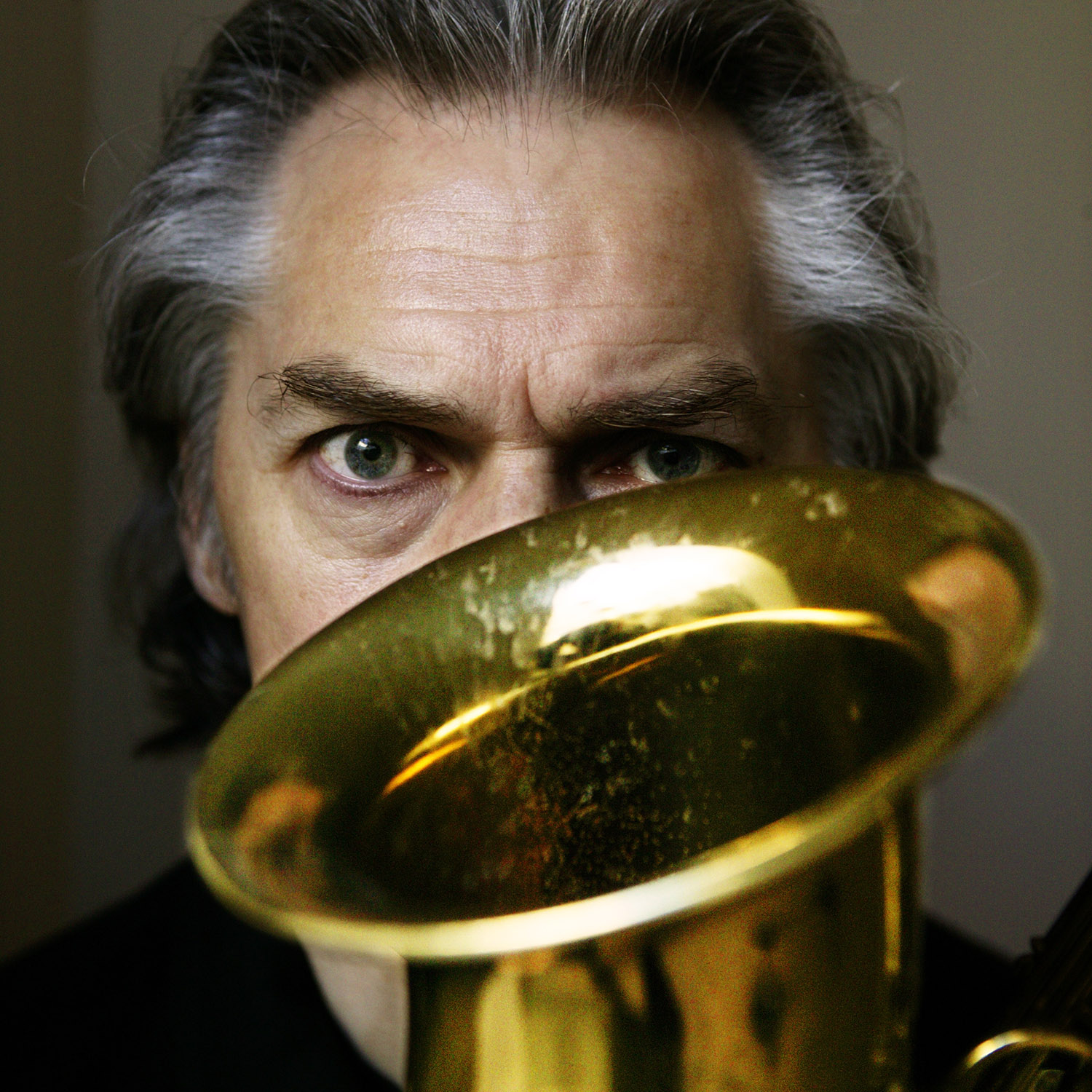
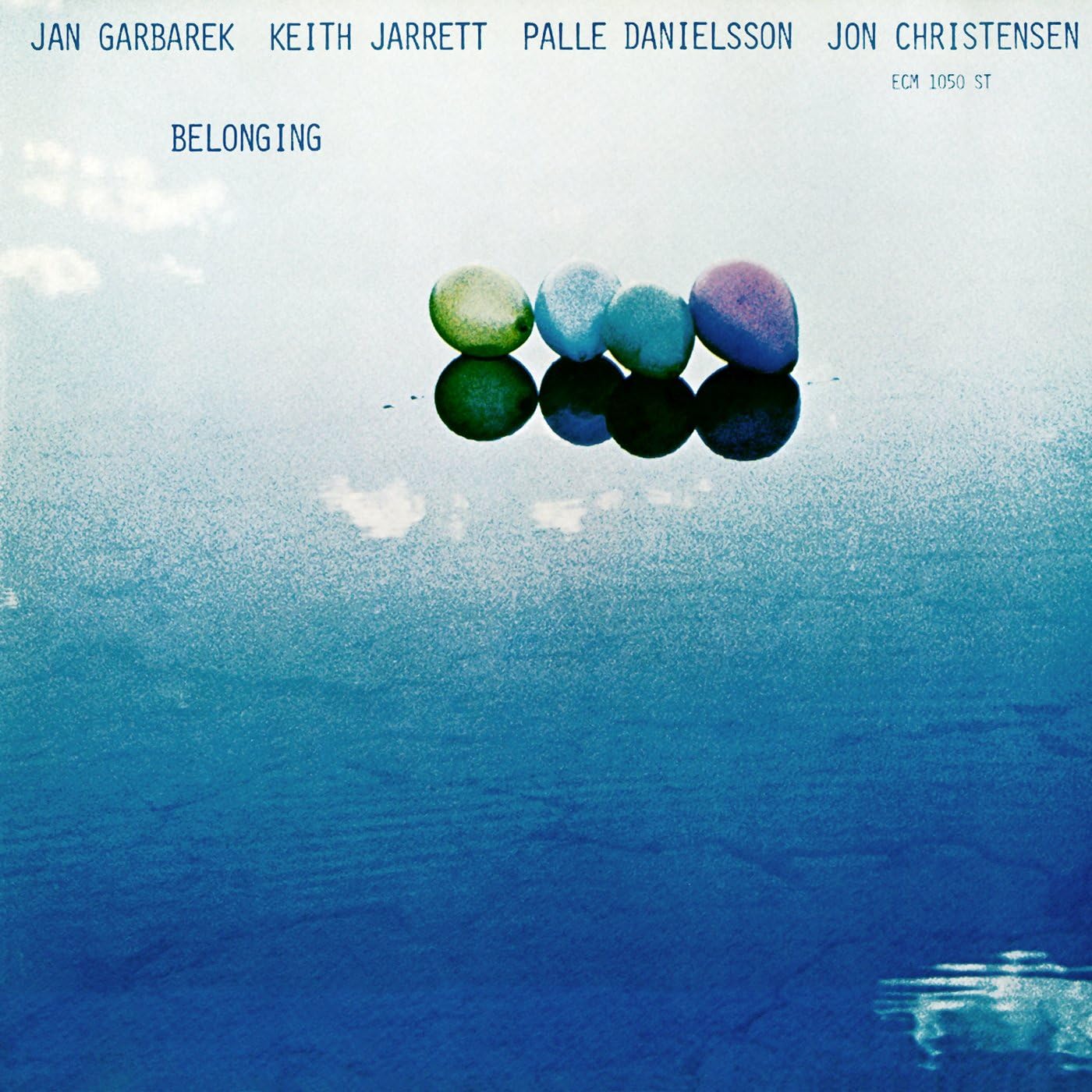
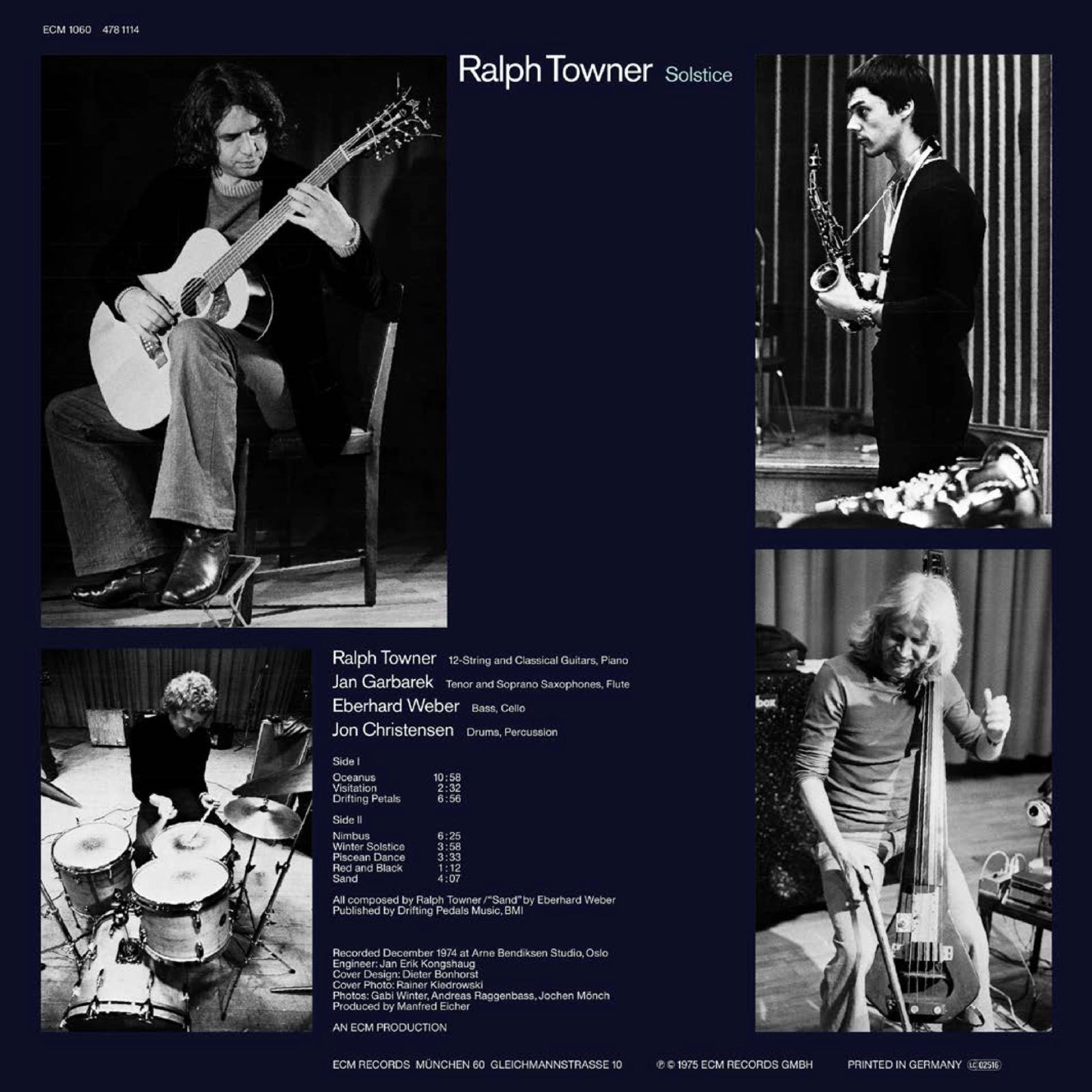
I am not sure which ECM album I bought first but it was either Belonging by Keith Jarrett (1974) or Solstice by Ralph Towner (1975). It doesn’t really matter since they both heavily feature Jan Garbarek on saxophone, who became the lodestar of my new music obsession. It wasn’t as much fun as rock music, since no-one I knew had ever heard of any of these people. Not only that but this music had a lonely, plangent quality, a spiritual essence and purity which encouraged solo, contemplative listening.
At the time the clarity of the sound led to it being called chamber jazz. This was meant to be demeaning, that is lacking the funk, the blues of “real jazz”. Yet we can see now, with ECM progressing into its 55th successful year, that they were in fact creating a new genre that even today sounds unique. Try saying they weren’t “funky” when you hear the emotion pouring out of Jan Garbareck’s saxophone on Nimbus (from Solstice), for example. Also they were running against the grain, this was primarily acoustic music, there was no electric rock in this jazz. To this day it is my greatest pleasure to hear real music, that is music played without processing, on a real instrument, played by a master who talks directly to me. Although of course in this case it has been beautifully recorded by Jan Erik Kongshaug, produced by Manfred Eicher and pressed onto vinyl. Yet there is no doubt ECM records had a clear and ageless acoustic of their own, which they maintain to this day.
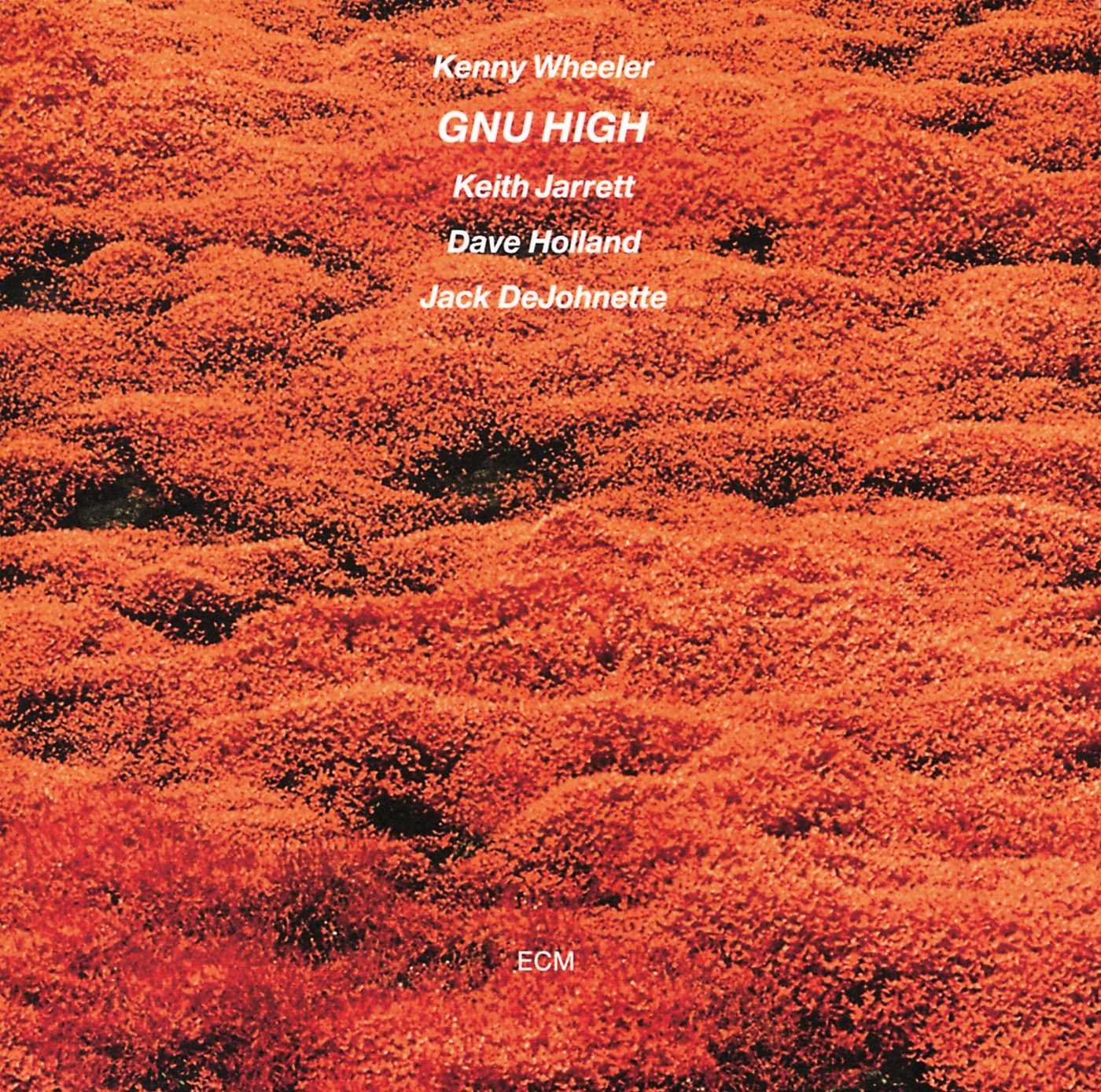
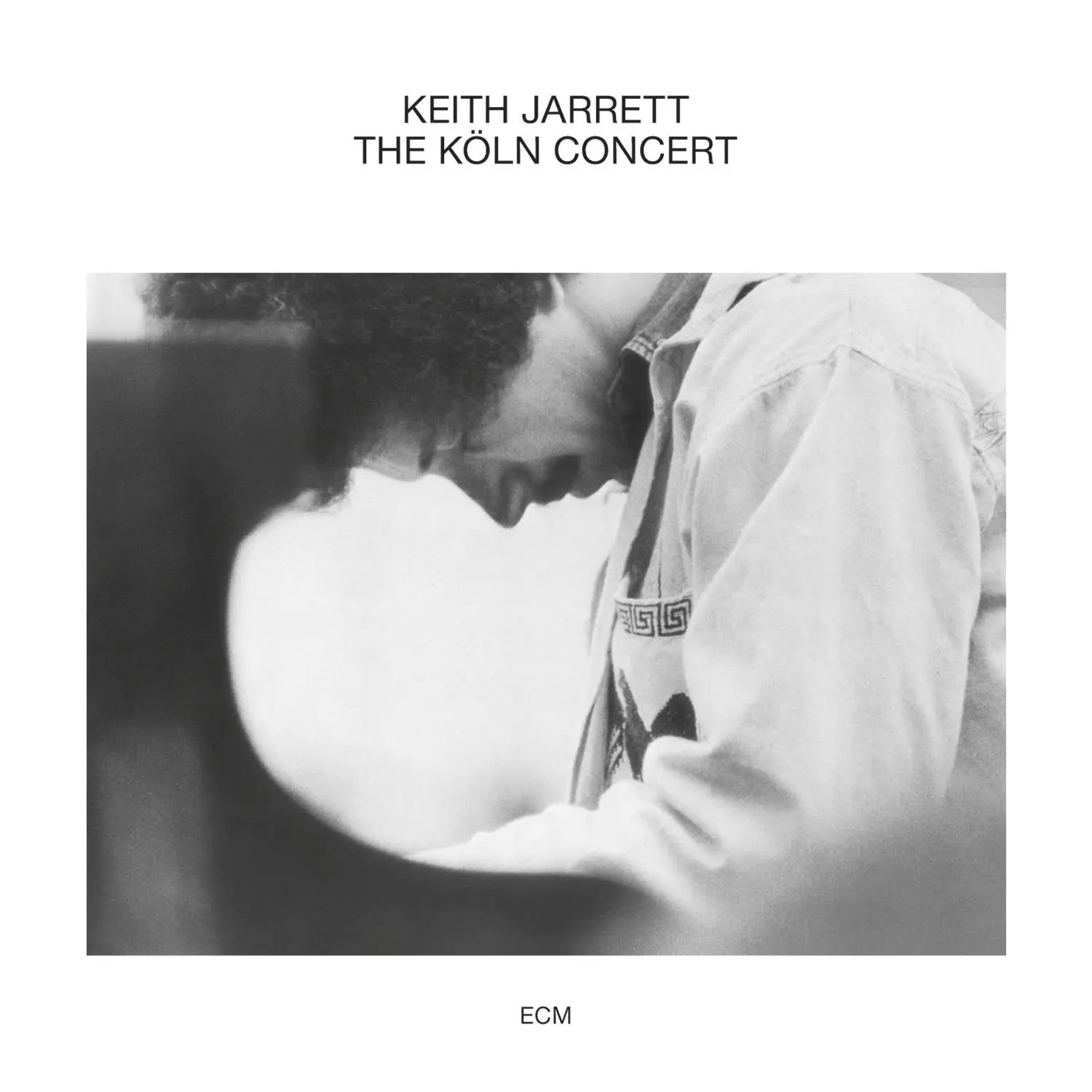
As time went on these two albums opened up a new world, featuring as they do a series of artists who branched out to make their own albums, although only a few matched up to these two initial recordings. From this moment on ECM records became a unique touchstone in my life. I did splash out on the 3 disc box set Keith Jarrett Solo Concerts Bremen/Lausanne, but later much preferred The Köln Concert, it is a lot crazier, yet more direct. Keith Jarrett was also the pianist for another much played album back in the day, Gnu High (1976) by Kenny Wheeler, along with Dave Holland and Jack DeJohnette. A few years later Eberhard Weber, the bassist on Solstice, went on to make Later That Evening (1982), which became a firm favourite. I used to buy this record as a present, to demonstrate the wonders of ECM to my friends, not always successfully. Later That Evening also introduced me to the guitarist Bill Frisell, who for a brief period of time became an ECM artist and recorded extensively with Paul Motian to great effect. Ralph Towner formed the group Oregon with Paul McCandless, Glen Moore and Collin Walcott, recording for both Vanguard and ECM, but managed to keep the same aesthetic. And then of course Collin Walcott formed Codona on ECM with Don Cherry and Naná Vasconcelos, the family tree continues to grow. You end up buying a lot of records!
Jan Garbarek meanwhile went on to record a plethora of great albums for ECM, of which I Took Up The Runes (1990) stands out, not forgetting the atmospheric Magico trio albums with Charlie Haden and Egberto Gismonti. With his keening tone he always sounds like he is playing on some windswept cliff or at the end of a long fjord, it was a sound that redefined what jazz could become. Later on he made the unique and groundbreaking Officium (1994) with the classical male vocal quartet Hilliard Ensemble, which leads us neatly into the ECM New Series. This New Series is ECM’s classical label featuring both early and contemporary classical music. Albums of note, to me at least, include Music for 18 Musicians by Steve Reich and Tabula Rasa by Arvo Pärt. ECM albums may have some of their unique quality due to the way Manfred Eicher chooses to work. Normally he will record for two days, mix on the following day and that’s it. This lends the albums a fresh, concentrated and improvised feel, the quality may vary, but as we know he does not release everything that is recorded.
There is no doubt that Manfred Eicher and ECM (which stands for Edition of Contemporary Music) redefined the meaning of jazz, enlarging the spiritual and universal qualities of the music. You only need to take a look at their roster since the first release in 1969 by Mal Waldron to see it now encompasses everything from the raucous Art Ensemble of Chicago, the masterful Tunisian oud player Anouar Brahem to the Greek soundtrack composer Eleni Karaindrou. This music is not defined by genre or tradition but a certain seriousness and elevating intent, their motto being “the most beautiful sound next to silence”. In addition they are a family, projects are often made by combining disparate influences, the musicians are tested and exercised by the unusual combinations set, I presume, by Manfred Eicher or Steve Lake. Thus new and original music is made, long may it continue.
This blog was partly inspired by the review of four new ECM albums by Richard Williams on his own blog thebluemoment.com. In fact it could easily have been his own reviews in Melody Maker back in the early 70s which prompted me to buy Belonging and Solstice in the first place!
The four part gallery Oto Concentratio represents the best of my Cafe Oto photography from 2010 to 2025 in large 4K size. This blog, basically a copy of the gallery text, has some alternate pics and is not in 4K! It does have an actual live panorama as above, but back in 2010 the original was made using Flash not HTML5. The photos were usually taken on Nikon digital cameras and a few on iPhones. They feature panoramas, infrared and timelapse photography. All the images were made as a normal audience member, so they vary in quality and on many nights I was not in a position, or it was simply too busy, to take any good photographs. Naturally I regret not having any good photos of Annette Peacock, Lydia Lunch or Ted Milton aka Blurt!
Cafe Oto was started in 2008 by Hamish Dunbar and Keiko Yamamoto to showcase experimental music in Dalston, East London. It is a single room ground floor space with no stage, and functions as a coffee bar and record shop during the day. Cafe Oto is a deconstructed venue, there is no branding or signs, just little monthly flyers scattered about. This is not a traditional jazz venue, the idea of neon signs and slick marketing would be anathema to the down-home vibe. In contrast the Cafe Oto website is highly informative, containing biographies of the performers and video examples, as well as a record of all shows back to 2016. The venue has become integral to experimental music featuring performers from around the world 7 nights a week – that will be roughly over 6,000 shows!
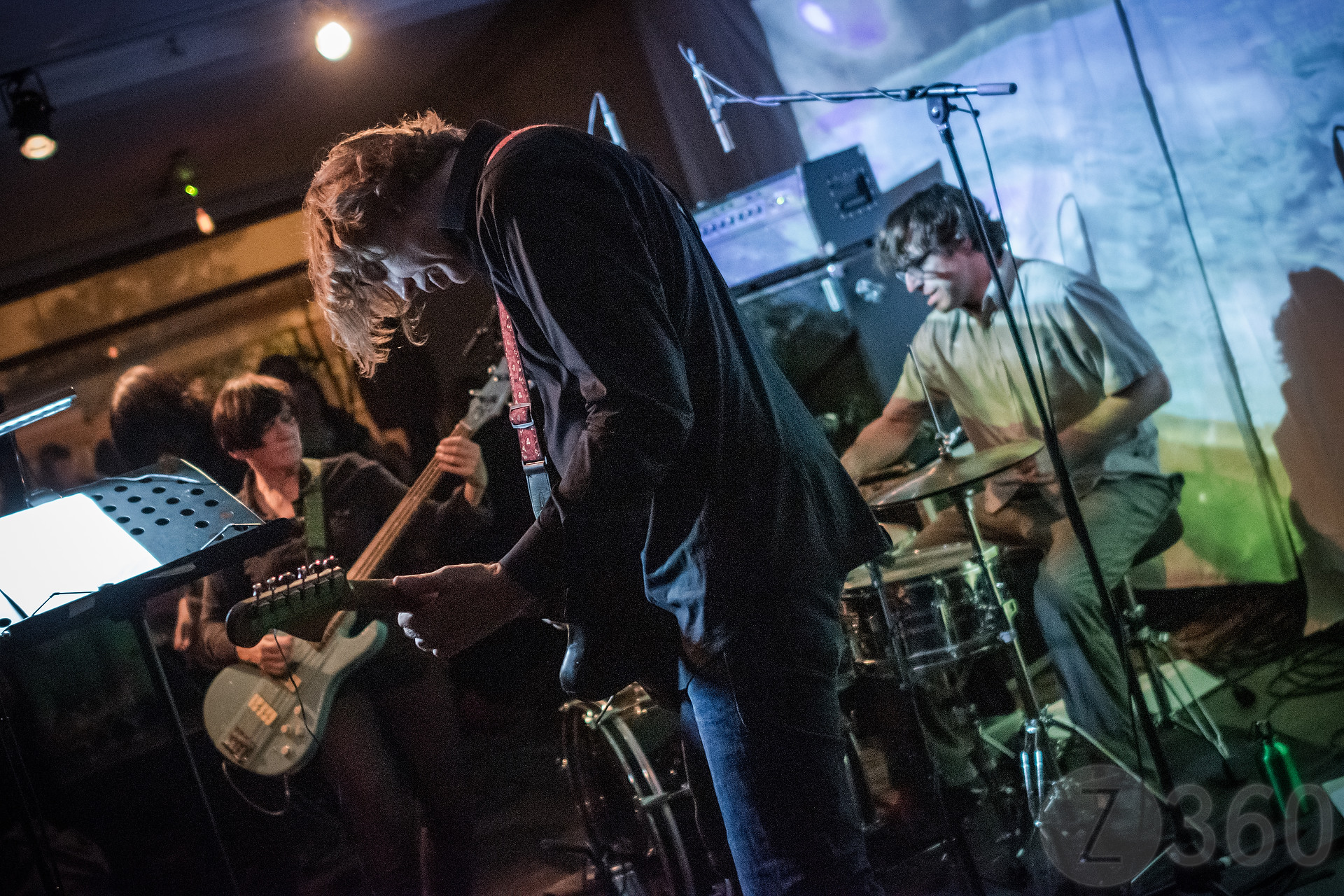
Thurston Moore Group at Cafe Oto October 2016
Of course I haven’t been to all those performances and this site features my own favourites, which tend to be improvisational jazz, but can include rock, folk, rhythm and vocals. I try and avoid anyone “playing” a laptop, there is usually nothing to see. The website is divided into four roughly chronological parts and starts with the mighty Sun Ra Arkestra (as above), who I had first seen at The Venue in Victoria back in 1983. I was to see them at least six times at Oto, only two editions are documented here in the gallery, but you can read about their 2014 performance here in my blog. Following up the great Sun Ra is the Harry Beckett Memorial Concert featuring the cream of British Jazz Improvisers, several of whom were to appear in later concerts at Oto. I was lucky enough to see Harry Beckett play at Sibyl Madrigal’s Boat-Ting on the Thames a few years before this concert.
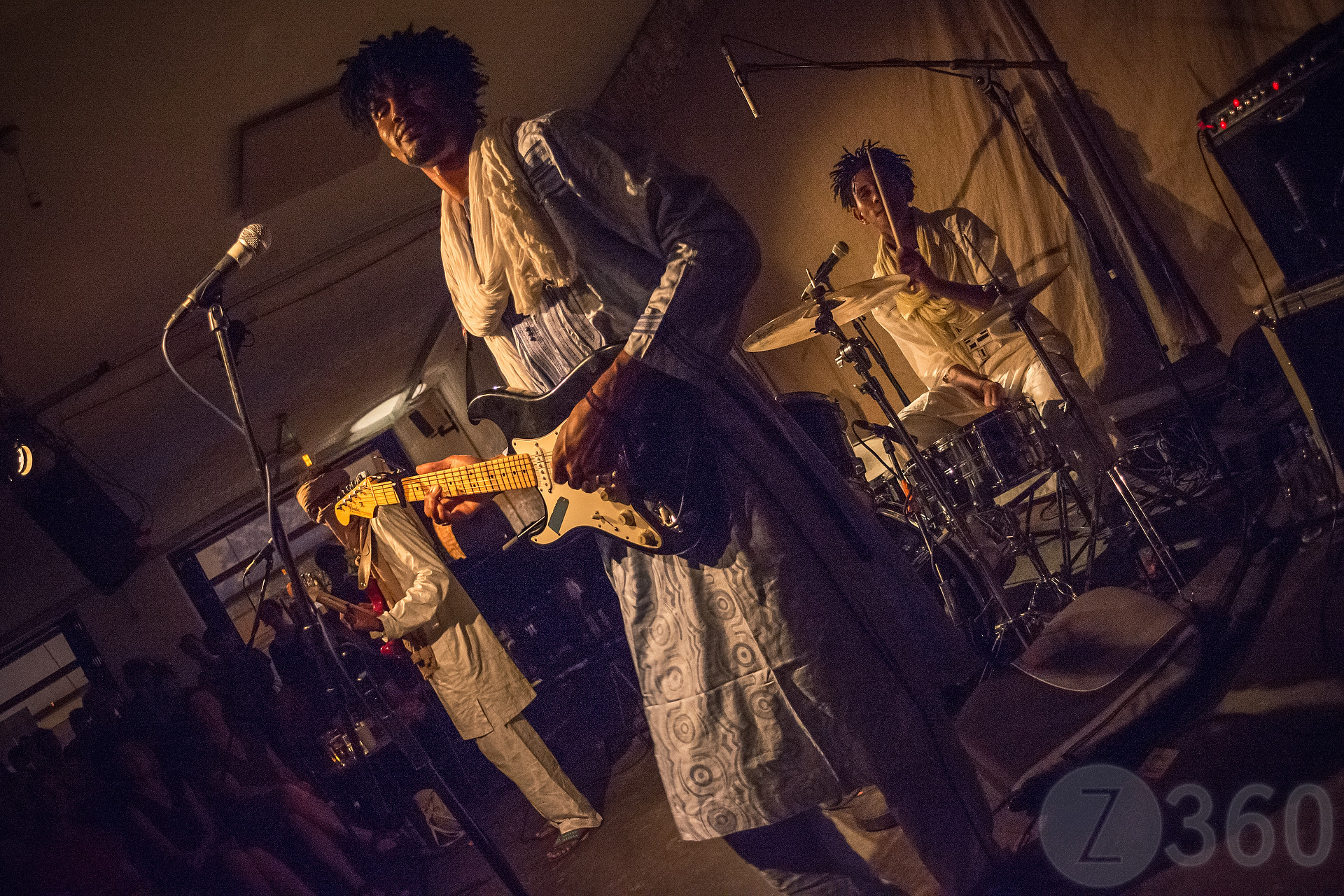
In Part Two 2013-2020 we find an array of amazing bands from around the globe. There is the first evidence of The Necks, who claim to be the Oto house band, despite being from Australia. I went to every night of their 4 day residency in 2015 and wrote this blog piece – In the Church of The Necks. Marc Ribot from New Jersey, USA is also featured solo, but I failed to capture him properly with his trio including Henry Grimes and Chad Taylor, you can read about this great gig in 2013 here. Also of note are my friends in Ya Basta! and People Band – I made some posters for their theatre group, The People Show, back in the 80s. And then there is the electric Mdou Moctar from Abalak in Niger singing in the Tuareg language Tamasheq. You can’t get much more remote than that…
Mdou Moctar August 2014
In the section 2021-2023 we really do get to see what I call the Oto House Band – Pat Thomas on keys, John Edwards on double bass and Steve Noble on drums. In the trio Decoy, Alexander Hawkins replaces Pat Thomas and what a powerhouse they are, especially with the legendary Joe McPhee. We will see more of these characters in the next gallery. This selection opens with the most exciting jazz rock band ever seen at Oto – the Hedvig Mollestad Trio. There are no vocals, just searing rock guitar for an hour, what a pleasure. Also of note are two elderly masters, Martin Carthy and Trevor Watts, playing well into their eighties. On a personal note, I was selected one night by Loré Lixenburg at random from the audience for an operatic grilling and proceeded to sing the praises of Cafe Oto in the best traditions of my improvising choir Musarc. I had to explain at the bar it had not been rehearsed!
Amina Claudine Myers April 2025
Sackcloth. Yes the infamous sackcloth Oto backdrop is still there, although it appeared to be a foot shorter last week. I have the feeling that if it ever disappears, that will be the end. There is now a fancy projection screen rolled up above it, which seems to work well. It works better than the new aircon, which was just too noisy, maybe they have managed to silence it, or they probably never switch it on any more during gigs. In contrast the actual sound at Oto is nearly always spot on, you think you are at an acoustic gig, yet the PA is gently amplifying it. Many thanks to Billy I believe, the only problems seem to occur with performers and their laptops. At least some microphone stands have migrated to the ceiling, and I presume they record everything, so there should be an amazing archive somewhere. Entry is always so casual and relaxed, no tickets, you just give your name. Occasionally there is a long queue outside due to a soundcheck overrun, and always arrive early if you want a seat. Over at the bar we can now order pints (used to be a schooner), and the Kernel Pale Ale is excellent, but there is no more real Stout. However the organic red wine is appalling, comes out of a box into a clumsy decanter and no-one drinks it. I am also concerned that there appear to be even fewer chairs and tables.
The bookcase has expanded and is excellently curated, but I do worry that some of the merchandise is impinging on the performance space. Meanwhile the toilets are regularly out of order and even more chaotic since the Ladies became LBGT+. All part of the fun I guess, but I was there one night when the front door shutter had jammed and I had to leave via the fire exit. There is rarely any dancing, not that kind of crowd and often too busy, but I have managed it on occasion. As usual there are a few bikes parked inside the venue, belonging to staff I presume, plus random piles of stuff which could accommodate punters. Obviously I would appreciate a bike parking space, but go on the train since I have had too many bikes stolen in Dalston. Is there a Green Room for performers? I don’t know, they still come out from beside the bar and have to navigate through the punters, sometimes getting lost in the dark. That is all good in my book, just like The Keystone in Oakland back in ’76.
Jimi Tenor January 2025
The final selection of photos 2023-2025 features several Oto regulars including some truly classic players including Shabaka Hutchings, David Murray, Trevor Watts, BJ Cole, Egberto Gismonti and Jamaaladeen Tacuma. Of course The Necks are featured again, as well as some important composers like Gavin Bryars, Andrew Poppy and Simon Fisher Turner. A pleasure to experience them in such an intimate and flexible setting. One of the best concerts, although a poor photo, was the Otomo Yoshihide Big Band, inspiring me to write a big band blog. I hear there are changes afoot at Cafe Oto and they are looking for a new Production Manager. Good luck, that is some job! Despite the carping above Cafe Oto has been my favourite place in the world for the last fifteen years. Ad vitam aeternam.
Joe McPhee June 2022
If you are interested in Cafe Oto they are keen for new members, and you can sign up here.
Update 30/05/25 Luckily Cafe Oto liked all this and said: Thanks a load for sending these over – some fantastic shots and a lot of very happy memories! Really nice reading the blog post too.
I passed my exam (a bit like A levels) to be awarded a WSET Level 2 award in Wines (with Merit) last year. To get to the next level can cost up to £1000 so I won’t be doing that, but nevertheless my Level 2 course was both interesting, tasty and informative. I believe I can now be called a sommellier, but that does not guarantee I know what I am talking about. The WSET stands for the Wine & Spirit Education Trust, and they run lots of professional and expensive courses.
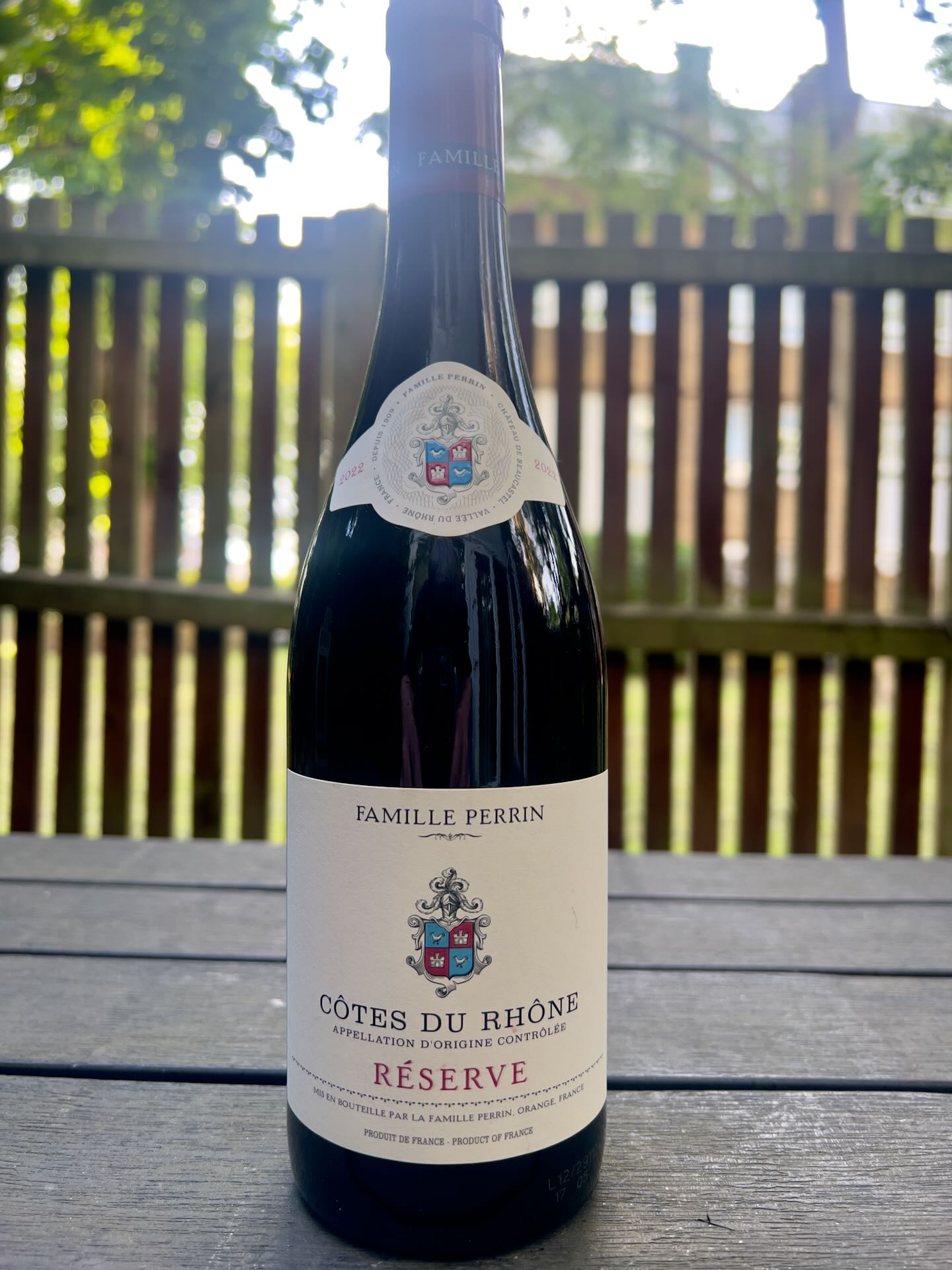
Still to get to the meat of this blog I will provide some recommendations and preferences. Illustrated above is my bargain wine of choice, Famille Perrin Côtes du Rhône Réserve. It is both simple, classic and blended (60% Grenache, 20% Syrah, 20% Mourvèdre), available on discount for about £10 if you’re lucky. This wine immediately shows my preferences, it is deep, brambly, confusing and peppery. Most normal Côtes du Rhône are a bit light, that is they feel a bit watered down to me. However this Réserve and the Vinsobres version are the real deal. A cheapo version is La Vieille Ferme by the same Famille Perrin, available nearly everywhere for £8. Further south and more classic is Chateauneuf du Pape, but that costs £30 a bottle and so it is out of my price range. My tip is to go next door and avoid the classic names. Yes, nearby in the Southern Rhône you will find Gigondas, still quite expensive, but look out for Rasteau, Lirac and Cairanne, snap them up if you find them. As you maybe know French Appellation Controlée wines are based on terroir, that is where it is grown, yet the field next door may be just as good.
Going further afield I have a particular preference for Carménère, an ancient grape which was wiped out in France by the phylloxera bug in the 1880s. Now it is grown mainly in Chile and has a particular dark chocolate and tobacco flavour. You can’t find it in France, although it blends well with Cabernet Sauvignon, of which it may be a varietal. For many years the growers in Chile thought it was Merlot, how wrong they were!
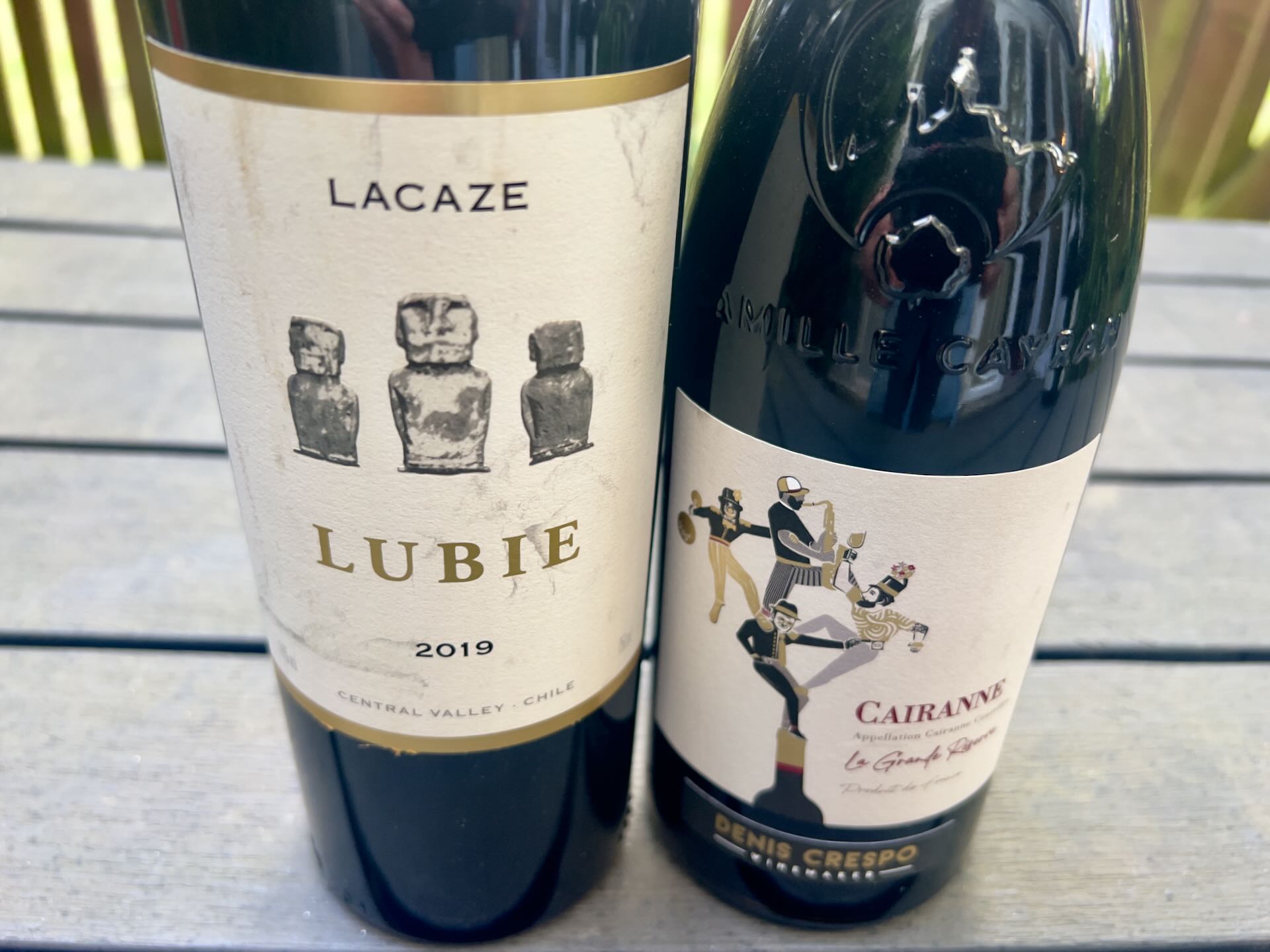
Lubie is an unusual Carménère, Cabernet Sauvignon and Cabernet Franc blend from Chile. The AOC Cairanne is made from Grenache, Syrah and Mourvèdre in the Southern Rhône. Both these versions are from Naked Wines and recommended.
In fact there is a vast amount of confusion over grape varieties even by the growers, and modern genetics has shown how similar, if not identical, many varieties are. For example even the relatively unknown Carménère has over 40 different names, and never forget Shiraz and Syrah are the same grape. It is a confusing business. Wines grown and matured around the world can taste very different, even if they are they are made from the same grapes. In general I find most red wines from Australia and South Africa too sweet or too fruity, so usually I do not recommend them. That is just a personal, unfair and blanket preference.
So part of the joy of tasting wines is in fact the difference. Every bottle is an adventure. Yes they all taste like wine hopefully, but some sure are better than others. If I see an unknown grape variety I always want to try it, leading to some great discoveries and a few disappointments. These wines tend to come from Eastern Europe or Greece. Like any decision this is partly based on circumstance, mood and maybe even time of day. Many times I have tasted a glorious wine, only to feel misled when tasting the following day, good wine needs a moment to bloom, secure those moments…
To get back to advice, I would personally recommend a Malbec if you are in a pub, it is so reliable and tasty. In fact any wine from Chile or Argentina is usually good value and full of flavour. Next on the value list are the blended wines from Southern Portugal and then maybe Primitivo aka Zinfandel (same grape again), or Nero d’Avola from Italy. These wines are all strong in flavour, but if you prefer something lighter like strawberries try a Pinot Noir from Chile or even New Zealand. Burgundy, usually very expensive, is made from the same Pinot Noir grapes in North East France. All the advice so far is for red wines, but I do have some White favourites. Number One is Viognier, maybe from Chile or France, and then I do like a rich Chardonnay from Australia. Remember despite being once very popular and hence not trendy, Chardonnay is a cheap Chablis, so enjoy!
This is an audio panorama of Paul Shearsmith playing with KMAT at the Hundred Years Gallery in Hoxton on the 17th November 2012. It was to celebrate his car, a Volvo Amazon 131, which he had made into a full size photograph taken by me and mounted onto laser cut plywood. This ended up costing more than his actual car! It was exhibited at many venues around town including Printspace, Mario’s Cafe and Stoke Newington Assembly Hall. Later on the battered Volvo featured in a movie, it was some car!
From the minute I met Paul through my friend Giles Perring and the band Echo City we always got along and met up many times in the pub he helped save, The Pineapple. In fact, only the other day, I took another old friend there, passing the rusting Volvo Amazon, now missing a bumper, and pointed out the photograph of Paul playing his pocket trumpet, which is proudly displayed in The Pineapple. Our first collaboration was when I made a video from panoramas and stills for his track Iraq Attack back in 2006. I presume you can still hear the anger.
Yes Paul, along with his partner Bettina, was an activist, and we went to several demos together. Above you can see Paul playing a trumpet on a rainy day at a March for Homes demonstration in 2015, sponsored by Socialist Worker. But what I most remember is the joy and the laughter, the music and even the dancing. This mostly happened at Paul’s birthday around Guy Fawkes day, he always had a keg of real ale and some crazy music. Plus there were 2 New Years celebrations fondly remembered.
Still the best was yet to come. Bettina played saxophone with several big bands which I greatly enjoyed and then out of the blue Paul produced a song with the Dan Spanner Big Band which I loved – My Degeneration. I believe it was the only song they ever had a vocalist for (apart from Dan) and it was a dynamite rewrite of The Who’s My Generation. We made a video for it in half an hour before their gig at The Gunners, while the pub was still open. That was the only time the band were actually all together, although we did a lot of prep beforehand to ensure our plans ran smoothly. This was the comment from the celebrated singer Maggie Nicols: I love this. I even joined vimeo so I could comment. It needs to go viral.!!
I saw Paul play many times, in many different groups. He was always experimenting, whether with saws, hosepipes, plastic trombones or pocket trumpets. It was always a delight, yet he always listened and could be quite diffident onstage, the mark of a true musician. Going through my archives I found this Test Video which I have never posted, taken at Alan Wilkinsons Film Flam club in Stoke Newington in 2020. It features a group called Bubble with Keisuke Matsui on guitar and Adam Bohman on objects. I hope it it reminds you of what a remarkable person he was. Thanks Paul!
Sorry it’s another rock album, both threatening and melodic. Still you can sing along as you dance to it, laughing out loud to the scabrous lyrics. Sung in a flat Lou Reed style, yet the guitars are constantly chiming and spiralling away. No, I had not guessed when listening to Another Girl, Another Planet by The Only Ones 45 years ago, that the lead singer would make my album of the year in 2024! The production is great, you can hear every word, with unexpected sounds and background vocals which can become choruses. There are 20 tracks, probably a few too many, but they remain varied and concise enough, within their genre. It’s the lyrics which keep you listening, mainly concerned with death and romance, just packed with black humour designed to upset. Hence the following song titles give you some idea how crazy and unpleasant the songs can be – I Wanna Go With Dignity, Secret Taliban Wife, Do Not Resuscitate, Art Is A Disease – to name a few. All credit to his sons on guitar and bass, who keep it all moving forward in a sprightly manner, along with a few famous rock greats such as Johnny Marr and Bobby Gillespie. Get your fucking head on right!
Not so many albums of note this year (tho’ some great gigs), but did spend time listening to Night Reign by Arooj Aftab, The Border by Willie Nelson, Funeral for Justice by Mdou Moctar and Sonic Wires by Katia & Marielle Labèque. Classical listening was inspired by the work of Lili Boulanger (1893-1918) and her sister Nadia Boulanger (1887-1979). Roomful of Teeth with Caroline Shaw (Vocal) and Lankum (Irish indie folk) also regularly featured on my playlists. Yet it is evident that the era of the album is over, music no longer is no longer defining culture, contemporary pop is both vapid and retro. The best of it, as every one said this year, is Brat by Charli XCX.
When I grew up in the 60s youth culture was hard to find. Now that it is everywhere it seems strange to remember what hard work it was to find it. But that certainly did make it seem more personal and a real adventure of discovery, these things were well hidden. There was no record player in my house so, for example to hear the Beatles, the only chance was random moments sifted out of the humdrum BBC boredom. Funnily enough request shows like Family Favourites aka Forces Favourites on the BBC Light programme would play the Beatles occasionally, as did the chart show Pick of the Pops and Saturday Club. But these shows were on just once a week. There was no pop music radio station until the Pirates came along in about 1965. So it was with great excitement that I found Radio Caroline North on 257m Medium Wave, however that didn’t last long, since they were closed down by the Marine & Broadcasting (Offences) Act 1967. Radio 1 then arrived to replace the Pirates, using many of the same DJ’s, but I refused to listen for some time since I was so annoyed by the closure of Radio Caroline. It had felt like a radio station just for me and, despite the ads, was dedicated to the music . Eventually I purloined an old valve radio from my grandparents. It was large and heavy, mains powered and took several minutes to warm up. Yet it was in a cool bakelite case and had a 5 inch speaker, as shown above. On this ancient radio I discovered Radio Luxembourg on 208m, in particularly David “Kid” Jenson and his progressive music show, usually broadcast every weekday at midnight from October 1970. Here I heard The Band, Lou Reed and Neil Young for the first time and made many musical discoveries. There was a lot of staying up late, but the big radio sat right by my bed, glowing in the dark. The only comparable programme on Radio 1 was Top Gear with John Peel, broadcast just on a Saturday.
Grundig Stenorette 2010 Mini Steno-Cassette Voice Recording Dictaphone
Despite not having a record player or radio for many years I did come into possession of an early Grundig dictaphone. It had been given to my father as a business gift, but since he didn’t use it I eagerly adopted it. This was a tiny (c.125cm) Mini Cassette Voice Recording Dictaphone, similar to the one illustrated. This amazing machine was really an early cassette player, too small and tinny for music, but great for the radio. I had just one tiny cassette for it (I did not realise you could buy any more!) which lasted for 30 minutes. Still I put it to good use, recording the classic BBC Radio 2 comedy I’m Sorry, I’ll Read That Again, so my cassette was exactly the right length. Having recorded the show I would listen chortling under the bedclothes at night. And of course I could replay any great joke I had either misunderstood or greatly appreciated. I wiped and then recorded the next show until the poor little tape wore out, while receiving an education in outlandish humour still with me today. The line-up of the show was John Cleese, Tim Brooke-Taylor, Graeme Garden, Jo Kendall, David Hatch with script input from Graham Chapman and Eric Idle, so as you can see it contained the roots of Monty Python, all of the Goodies and was responsible for the still running I’m Sorry I Haven’t a Clue on Radio 4.
Monty Python’s Flying Circus would go onto becoming the defining comedy show of my youth. An early introduction to this zany type of humour had been Do Not Adjust Your Set featuring the magnificent Bonzo Dog Doo-Dah Band, on ITV 1968-9, ostensibly a children’s programme. From this show Eric Idle, Terry Jones, Terry Gilliam and Michael Palin went on to join Python along with John Cleese and Graham Chapman, which started on the BBC in October 1969. At school we loved them so much we invented a fake religious assembly involving lining up, flipping the radio socket and shouting “Dinsdale” as gruffly as we could. This was performed just before the actual school assembly to put us all in a stupid mood. Dinsdale was one of the gangland Piranha brothers and a very naughty boy, haunted by an 800 yard long hedgehog called Spiny Norman. I also had the privilege of seeing Monty Python’s 1st Farewell Tour at Liverpool Royal Court Theatre in 1973 (although we knew all the jokes) and to appear as an extra in Monty Python and the Holy Grail in 1975. Only last year I sang Rockin’ Around the Christmas Tree in a choir for Michael Palin, the comedy never ends…
Monty Python’s Flying Circus – series 2, episode 13 -1970
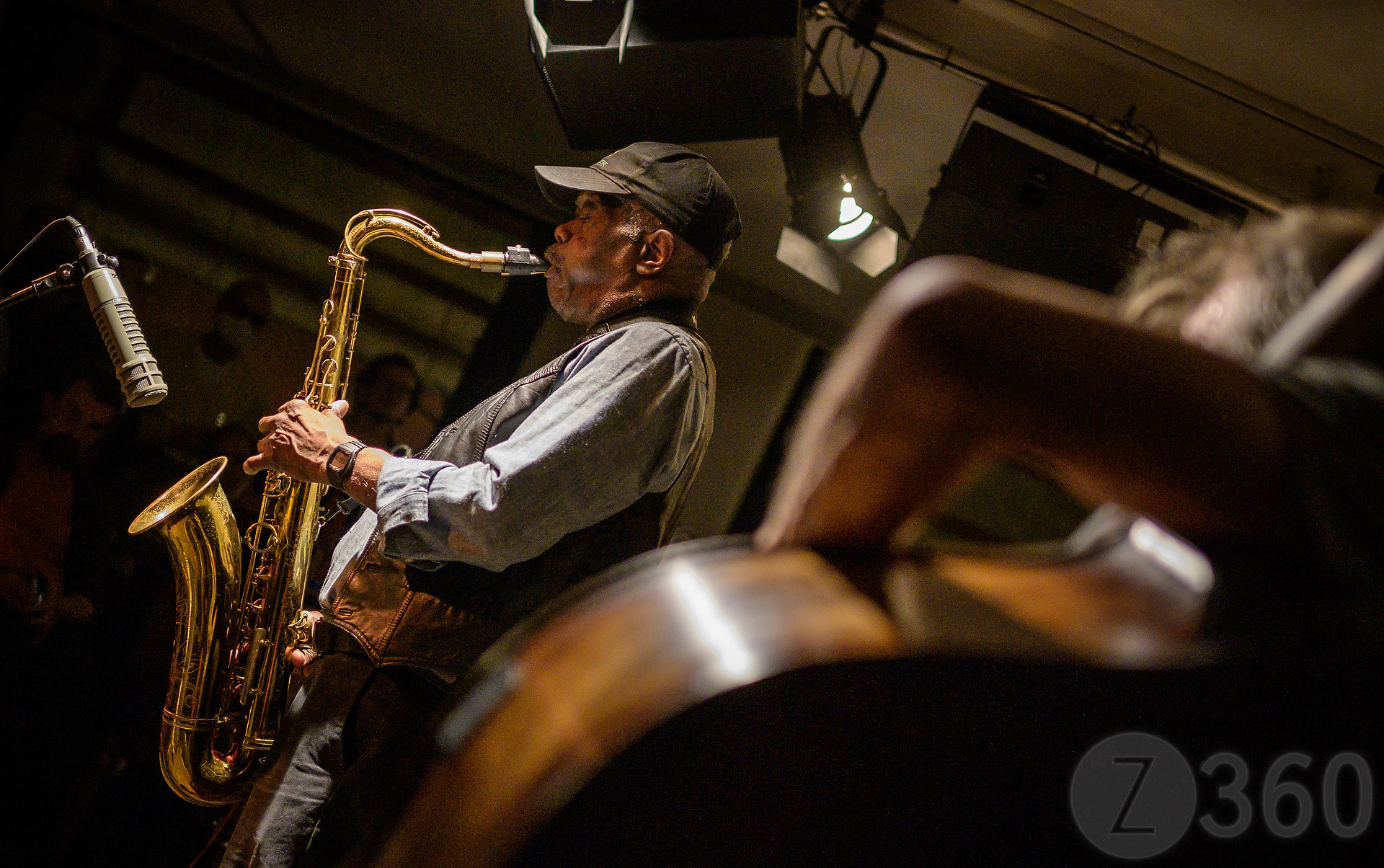
On Sunday 27 October I saw the Otomo Yoshihide Special Big Band at Cafe Oto. This 17 piece ensemble from Japan played the gamut of modern big band music, starting off with the stomping rhythm of Stone Stone Stone (I believe). One of the glories of this orchestra is that it functions as separate bands within the band, the sectional conductors calling out changes for their own ensembles. This makes for great excitement and dynamism, a feeling that each moment, each break is special. During the evening they covered nearly every known genre from French Romanticism to Northern Soul, I heard the systems music of Steve Reich for a few bars, and plenty of Sun Ra, spinning off into atonal galaxies. You never knew what was coming next, yet it was all held together, with the great joy and happiness evident within this big band.
It took me some time to appreciate big bands, they seemed too amorphous and maybe old fashioned, belonging to a previous generation. I was brought up on The Beatles, you could hear what everyone was doing, and hear exactly how they all worked in unison and why every component was vital. They had the power of amplification on their side to make even four people sound like an orchestra. However before electrification and the public address system took over, all bands had to be large, simply to make enough noise to fill the hall. So back in the 30s big bands ruled the roost and they played acoustically. That now seems admirable to me, I want to hear the musician, not the processing. So what is a big band? Basically it should contain at least 10 performers and a brass section, that is the limit of my definition. It is a very open category, the keynote being dynamic excitement.
Probably the first big band sound I loved would be the fabulous arrangements by Nelson Riddle for Frank Sinatra, without even thinking they were a big band. I got into a great deal of trouble at Sounds (a rock music weekly) for making Songs for Swinging’ Lovers (1956) the No. 3 in my Top 10 albums of all time, which meant it would have appeared in their Top 100 – I had to remove it! While that album may have been too jolly for Sounds, I wonder if my first truly memorable gig by a live big band, Sun Ra at The Venue in 1983, would have been acceptable with the album Jazz in Silhouette (1959)? I was to see the Sun Ra Arkestra at Cafe Oto many more times from 2009 to 2014, cementing my love of this music. In fact thinking back, I had bought Escalator over the Hill by Carla Bley in 1972 while still at school, yet I did not even think of this as jazz or big band at the time, more like experimental rock featuring Jack Bruce. I guess what made these records acceptable was the pulsing and dynamic rhythm section, after all big band music was originally made for dancers.
Sun Ra Arkestra at The Venue, Victoria London 1983
In my pantheon of great big bands there many are I have discovered over the years. You can’t go wrong with anything by Duke Ellington, and my first choice of his would be Ellington Uptown (1952) featuring A Tone Parallel to Harlem (Harlem Suite). Another great modernist composer is Stan Kenton, you can hardly believe this music was made back in the early 50s, and albums such as Innovations in Modern Music (1950) feature a 37 piece orchestra with a 14 piece string section. Following up on some of Kenton’s inventiveness there is Don Ellis who brought a swaggering 60s feel to big band music, and if that’s a bit much try Gil Evans, famous for his work with Miles Davis. A contemporary acolyte of Gil Evans, who has also worked with David Bowie, is Maria Schneider with several Grammy Awards to her name – check out Data Lords (2020).
Closer to home there is the fabulous Spanner Big Band, playing modern arrangements of 50s classics from Mingus, Ellington and Basie as well as a few reorchestrated pop tunes. They are led by the dynamic Dan Spanner and regularly play at the Three Compasses in Hornsey for free. Also recommended are Orquesta Esterlar, a community-based Cuban big band, playing monthly at The Post Bar in Tottenham, and that’s free as well. So do go along…it’s always a privilege to see a crazy big band and financially these days they are performing for the love of it. You can tell from the smiles, on your face and theirs.
Spanner Big Band at Jamboree, Kings Cross London 2024
Pleasant but underwhelming is all all I can say. The fact you can “see” through the goggles (if you want) is excellent, so it is easy to forget you are wearing them. The eye navigation and finger clicking worked great, as did window manipulation. Normal photos looked no better than a good hi-res monitor, still lots of oversharpening. Asked to zoom in on a still, it looked over processed and smoothed as usual, like most iPhone pics. The iPhone panoramas were nice to move around, but of course displayed classic jpeg artifacts. The 3D photos and videos looked better through the stereoscopic glasses, apart from some dodgy backgrounds. Still, you need a Vision Pro to see them properly. Apparently the 3D media were all taken on iPhone 15, so that was good. I was then encouraged to watch several Apple video promo’s. Of course they looked great, they have spent millions of dollars on them, so they should. Did they look better than normal video, no they looked like normal 4K video to me – that is high quality but with some special cinema adaptations.
Then it all went wrong. I went to my hi-res gigapixel website and you could not make a fullscreen view. Not only that, the resolution was not even HD, it was like viewing the internet in 2001, 720×480 pixels. I should say that I was able to actually navigate my panoramas, they just looked awful. Ok, so then I tried my 4K videos on Vimeo, same result. I actually cried out “appalling”. I then asked if there was download throttling. No response. I then asked if Safari didn’t work properly. No response. If this is actually how it works, Vision Pro is not ready for primetime. If it cannot play a normal 4K video, what is the point? If you can only properly view work specifically made for the Vision Pro, I would say wait a few years.
I should explain here that throughout the Vision Pro experience there is a personal Apple Specialist who monitors your actions and your views on a remote monitor. You talk with each other during the demo. Undoubtedly this person is following a script, as a result they do not appear to be able to answer actual questions. Not only that, but my Specialist was wearing a mask, which did not aid communication. (Have I got Covid, have you got Covid, either way it is unpleasant). I also spent 10 minutes wearing the device with an error message, while the Specialist disappeared, so probably not their best ever demo. However, that did give me time to take the selfie above, so thank you!
Nevertheless, I can see the appeal of this device in certain circumstances and enjoyed the experience. I did manage to use the virtual keyboard with eye navigation, a bit like using an iPhone keyboard in fact. As you might expect from goggles, by far the most impressive part of the experience was the best 3D I have ever seen. This is only version 1…hope it gets better!
Why does anyone use X formerly twitter? It is a poisonous cesspool of unregulated misinformation. This is amply demonstrated by the ludicrous and inflammatory tweet by the owner of X saying Keir Starmer was considering sending far-right rioters to “emergency detainment camps” in the Falklands. It received nearly 2 million views before being told by the Daily Telegraph it was fake news. The day before he claimed in response to the anti-immigration protests in England and Northern Ireland that “civil war is inevitable”. This man may be an interesting businessman but he knows nothing about British politics. And guess who has the most followers on X – the owner! Surely something wrong here…
But what staggers me is why our trusted commentators, the government and the BBC for example, continue to use and hence promote this broken platform. This is a classic addiction scenario – I know it does harm but I can’t help using. I suggest a detox and course of rehab. So get a grip and follow your own recommendations.
X is now trying to suing advertisers who have withdrawn from the platform. I was not aware that advertising is mandatory. X is no longer the nice global town square, but currently global riot central. Back in 2020 it was estimated that approximately 48 million accounts (15% of all accounts) were not genuine people, says Wikipedia. It seems ridiculous to me that anyone would sponsor this unregulated farrago. In fact I would regard any advertiser on X as suspect, so boycott now, please!
To put this in perspective I was amazed when twitter became so popular with our members of parliament. They had no control over this foreign medium, were surrendering copyright and participating in a shouting match. Of course it was fast, easy and universal, but numbers do not excuse their behaviour. MP’s may comment about the riots on X, but they do not seem to care or even realise they have been fomented by posts on X itself. When you use the platform, you are promoting the platform. Finally an NHS Trust has seen the light stating the platform is “no longer consistent with our Trust values”. Our government should do the same.
You only need to look at any blog to see how random the replies are. Maybe 5-10% are of any interest, at least 50% are exercising their copy and paste hobby horse, while probably 25% have not even read the article! Here I am referring here to the Guardian Comments which are highly moderated, others are even worse. Most YouTube comments are just bigging up and content free, while we all know how Amazon reviews can be bought. Comments are a world of fluff.
In 2006 my website, z360.com, was cool site of the day on Fark and received over 4 million hits. They ran a comments column which was either very nice or moronic, mostly concerning a single dog occurring in my panorama. At that moment I realised internet numbers and followers are entirely worthless and meaningless. Yes cat videos are still No.1 on YouTube, but so what and who cares?
You do not need an online safety act, just stop participating in harmful forums, you hypocrites. Stop giving them legitimacy. Despise the meaningless numbers. Just leave.
X
Update 12/08/24 MPs beginning to see the light: Josh Simons, the Labour MP for Makerfield, said “What matters about Musk is not only what he said, but how he changed X’s algorithms. He’s turned X into a megaphone for foreign adversaries and far-right fringe groups seeking to corrupt our public sphere. Nobody should have that power.”
Update 28/05/26 “The enduring curiosity is why so many self-professed progressives remain wedded to a platform with an algorithm that results in misrepresentation and suppression, drowning out their creativity in an open sewer of disinformation, scams, bots and falsehoods.” If you’re still on Elon Musk’s X, ask yourself this: why? | Jonathan Liew
This is the camera, a Minox 35 GT from 1981, that I always carried with me for several years. It was tiny, only 100mm wide and 31mm deep when closed, it weighed just 200g, yet took standard 35mm film. It felt like a spy camera, I was always ready. In those days only professionals carried a camera 24/7, you were the exception. Today it is no longer in production since it has been well superseded by the power and ease of use of our ubiquitous phone cameras. Yes, we are all photographers now and all those photographs are free at the point of use. How times change, how quickly advanced technology becomes redundant.
In the 80s to become a photographer you had first to build a darkroom. That was the only way to process film fast enough to be of commercial use, without spending a fortune on poor quality rush processing. So it took maybe an hour to process film and then maybe a couple of hours to make prints, and that was with a film drier and a Kodak drum print drier. Remember this was just for monochrome. Every click cost money, many jobs would be completed on just 1 roll of film, that is 36 pictures on 35mm or 12 on 120 format. Nowadays I may take 500 pictures or more, there are so many more decisive moments these days! And they are all free…
Kodak Glazing Machine and Print Drier
The fastest film available was normally Kodak Tri-X or Ilford HP5 at 400 ASA, often push processed to 800 ASA. There was Kodak Recording film at 1250 ASA, which had an enjoyably coarse grain, but that meant it was reserved for specialist uses. I was also an early adopter of Ilford XP1 400, a chromogenic C41 35mm film with its own specialist developer. It had so little grain and such good gradation, that art directors and picture editors thought I was using medium format, so I loved it. As for colour, I adopted transparency film, which had a fast turnaround time of 2 hours at a good E6 processor like Primary Colour. Of course the transparency, once mounted, was the final product ready for production, there were no negatives or prints. As a result the initial exposure had to be spot on, often bracketing of exposures was necessary. Alternatively you could get a clip test for the first few frames of the roll, and then order the development to be adjusted as you required. Good colour film was always slow and the best was Fuji Velvia which was only 50 ASA. Hence I often had to use a big hammerhead Metz 45 flashgun when out on location. Most transparency films above 100 ASA looked washed out, compared with Velvia or Fuji RDP 100. A particular issue for me was tungsten balanced film (3200K) for use at concerts. The only real choice was Kodak Ektachrome 320T, but I never liked it much. Otherwise there was Fuji 64T, excellent on a long exposure, using a tripod at night.
So the days of worrying about ASA, colour balance or even exposure are over. Photography sure has become easier, if not child’s play. Take a RAW format photograph and all those variables can be adjusted, no accuracy is required. The dynamic range of a good digital camera far exceeds film, an exposure 5 stops out can be recovered in Lightroom or Capture One, any colour balance may be used, and digital photos can now look great at 3200 ASA. My Minolta Flash light Meter IV is totally redundant, as are most of my photographic skills. Yes we are all photographers now…
De Vere 54 enlargers, with cold cathode and condenser heads, in my darkroom c.1985
My Father and Godfather committed suicide. That was their privilege, they were Doctors. They knew they were terminally ill and they had access to the relevant drugs, and so did not need to involve a third party, which would be currently illegal. They assisted their own dying. In fact, my Father failed the first time, which shows just how difficult it can be. Don’t forget providing information, advice, support or assistance to anyone intending to take their own life is against the law. Until 1961 attempted suicide was itself a crime, leading to prison and loss of all goods.
Unfortunately, my Mother, who had made it clear through several documents such as a Living Will and DNR (do not resuscitate instructions) that she did not wish her life to be prolonged, lived through 6 months of Hell. She also had a sympathetic local doctor and had already refused further chemotherapy for breast cancer. All of this appeared to make no difference. At her lovely hospice, I was told by a tearful doctor my Mother would die within 2 weeks. Sadly my Mother survived too long and was ejected from the hospice, and had to be placed in a retirement home, which turned to be a very unpleasant experience for us all. She fervently wished for assisted dying for that 6 months. Despite trying not to eat, she lived too long for a happy ending. I blame our outdated legal system.
Thus to say I support assisted dying would be an understatement. Of course at my age I’m already worrying about my own lack of choices. Assisted Dying is a right which should belong to us all. Thank you Jonathan Dimbleby, Julian Barnes, Patrick Stewart, Jo Brand, Prue Leith and Esther Rantzen for raising the profile of Dignity in Dying.
As Prue Leith says “While I am healthy at the moment, I’d very much like to have a little lethal concoction sitting in a safe waiting for the right moment. And I’d rather it was legal.”
It is beyond my comprehension why anyone who is not a millionaire would vote for the Tories. Still there are only 2,849,000 millionaires in the UK (4.8%), not enough to win an election. But people still vote for them – At least for the last 14 years. Shows how much I know…
I Saw Keir Starmer speak in 2014 before he was an MP for Holborn & St Pancras (aka Camden). He answered every question at Camden Girls School better than anybody. I told my hairdresser (who also held a hustings, see my video) he would be the Prime Minister one day. I believe I will be proved right.
Personally I will be voting Independent.
The Labour Party is a War Party.
Nuclear weapons can destroy the World.
Hence I do not vote for them.
I hope that is not a surprise.
I can’t remember when I first came across Murakami, but it was some time in the early 90s, probably his 3rd novel A Wild Sheep Chase (1982). From that first reading I was hooked, entranced by his surreal imagination, the contemporary view of Japanese society and his wide ranging and accurate musical references. You could tell you were taking off on a wild careening ride, destination unknown. In fact this is the way he writes, the novel expands autonomously as he works on it, yet he nearly always manages a satisfying conclusion. As he says “writing itself is like dreaming”. To me this makes him a truly modern novelist, you don’t feel manipulated by the characters and events, the door is ajar and there is simply a sense of mutual exploration. The often bizarre characters grow organically, reacting to strange events in a totally plausible way. These are open books, there is no predestination. He manages this because his writing style is somewhat prosaic, relating them in a very down to earth way, however bizarre they might be.
This unique style is probably down to the fact he never intended to be a novelist and certainly never trained to be one. He found his own unique voice, he explains in Novelist as a Vocation (2022) , by writing in English and then translating this back into Japanese. This gave him the simplified, pared down and highly readable style we know today. He is not in any literary tradition, which lends him an honest and personal voice. In fact the story of how he became a novelist, which he has told several times, could come straight out of one his novels. At the age of 29, he was running his own small jazz club called Peter Cat, when he went see his favourite baseball team and…
The satisfying crack when the bat met the ball resounded throughout Jingu Stadium. Scattered applause rose around me. In that instant, for no reason and on no grounds whatsoever, the thought suddenly struck me: I think I can write a novel.
I can still recall the exact sensation. It felt as if something had come fluttering down from the sky, and I had caught it cleanly in my hands.
After the match he bought writing paper and a pen and proceeded to write every night for six months, producing his first novel Hear the Wind Sing (1979).
Before he became well known in the West, I always felt that Murakami readers were like a secret club. If in conversation with someone unknown and the subject of his books arose and they had read them, a mutual friendship seemed assured. A particularly bizarre experience of this nature happened in Northern Armenia. The country was suffering at the time from a complete breakdown, the Russians had left a few years previously, leading to the closure of farms, factories and even the education system. Nobody seemed to know who ran anything, people were just getting by in unregulated chaos. I was reading Hard-Boiled Wonderland and the End of the World (1985), a surreal cyberpunk novel about a crumbling walled town. There were many strange parallels between the book and the situation I found myself in and Murakami has stated that “I was so popular in the 1990s in Russia, at the time they were changing from the Soviet Union – there was big confusion, and people in confusion like my books”. Anyway to my surprise, one of our drivers (in fact from Syria) had read some Murakami, so I had leave my copy of the book with him, it seemed both appropriate and fair in the strange circumstances.
The lack of pretension combined with the acid and surreal wit in Murakami’s work, often makes me reflect on the similarity to British writers like Charles Dodgson aka Lewis Carroll, J.G. Ballard and even Brian Catling. There is an unusual symbiosis between Japan and the UK as islands at the end of continents, which perhaps leads to a unique form of isolated irrationality, as well as a secret understanding of the others situation. While his authorial voice can always be heard, his novels are quite varied, and he appears to have great fun with the design, Norwegian Wood (1987) appearing as 2 small volumes in a box, 1Q84 (2010) had a heavy black burnt look and Killing Commendatore (2017) had bullet holes on the cover. He always entertains the reader.
My admiration for Murakami was cemented by perhaps his greatest novel The Wind-Up Bird Chronicle (1995). If you read only one of his novels, this is the definitive one, for me at least. Shortly after this I read Haruko Murakami and the Music of Words (2002), a biography written by his translator Jay Rubin. Murakami had always been a quiet and mysterious character but this book revealed both his life story and the vast range of his output once he became an author. He writes translations of F. Scott Fitzgerald, Truman Capote, Raymond Carver as light relief from his novels, as well as a several collections of short stories, interviews and reportage. The novel Norwegian Wood (1987) which ensured his popularity in Japan and led to his living in the USA for several years, is charming, sad and maybe a little dated. Perhaps avoid 1Q84, it is huge and highly repetitive, but let me recommend nearly everything else. There are two semi autobiographical works What I Talk About When I Talk About Running (2007) and Novelist as a Vocation (2022), both of which are fascinating. All of his short story collections are highly entertaining and I thought his most recent novel Killing Commendatore (2017) to be a return to form. Looking forward to The City and Its Uncertain Walls due to published in translation later this year.
Photograph by Thierry Bal of Musarc performing The White Noisery
The gateless gate opens To reveal no sound Except the hum of life
These are our eons Cast all around us We are blind to them
I hear the sound of surf Sweeping all mind away But there is great unity
Let’s all move in time Above the morass We call human life
Inspired by The White Noisery (2012) by Jennifer Walshe
This poem was composed for the Musarc Winter Konsert 2023: We Are Participating. There was a Shared Reader and Writing Project for members of the choir and this was my final input after several discussions and Zoom calls. The poem was incorporated into a psalm “The night is cold and the radio seems to be on”, which was written by members of the choir and performed with the audience.