My current attempt to be an author is now online
This is a first draft, with lots of pictures
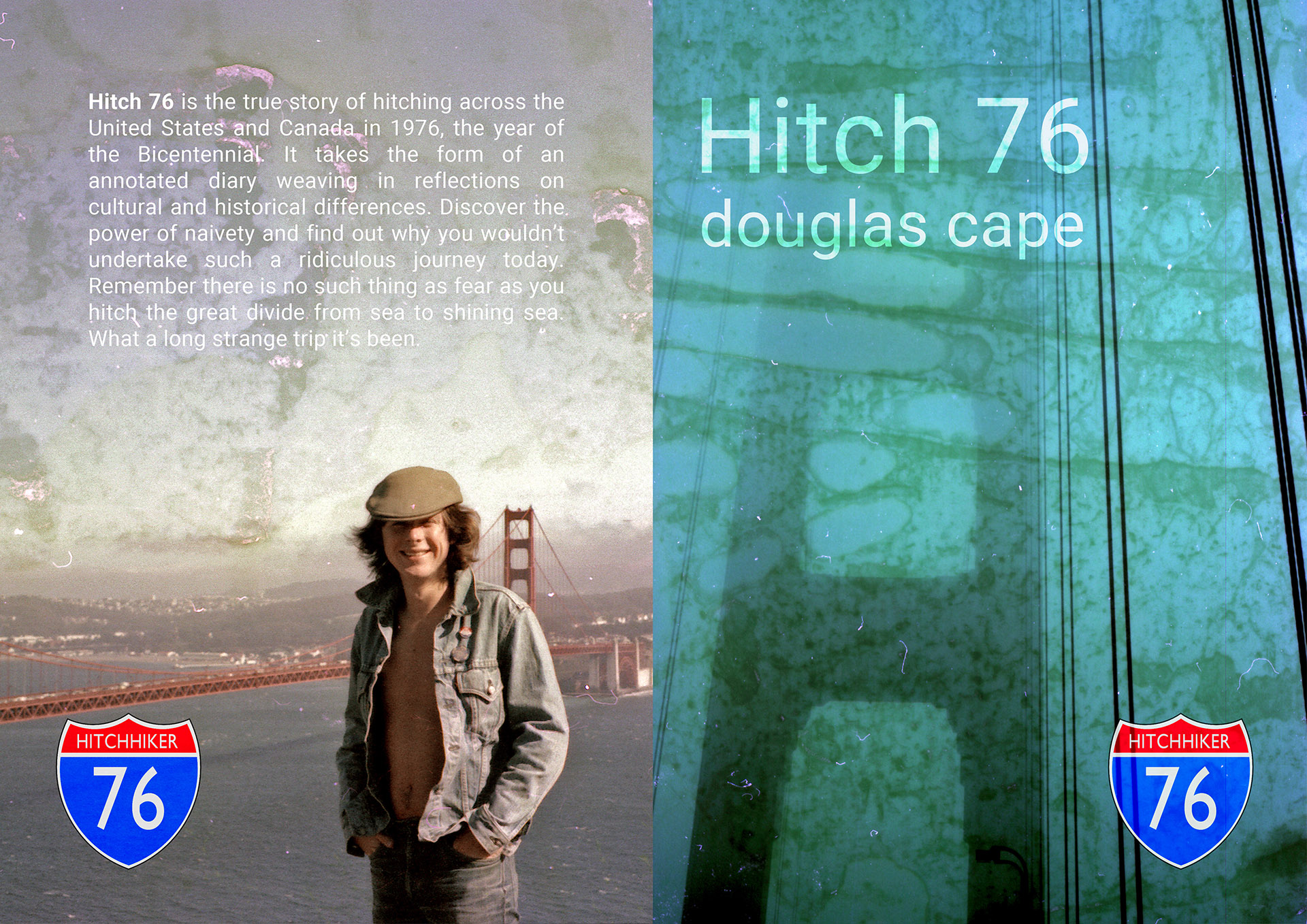
It is a true story about hitchhiking across America and Canada in 1976
Any comments appreciated
PS. May not be online for long
My current attempt to be an author is now online
This is a first draft, with lots of pictures
It is a true story about hitchhiking across America and Canada in 1976
Any comments appreciated
PS. May not be online for long
1998 July 6th Jazz Cafe, London
Nils Petter Molvær – Trumpet
Eivind Aarset – Guitar
Audun Erlien – Bass
Rune Arnesen – Drums
Per Lindvall – Drums
DJ Stangefruit – Vinyl
Sven Persson – Sound Design
It all started with a strange rumour, ECM, the chamber jazz label, had signed a hot new Norwegian trumpeter in the Miles Davis mould. He was playing electric gigs with two drummers and a DJ, unheard of for this staid acoustic label. The electric Miles from the early 70s was my signature music, so this definitely merited investigation. I headed to the Jazz Cafe for the first ever UK gig by Nils Petter Molvær.
In the sweaty dark confines of the club the first thing to hit was the rhythmic volume, totally unlike any other ECM experience.This was modern soundscape taking Miles into the house – he’d been there with work like Jack Johnson and Bitches Brew, but nobody had really picked up the baton, until now. The twin drummers laid down a loud, steady, intoxicating rhythm, scrabbled scratching overlaid it, a lone muted trumpet rose above it all. There was plangency pouring over a rich stew of funk, reaching an apotheosis with Khmer which took us further East into a killer dystopian beat; total surrender.
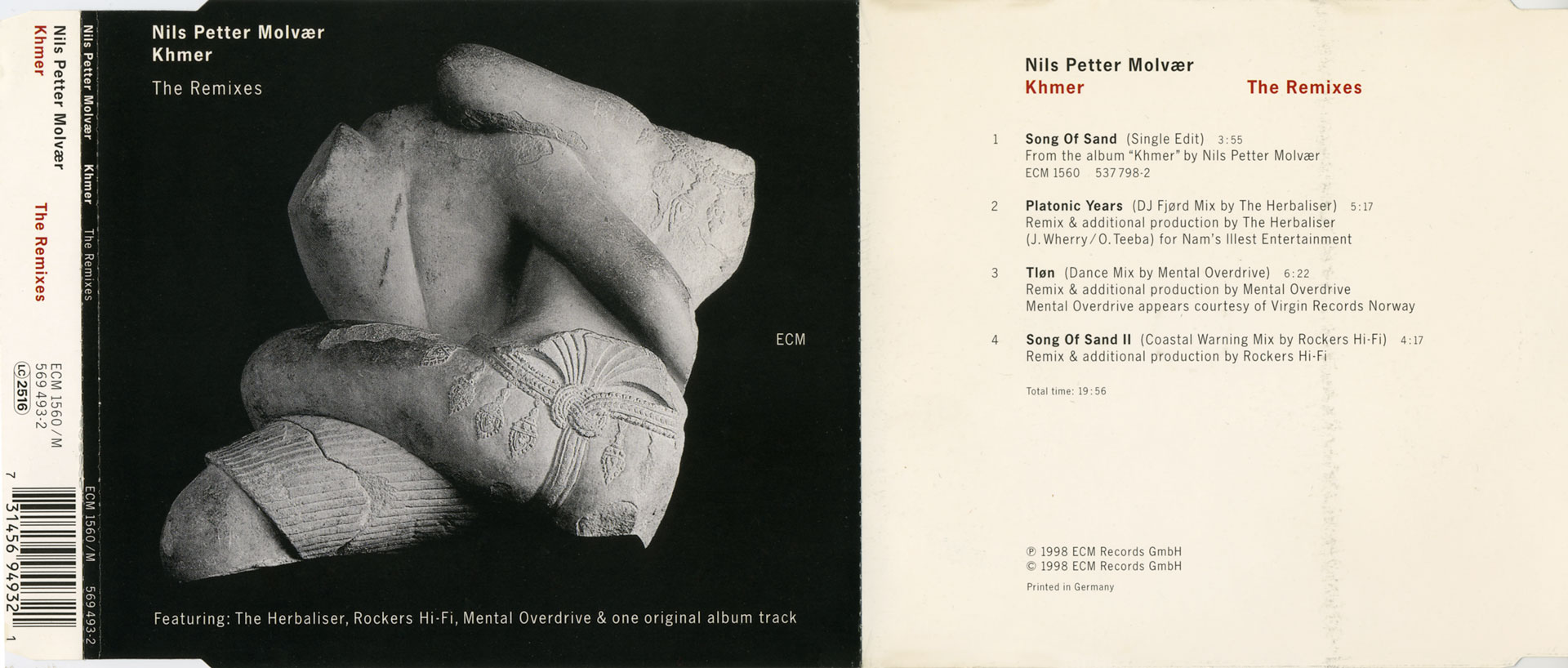
After this first ecstatic gig, as we left, ECM gave away a promo EP called Khmer : The Remixes. I played it to death. I still play it now. It is a Desert Island Disc.
As they said “For the first time ever ECM enter the world of remixes” – it was to be their best try, only to go downhill from there, but at least they had the guts to try properly. They were not founded to be an on-trend label, nor should they be. Nevertheless the respect that Nils Petter Molvær is held in by ECM and their Producer Manfred Eicher can be demonstrated by the inclusion of nearly their whole first album Khmer on the ECM retrospective Selected Signs Vol. VI, A Cultural Archeology. Nils only stayed with ECM for one more album, Solid Ether, but the template had been set.
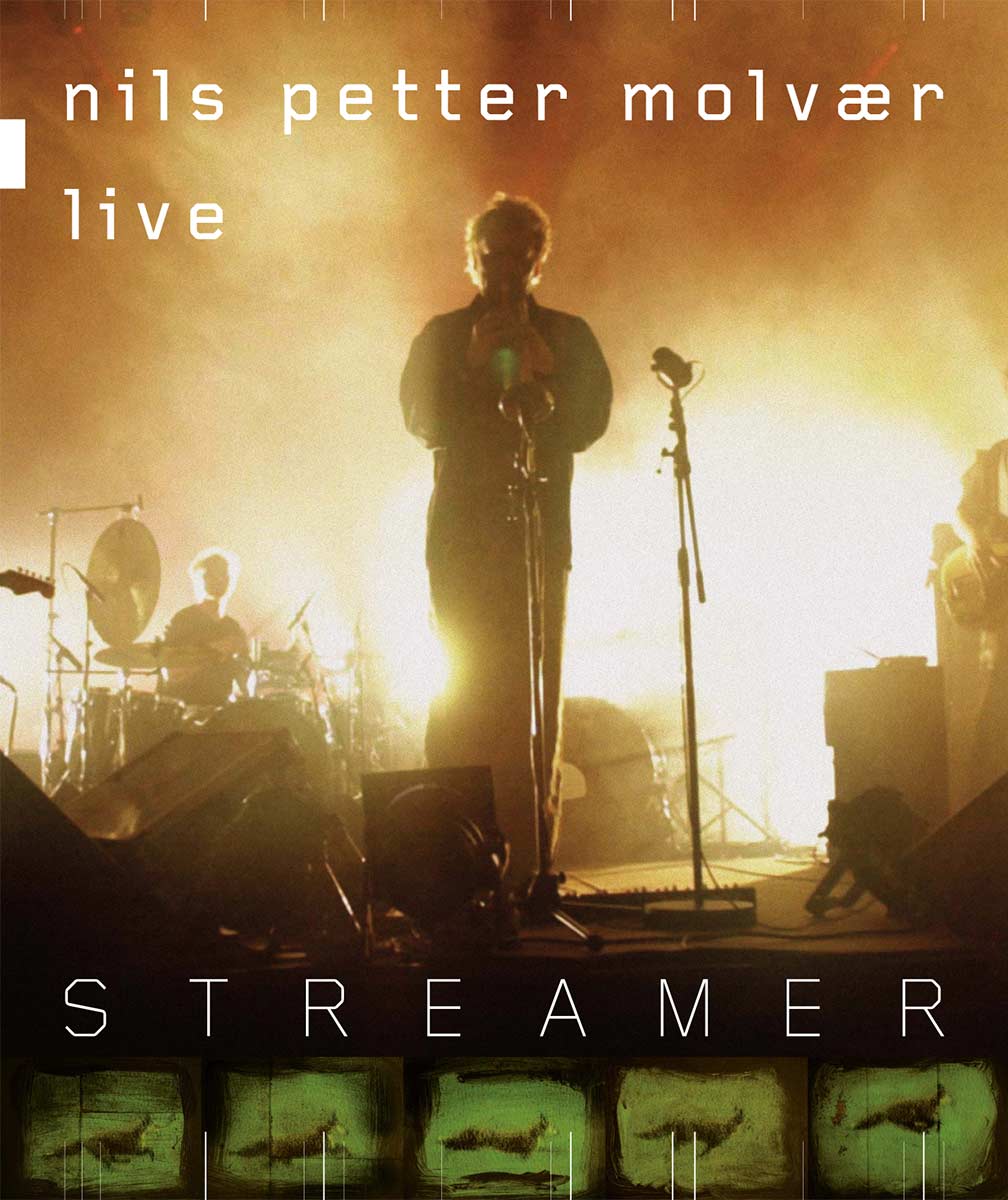
The next time I saw him was in 2002 at The O2 Academy in Islington, then operating as a replacement Marquee Club. He played a blistering house jazz set, climaxing with the semi-rave anthem Nebulizer. In between the frenzy there were moments of solo beauty, like Little Indian. Several tracks from this great gig appeared on his live album Streamer. A slew of remix albums followed and when I saw him at Cargo in 2004, this appeared to have mellowed his slimmed down band. They played a more nuanced and atmospheric set, despite being in a club venue.
As Nils finally distanced himself from Khmer, he collaborated with many different artists including Jah Wobble and Bill Laswell on Radioaxiom : A Dub Transmission, a subject we will return to. In 2010 he played with a dystopian metal trio at Queen Elizabeth Hall, with dry ice and black cut-out projections. Once again he was forceful and lyrical, wrestling with guitarist Stian Westerhus and drummer Audun Kleive, providing a warning to the world. During his residency at Kings Place in 2013 he appeared to be more involved in the spirit of collaboration, rarely stretching his somewhat ambient playing, happy to take a back seat. The highpoint was a series of live improvisations to Buster Keaton films.
In 2016 he made another great album, Bouyancy, with Geir Sundstøl on pedal steel guitar which beautifully matched his own sliding, muted style of playing. The concert at Ronnie Scott’s, framed by large nautical bells, took us into a magical aquatic seascape. Often submerged, we surfaced at intervals as we flowed with the current taking us to different climates, both hot and cold.
Back at the Jazz Cafe in 2018 and back to the beats, now with serious air conditioning. Sly and Robbie need no introduction, most people are probably here because of them, but Nils holds the centre and soon captivates as he emotes over the pounding dub rhythms. They have just recorded an album together, Nordub, and I am already thinking they should have held their fire until after the tour, since this live gig is a power level above that excellent work. We can hardly see Sly in his shades behind a huge black and silver drum kit, as masterful reggae rhythms shuffle and slide around us. Robbie is seated, looking happy with a brand new white Fender bass, so confident he often plays right hand only, rock steady. Later he comes to the fore, intoning sparse resonant dub lyrics. On the far left is Eivind Aaarset with a panoply of pedals and FX, as he was 20 years ago, sending out shards of noise, climaxing as the rhythm rivers. At the centre of the storm Nils does his looping laptop tricks, sings into his trumpet bell and plays into his large ribbon microphone with points of trumpet scintillation. The music flows and curbs, slowly building with all of rock, jazz and reggae in the mix, we are immersed, overcome.
Like the first concert, we climax before the end. There is a great variation on the encore scenario with Robbie Shakespeare – he leaves the stage while we sing his dub chant back at him. The band return as we chant and proceed to tell us musically why they are one of the most powerful and exotic bands in the world. They say nothing.
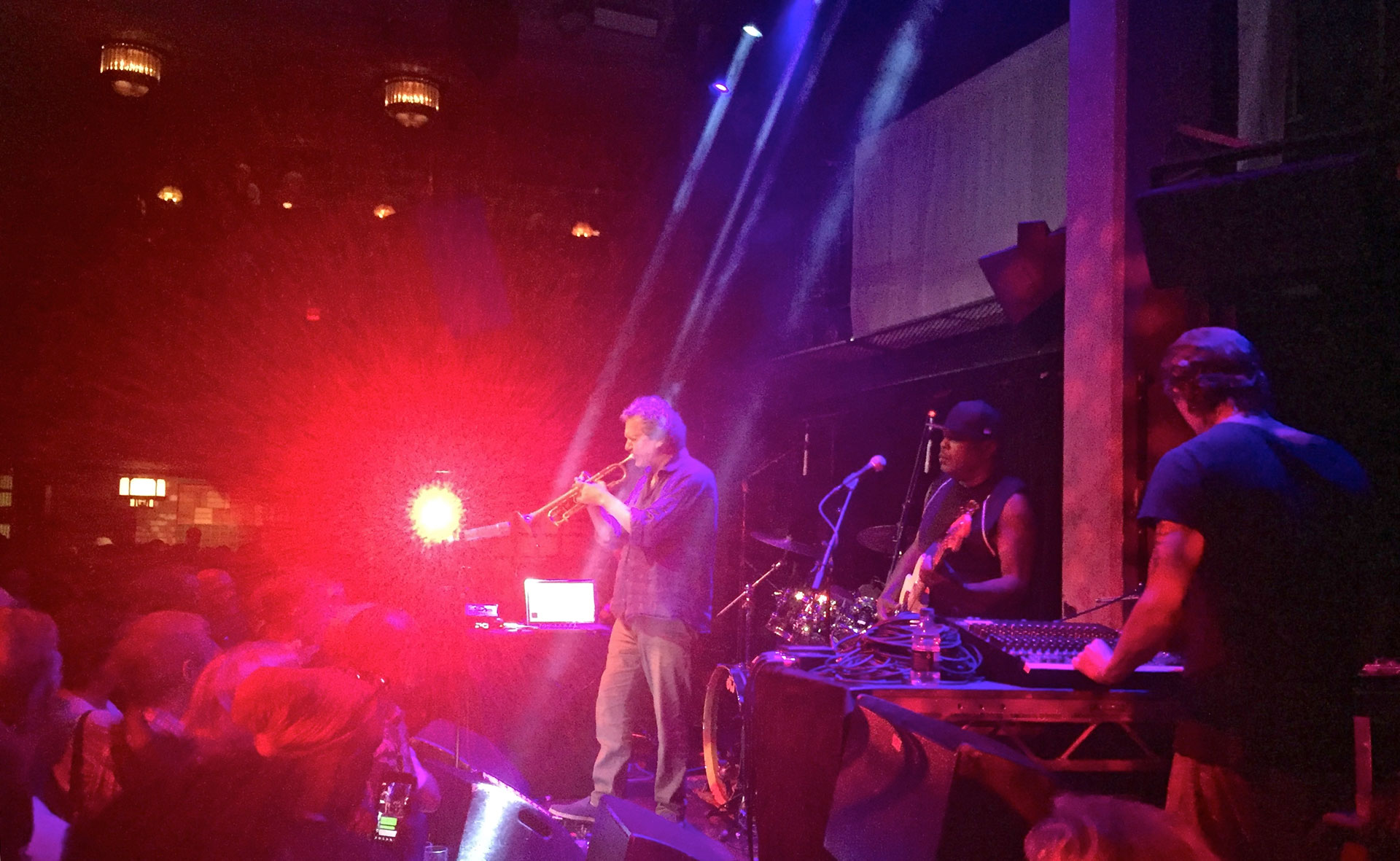
2018 July 24th Jazz Cafe, London
Nils Petter Molvær – Trumpet
Eivind Aarset – Guitar
Robbie Shakespeare – Bass
Sly Dunbar – Drums
Vladislav Delay – Electronics
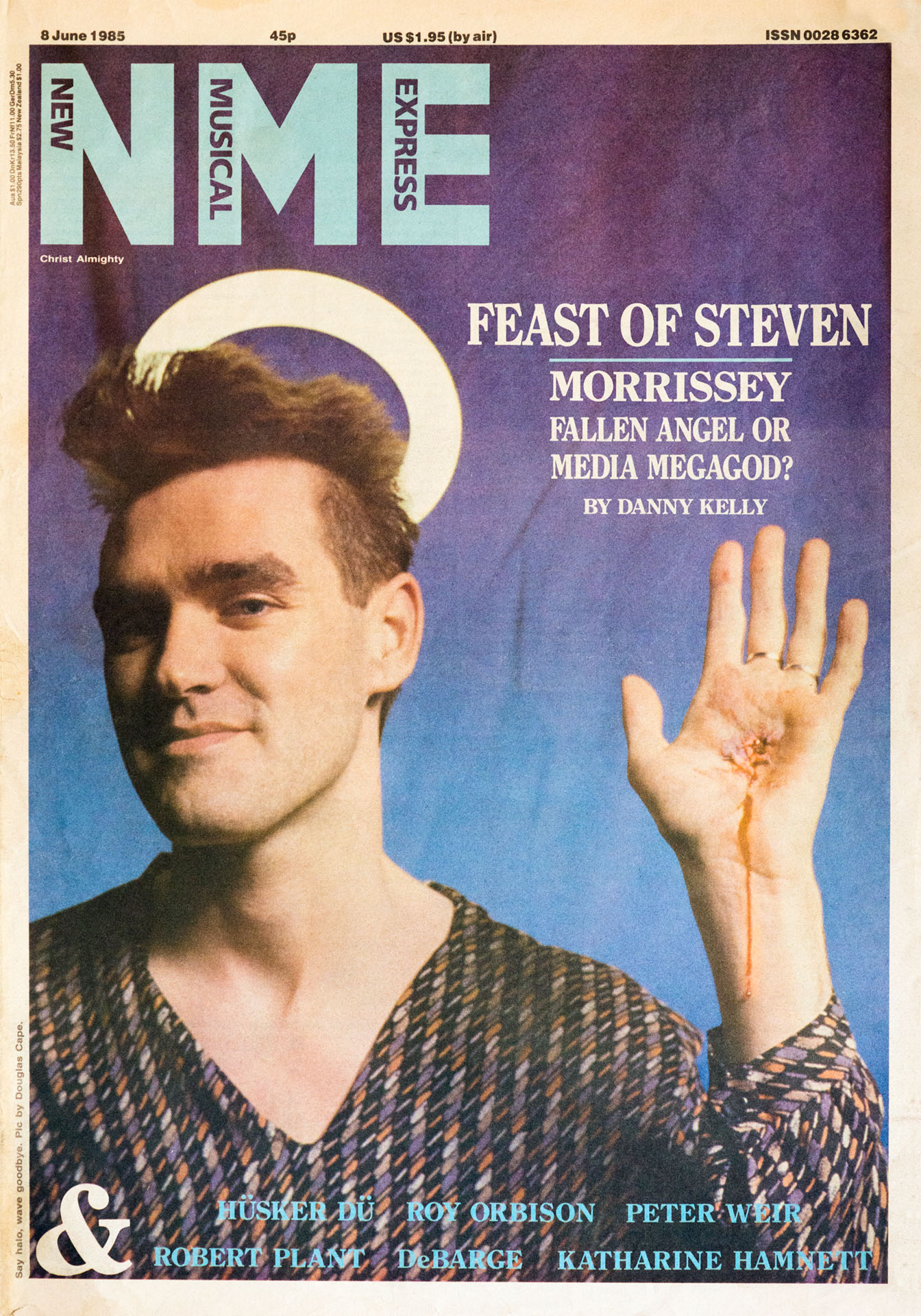
This cover shoot in 1985 was the apotheosis of my burgeoning photographic career. From the early 70s I read the New Musical Express religiously every week and even completed the crossword. Meanwhile The Smiths had become my favourite indie group, so the combination was everything I had ever wished for, this was as good as it got.
Commissioned by Tony Stewart the deputy editor (who I later unfortunately followed to the ailing Sounds) I drove the journalist Danny Kelly up to The Hacienda in Manchester where the shoot took place. I had done a fair amount of preparation, constructing a halo from a fluorescent ring lamp and preparing some gory make-up. I had no assistant and did all the set-up and prosthetics myself. Morrissey was as sweet as pie and liked the idea of the stigmata. He only balked when I wanted to use the actual club for some background shots, saying that he’d already been photographed there. Still it all went very well, but I wasn’t allowed to attend his interview with Danny and spent several hours hanging around the gothic Midland Hotel.
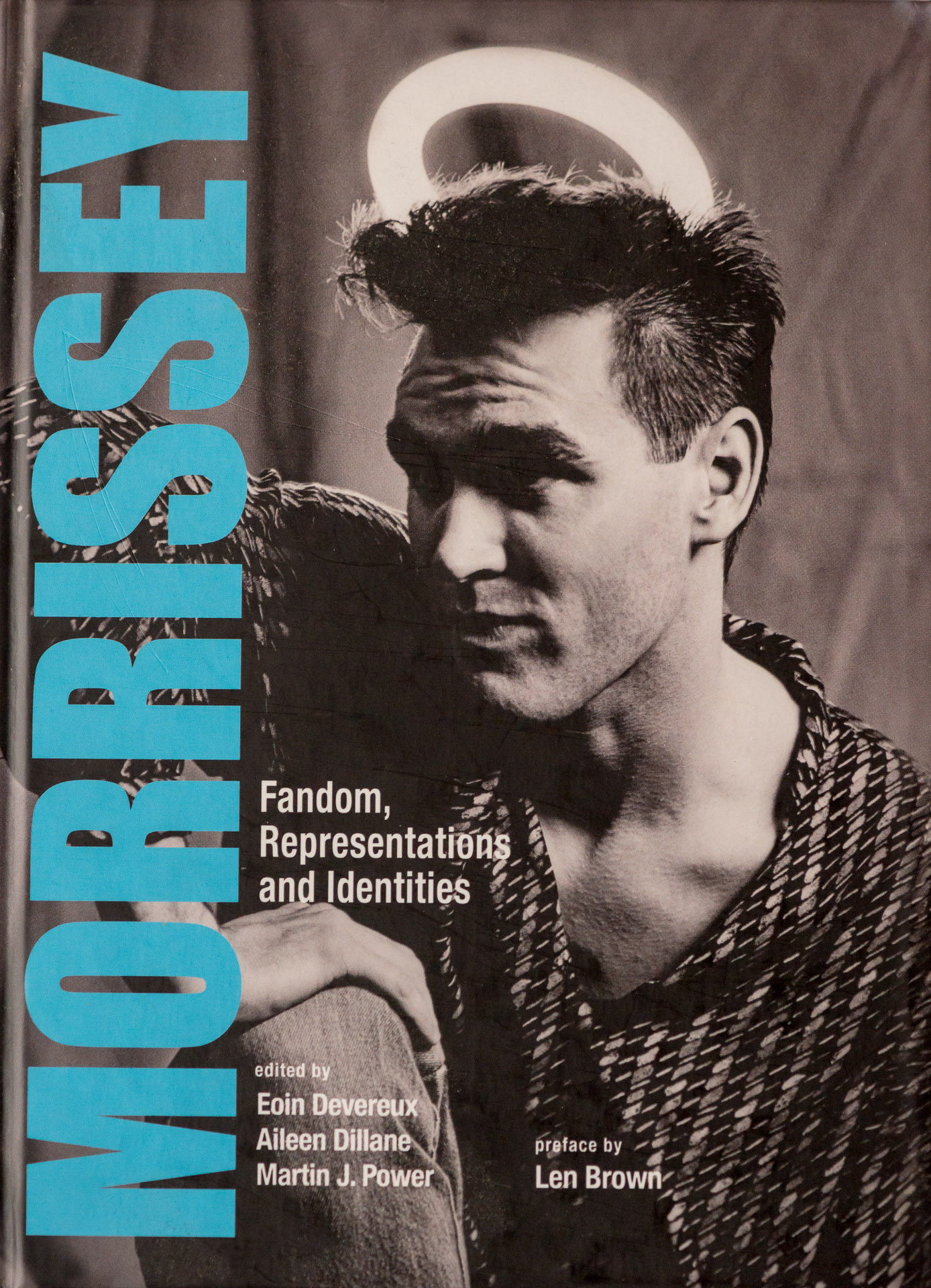
The shot chosen for the cover was not my favourite, but I guess it fitted their layout best. They did use a classic black and white shot with the interview, later featured on the cover of Morrissey: Fandom, Representations and Identities.
Back in the 70s the New Musical Express was a wide church, encompassing all contemporary music including folk, jazz and even modern classical. I discovered Philip Glass, Jan Garbarek and the Art Ensemble of Chicago in their pages. They would feature campaigning articles about Red Wedge and occasional specials such as a Youth Suicide issue. The writing was varied, iconoclastic and opinionated, notable favourites being Richard Williams, Barney Hoskyns, Ian Penman, Nick Kent, Tony Parsons and even Charles Shaar Murray. By turns humorous and political the NME became the voice of alternative youth, there was no-one else with their finger on the pulse. In addition they produced a series of budget cassettes starting with C81, which championed their diverse musical influences.
The NME slowly headed into a dead end street of their own making, forgetting their history and the wilder shores of music practice. The writing lost all ambition and pretension, there was only so much you could say about guitar bands amid the narrow confines of Britpop. In the 70s you read the NME to discover new music and new attitudes, not to catch up on the gossip in the Sun’s Bizarre column. The world still needs a daring and authoritative music magazine, there is The Wire, but what do they know about pop music?
R.I.P. NME ‡
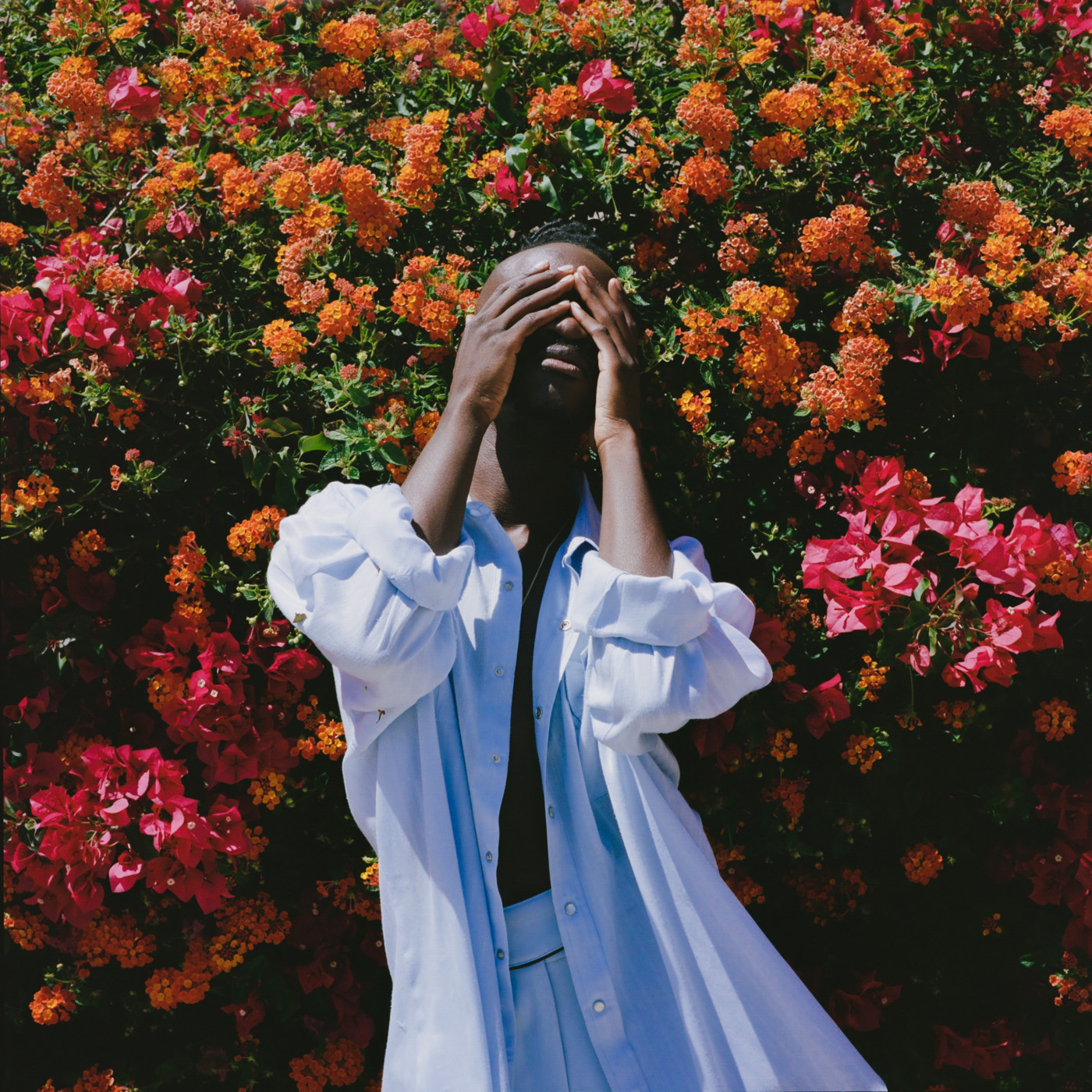
Kwaye sings Sweetest Life so put on your dancing shoes now !
Surely the hit of the Summer
And now on the Guardian Front Page
And yes directed by my son Billy Boyd Cape
***
I am writing this In Memoriam to Jazz at The Oxford, my local jazz club in Kentish Town, London. It happened on a Monday (when nothing happens) upstairs at a local pub for 12 years and was like having Ronnie Scott’s just down the road, but much cheaper, more relaxed and more personal. It was run by George Crowley, an excellent saxophonist in his own right, often playing with the guests and of course when the guests couldn’t make it.
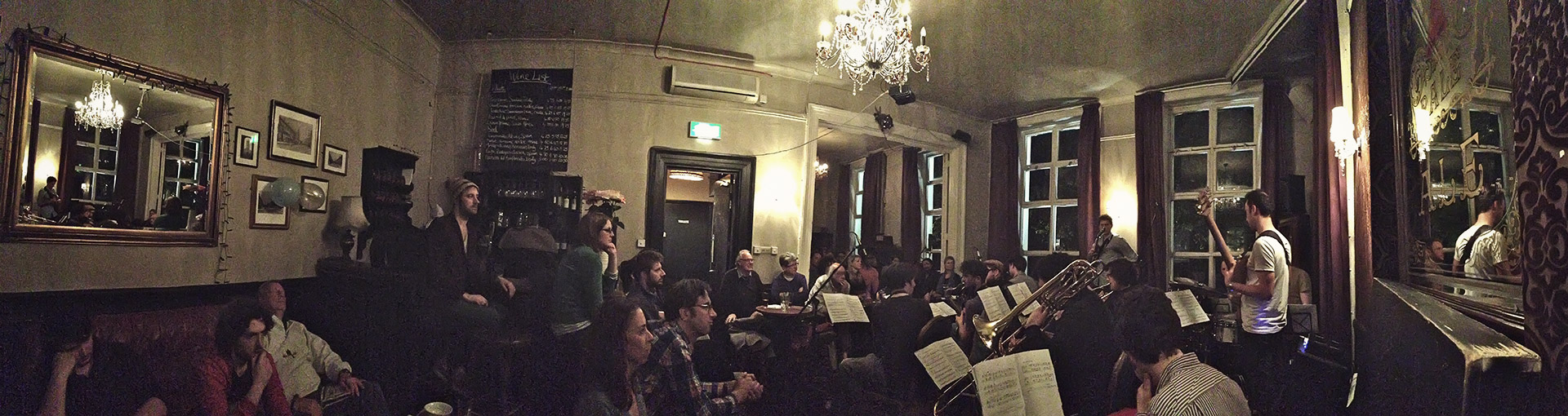
Crocodile playing at The Oxford, Kentish Town
While it started off as often too full of student alumni, it only cost £5 and every so often someone of the calibre of Shabaka Hutchings would turn up. Great nights included someone transporting a full size Hammond organ up the stairs, big bands such as Crocodile outnumbering the audience and of course musicians of the quality of Jeff Williams, Laura Jurd, Martyn Speake and Kit Downes. I will be missing this…on occasional Fridays some of these musicians may appear at the Con Cellar Bar aka The Constitution on the canal in Camden.
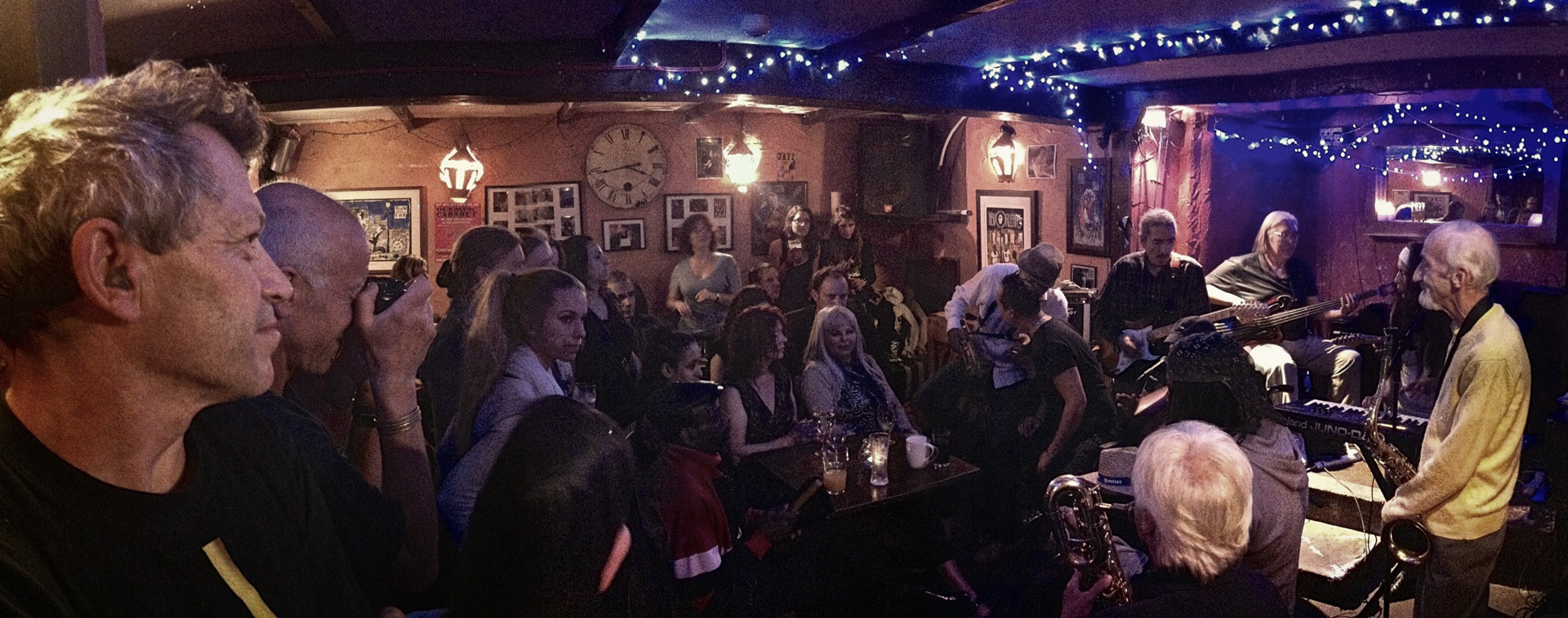
Blues Night at The Constitution
Meanwhile the amazing Cafe Oto in Dalston, now the UK home of Sun Ra, continues to plough its unique furrow through nearly any kind of modern music as inspired by Wire magazine. A staggering number of amazing concerts with the cream of British avant garde jazz as well as luminaries from many international genres.
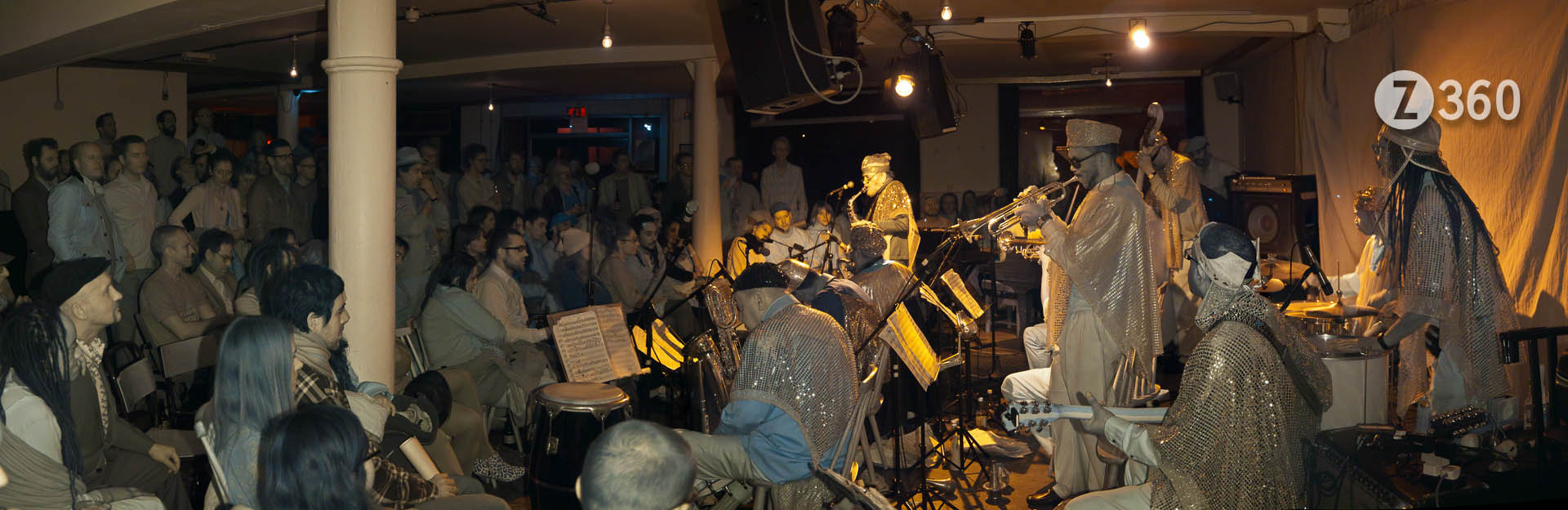
Sun Ra Arkestra at Cafe Oto (in Infra Red)
The sackcloth backdrop which looks like a temporary rebuilding memento is still there as is the relaxed and concentrated vibe which draws in performers as varied as The Necks, Annette Peacock, Jimi Tenor, Marc Ribot and The Thing. There is no stage, we are one. Just so you know – I’m a Member!
Across the road is one of London’s most famous and established jazz clubs, The Vortex.
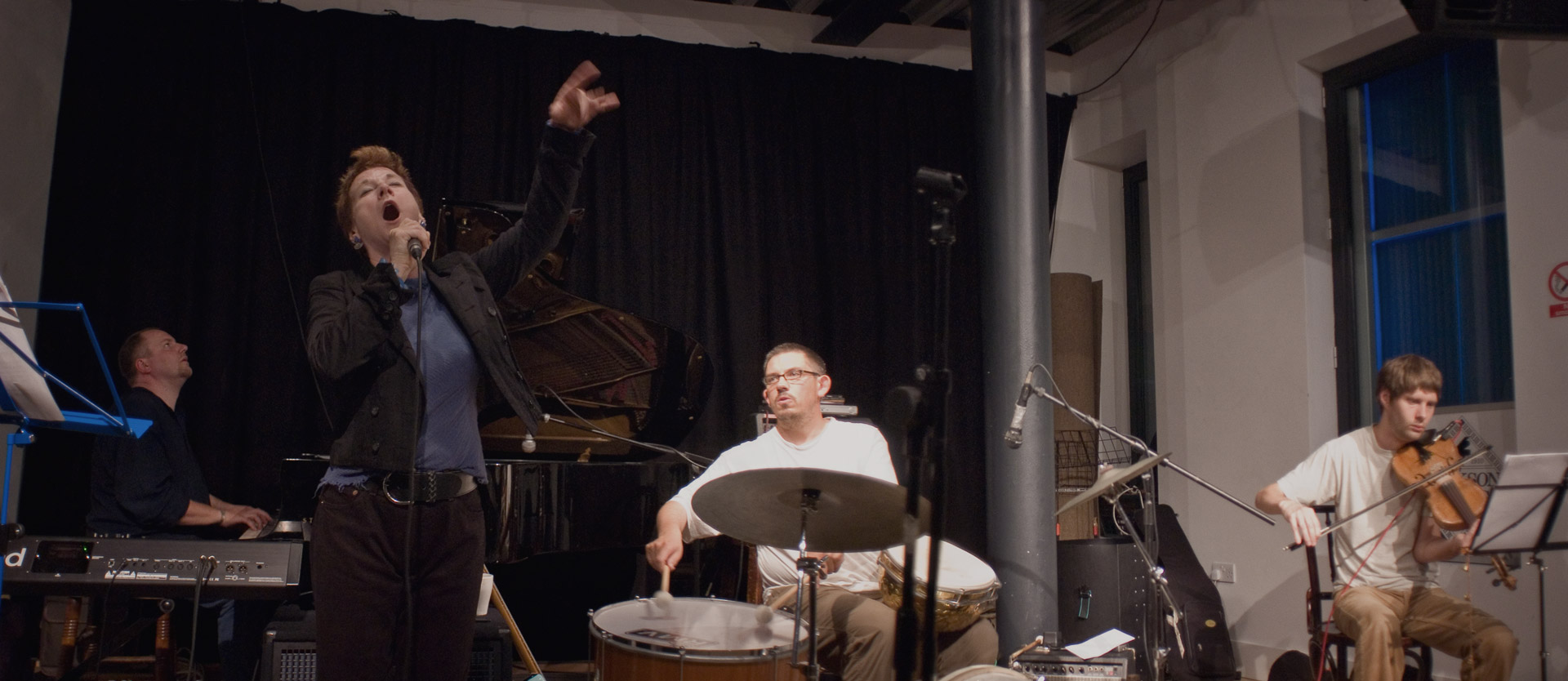
Carol Grimes at The Vortex with Giles Perring
While presenting an excellent cross section of soul and avant garde jazz, I have always found the room a little bit too concrete and dry after it moved from its original location, a funky, wooden and crazy place in Stoke Newington Church Street, which for a few years until 2004 was definitely the best jazz venue in London. Thank you Billy Jenkins for some great nights there. Also of note is the funky Servant Jazz Quarters round the corner. Meanwhile just south of the River, an important new improvised venue opened recently called iklectik, set in hidden arty gardens in Lambeth and I would recommend discovering the Horse Party. Just don’t tell the Archbishop.
Bill Evans Band at The Jazz Cafe 9/8/16
This article is also inspired by a recent visit to the venerable Jazz Cafe, just off Camden High Street. After becoming one of the key venues for New British Jazz in the late 80s, the tiny L shaped wine bar in Stoke Newington Green expanded to a large venue in Camden and has recently been refurbished as a full on night club, featuring jazz. The main floor is open with a restaurant of sorts on the balcony and this works well for funkier outfits, such as Bill Evans who I saw there only this week. Seen some great gigs here such as the Paul Motion Trio (see above), Nils Petter Molvaer and Pharaoh Saunders.
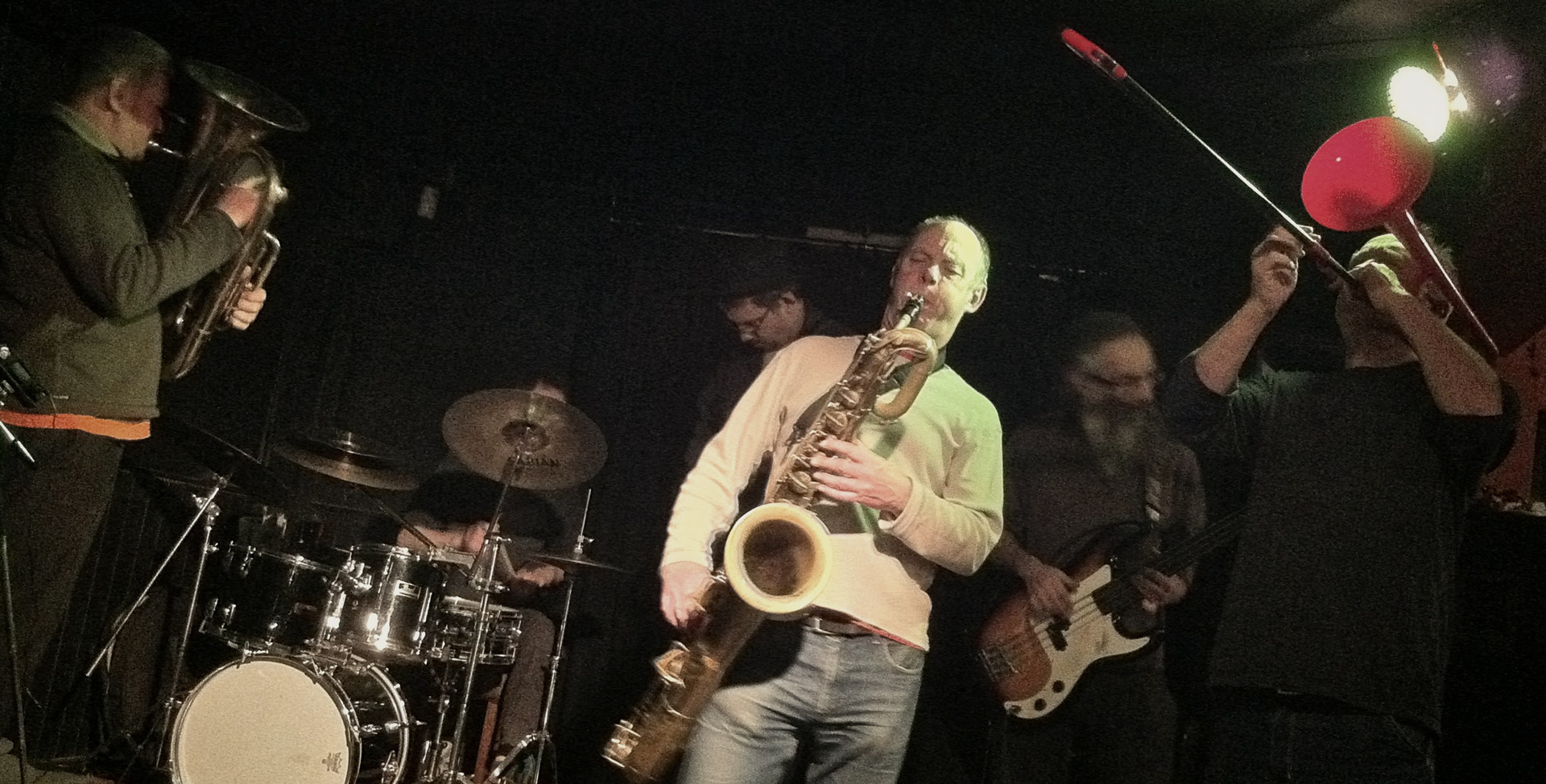
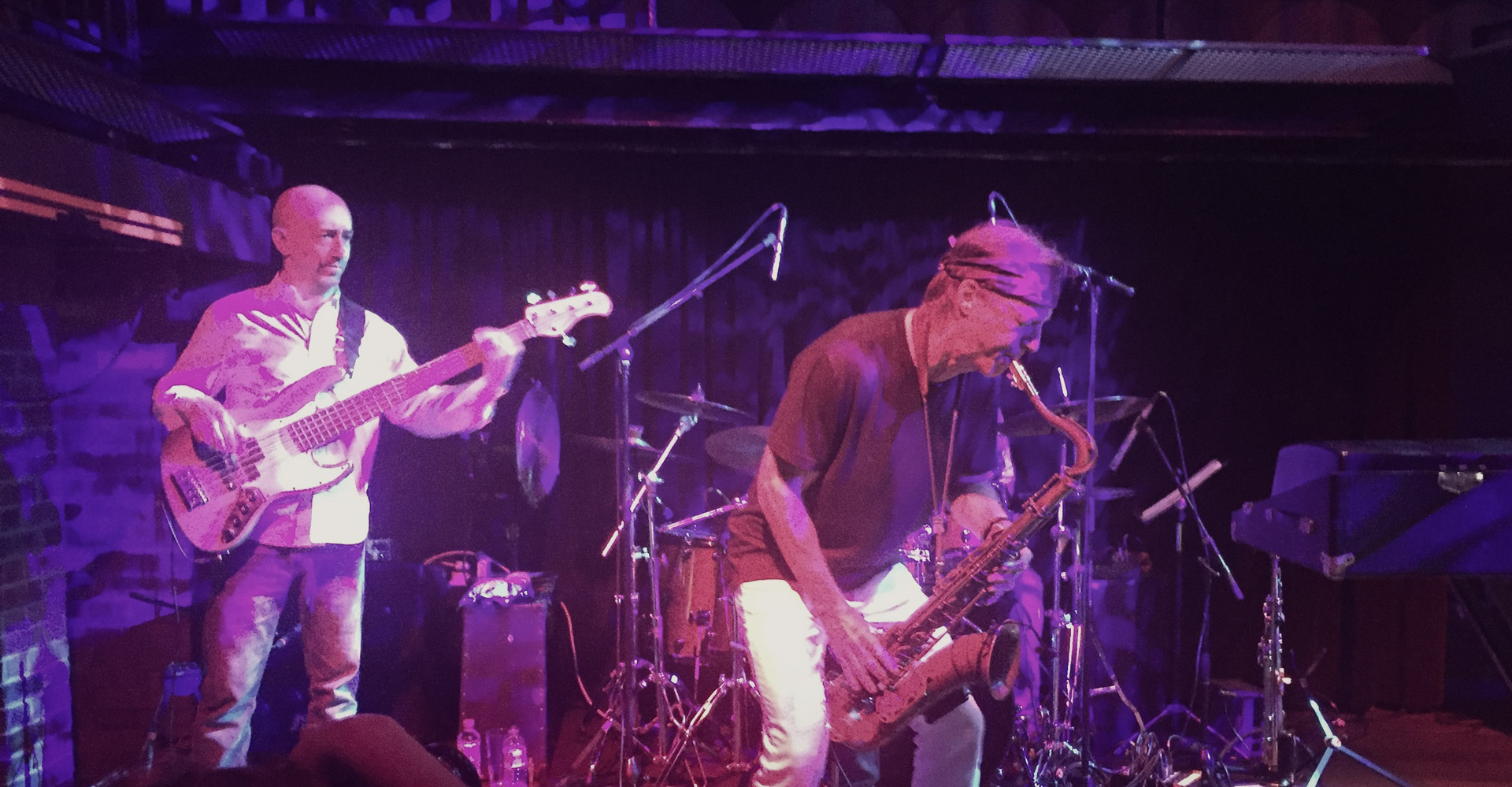
Alan Wilkinson fronting Ya Basta at Flim Flam, Ryans Bar
Talking of L shaped rooms the L in the Flim Flam venue at Ryans Bar, again in Stoke Newington Church Street, has been removed after refurbishment. This venue is run by Alan Wilkinson, a free sax improviser of long standing and on Wednesdays presents the best of improvised music with an eclectic lineup of the famous and crazy in nearly equal measures.
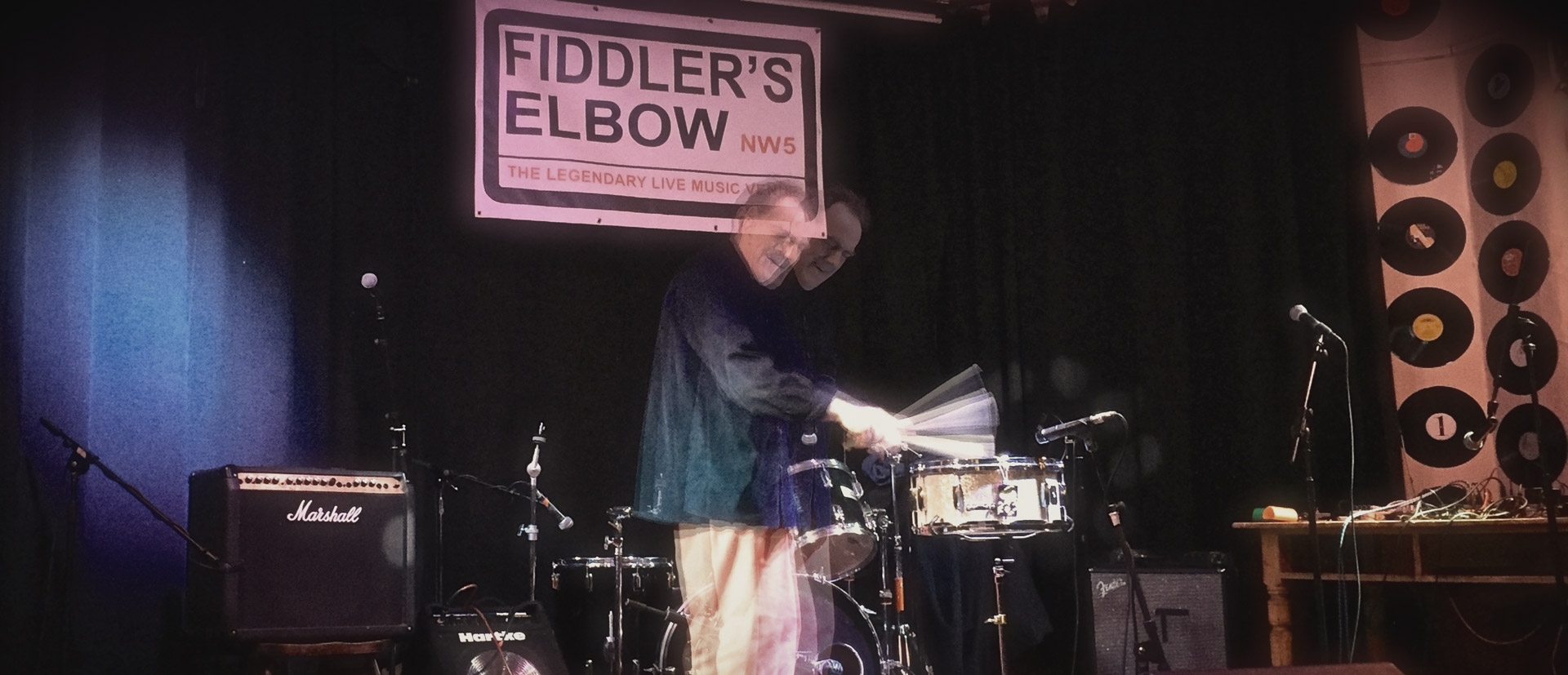
Charles Hayward does his half hour snare drum roll
For more varied musical fare there is the Fiddlers Elbow just outside the Camden Market tourist trap area, presenting live music every night. The main pub room is kinda pentagonal, with a dance floor.
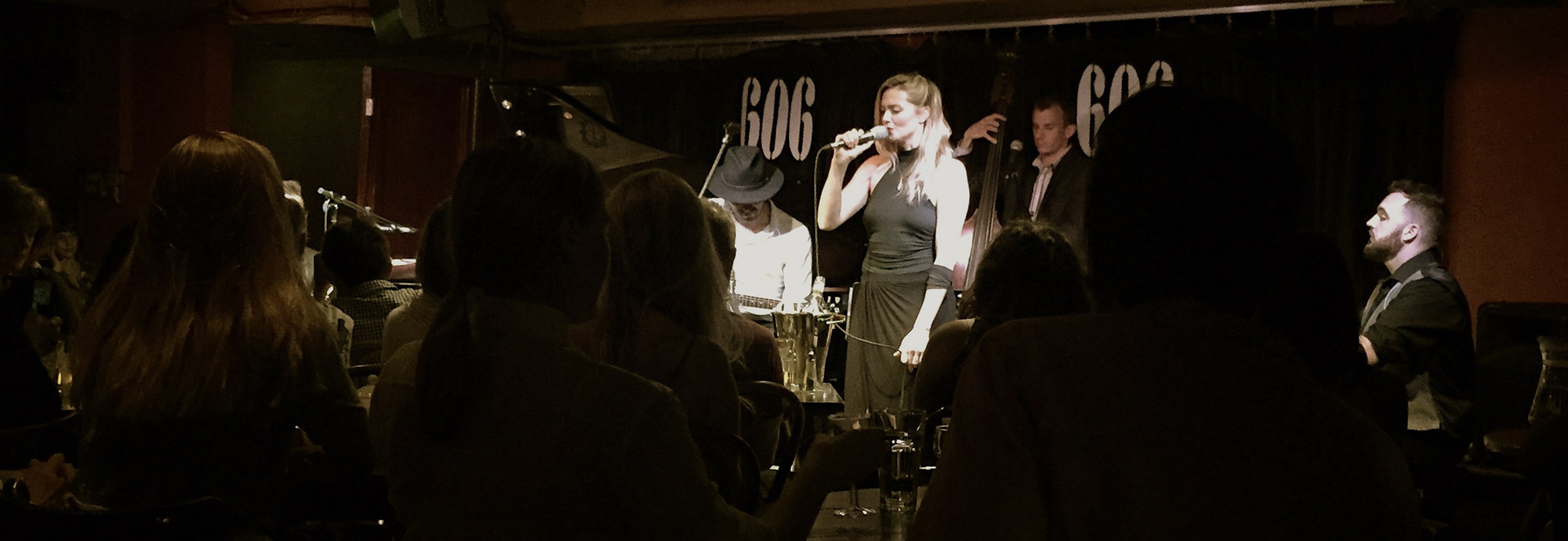
Purdy at the 606 Club
A mention for a few others such as the 606 in Chelsea, allegedly a members supper club, but which presents British jazz and soul in an atmospheric candle-lit cellar. In Soho there is Pizza Express and of course the famous Ronnie Scott’s, both also a bit supper club these days. Ronnie’s does attract some outstanding acts, often American, due to being established over 50 years ago by a very funny and excellent saxophone player. Great nights here have included Art Pepper, Airto, Stacey Kent and of course Nina Simone. Also recommended in Central London is the celebrated 100 Club in Oxford Street, still surviving after many years. Vividly remember gurning at Slim Gaillard here for a couple of hours and grooving to the late Tommy Chase Quartet.
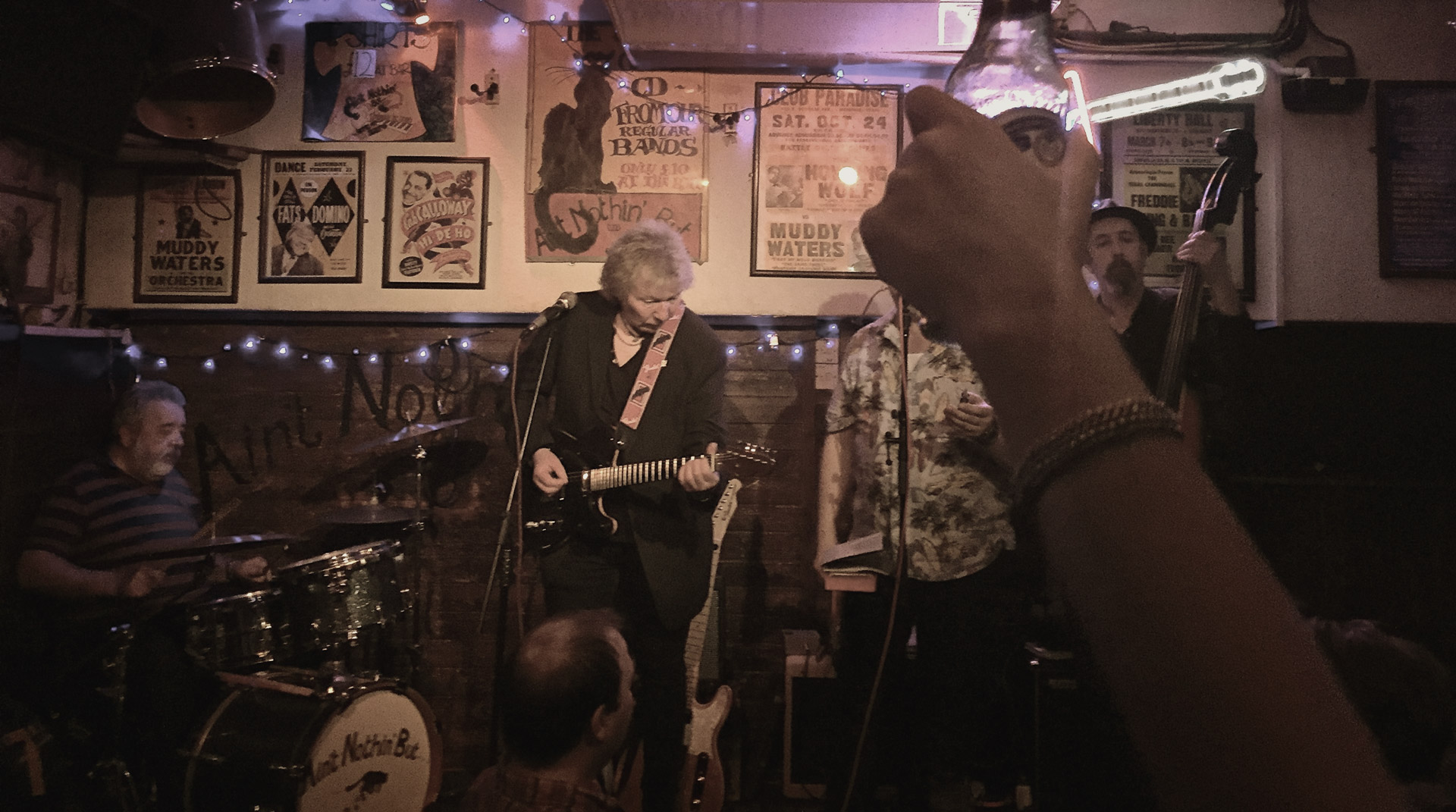
Blues Spiders at Ain’t Nothin But..
A good standby in town is the Ain’t Nothin But Blues Bar in Kingly Street, which does what it says on the tin 7 nights a week. Further East is the Village Underground, a cavernous venue under huge railway arches for Shoreditch hipsters who don’t like sitting down. Primarily a dance/pop venue it occasionally features jazz acts such as Snarky Puppy. The nearby Rich Mix in Bethnal Green has a more varied World music programme, but I am pleased to see James Blood Ulmer is appearing there soon, last seen at Cafe Oto.
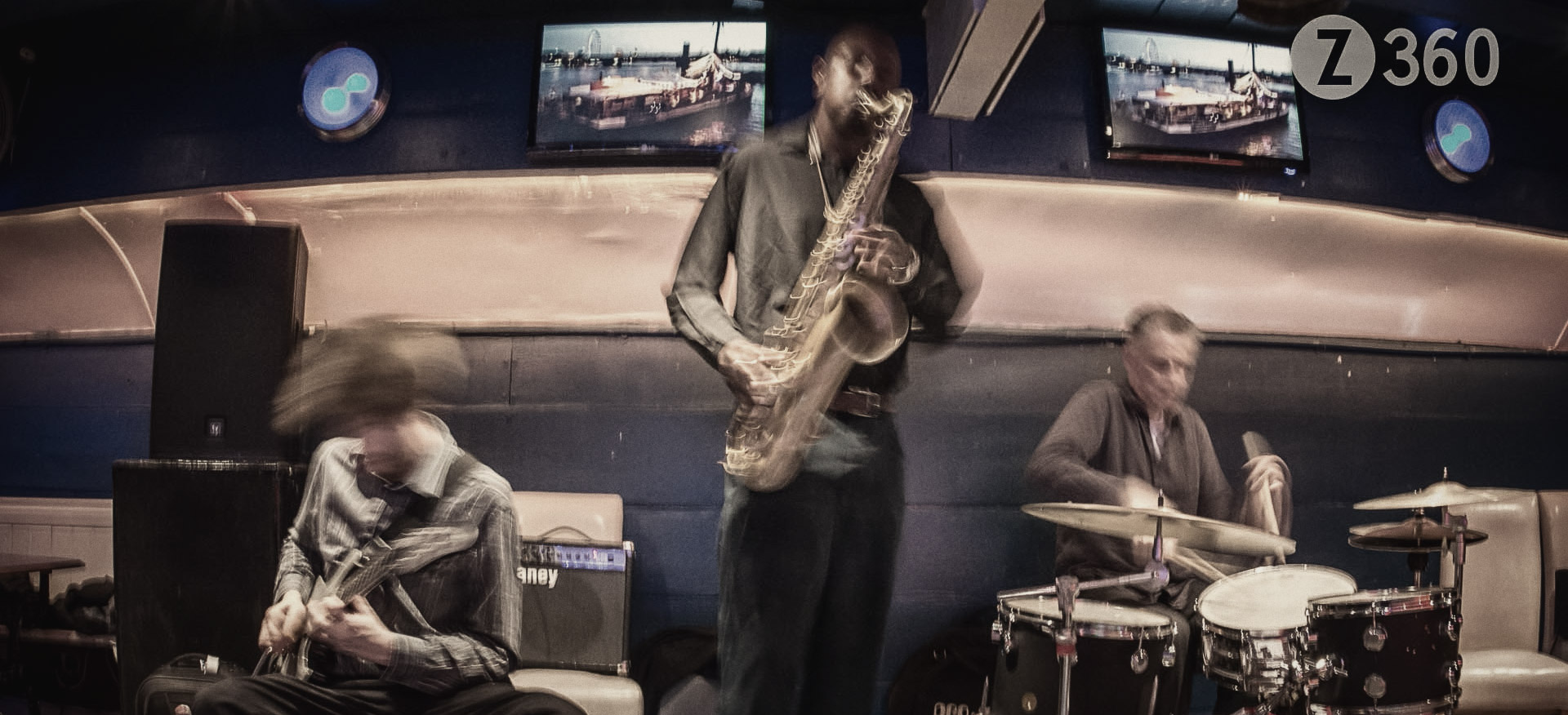
Alex Ward, Shabaka Hutchings, Steve Noble at Boat -Ting
Finally a big favourite is Boat-Ting, allegedly London’s hottest new music and poetry club, although after 14 years it’s not that new. Hosted by livewire Sybil Madrigal it regularly features NEW – with Britains best drummer, Steve Noble, powerhouse double bassist John Edwards and the virtuoso guitarist Alex Ward. Best of all this is a jazz club on a boat on the Thames, feel the waves like nowhere else..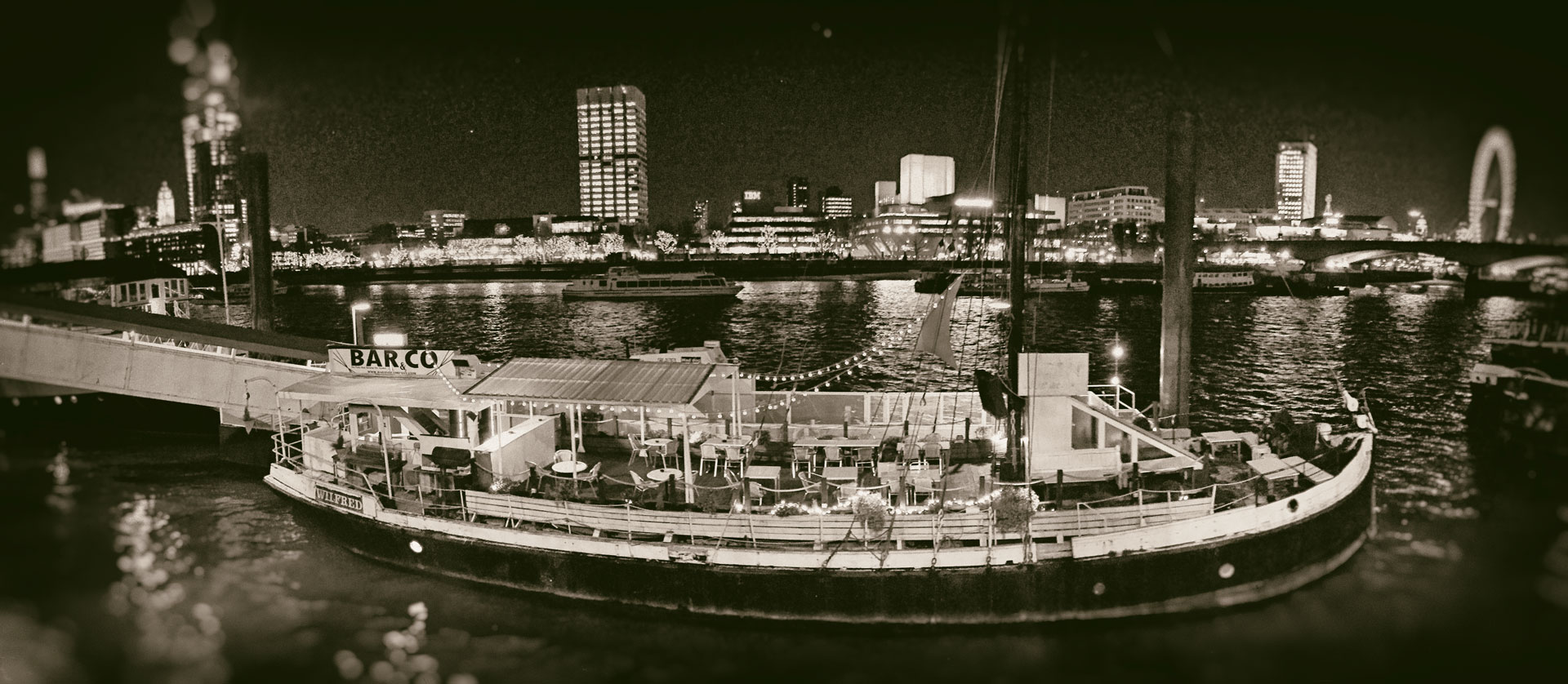
So where else in the world could I stand 3 feet away from a world class musician on a regular basis? Answers on a postcard, maybe from New York.
Nearly all these places are dirty, cheap, relaxed, and half full some of the time.
You can find some more proper pics of some of these places at Z360 Live Music
Flim Flam, Ryans Bar Stoke Newington
Boat-Ting, Embankment The Thames
R.I.P. The Bull and Gate, Kentish Town. The Spitz, Spitalfields. The 12 Bar Club, Tin Pan Alley Denmark Street. The Red Rose, Finsbury Park. The Adelaide, Belsize Park. The Mean Fiddler, Harlesden. The original Marquee, Wardour Street Soho. The Moonlight aka Klooks Kleek, West Hampstead.
And don’t forget The Klinker wherever it is…
Update February 2019
Jazz is now back on upstairs at The Oxford, Kentish Town. George Crowley is no longer running the evening, but he was featured there recently and it was a great pleasure to see him destroying the “standard” he was requested to play.
I am not American, Black, or a Woman, but I could not fail to be moved by this inspired performance of Aretha Franklin. She was singing (You Make Me Feel Like) A Natural Woman by Carole King and Gerry Goffin at the 2015 Kennedy Center Honors.
Moving, because despite the trappings, it appears so spontaneous and genuinely soulful. Aretha starts off simply at the piano, belting out the chords, singing as if not a moment had passed since her original recording back in 1967. Soon she is moving off the rhythm, interpreting, comping and finally testifying, to an audience now on their feet. The 4 minutes seem like an entire concert that builds to a final operatic moment, with the audience in thrall to a true diva.
The atmosphere is heightened by the presence of the songwriter Carole King, who appears both surprised and delighted at this unexpected performance. In the same way the presence of The President and his wife lend the proceedings a gravity and wider meaning, given that back in 1967 America was riven by racial strife, and no-one expected to see a Black President in their lifetime.
~
In one sense, to say that the best vocal performance of 2015 is by a 73 year old of a 50 year old song is a sad reflection on contemporary popular music. Where are the truly memorable new songs? What happened to singing with soul, conviction and meaning? We still need more of that…
PS Original High Quality Video withdrawn, hope this one works !
The Necks, the Australian jazz trance trio played 4 nights at Cafe Oto November 13th to 16th 2015. Each night they played 2 continuous improvised 50 minute sets to a rapt, reverential and appreciative audience.
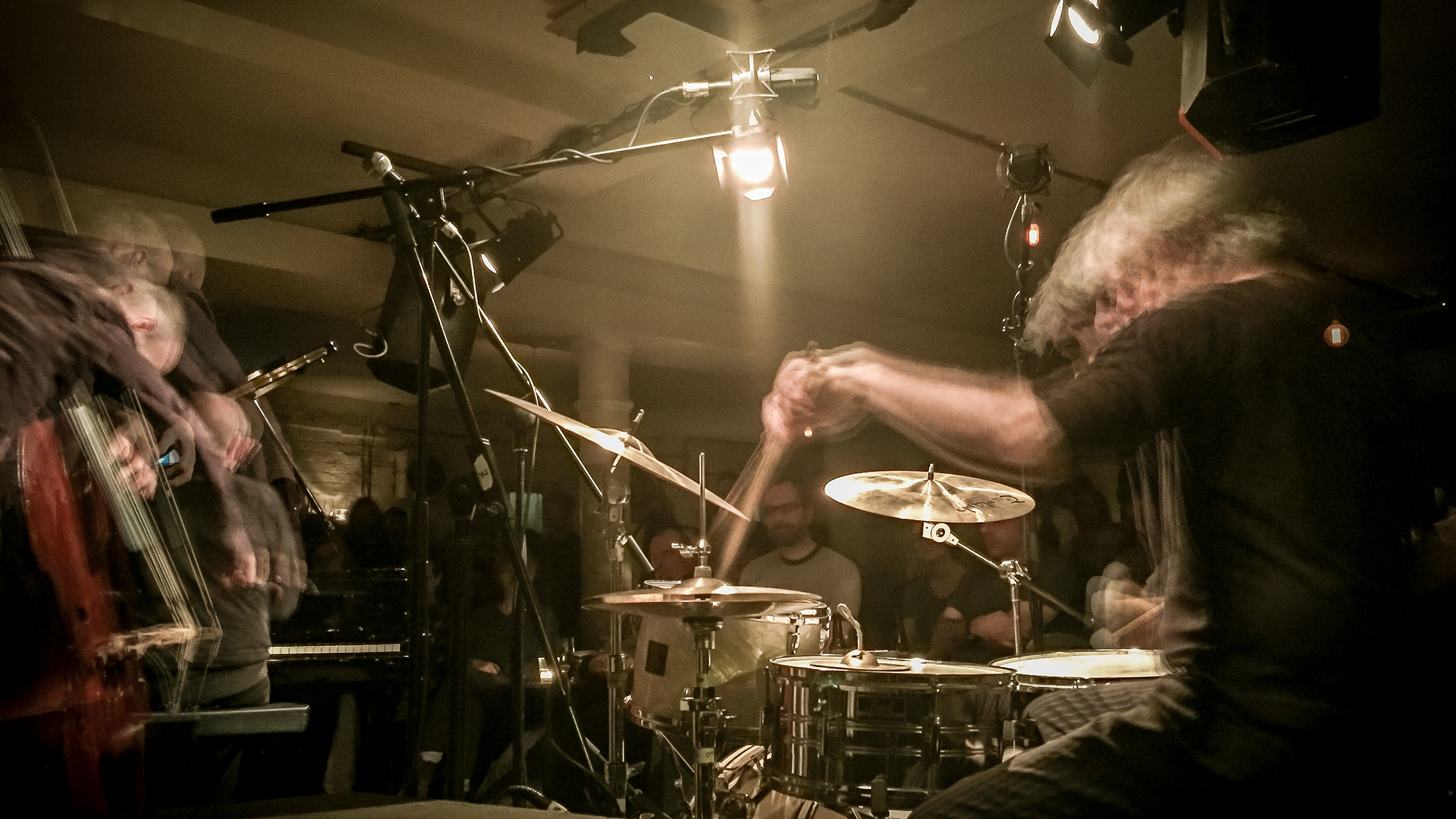
The Necks at Cafe Oto © Douglas Cape z360.com
To give you some idea of the unique nature of their playing here are my interpretations for each set over the four nights:
Friday 1 – Walking by a river then nearly drowned in the waves
Friday 2 – Scratching around to find the power of Rachmaninov
Saturday 1 – Simple – Building – Hypnotic – Incantatory
Saturday 2 – Birds in an African village later viewed from a huge helicopter
Sunday 1 – The Temple becomes a huge production line that is washed away
Sunday 2 – Starts with a bang and becomes a rhythmic tourbillon
Monday 1 – Millions die when the thunder rolls in
Monday 2 – The old Steamer beaches and is torn to shreds by nanobots
The closest antecedent to their style is the classic 1969 Miles Davis album In A Silent Way which summons a similar ever unfolding rhythm which develops slowly and organically to a quasi religious moment of trumpet satori. However The Necks have taken this template (which was in fact assembled by Miles and Teo Macero from studio edits) and created a unique assemblage incorporating nearly every form of modern music using the simplest of acoustic instruments – piano, bass and drums, to create improvised symphonies. It all seems to start so simply with a repeated loop of percussive sound which slowly builds, but before long you can hear an organ in the repeating changes, there is a sheet of electronic chatter, someone is shouting in a storm, the drums are obviously on a loop, the piano is an automaton…none of which is true. You are actually hearing classical piano, elements of Gamelan, the airport music of Eno, the systems music of Reich and Glass, the trance of The Orb, the chaos of Punk, the ear worms of Pop and the repetitive beats of EDM all working to a new maxim.
25 Second Timelapse movie of The Necks
The three members of The Necks arrive without pretension. Chris Abrahams the pianist is the artist lost in his own romantic motorik world, barely looking away from the keys. Lloyd Swanton the bassist is the businessman, looking sharp centre stage and taking care of the sparse announcements. Tony Buck the drummer is the hippy muso playing polyrythmically with his ethnographic percussion set. They are all leaders.
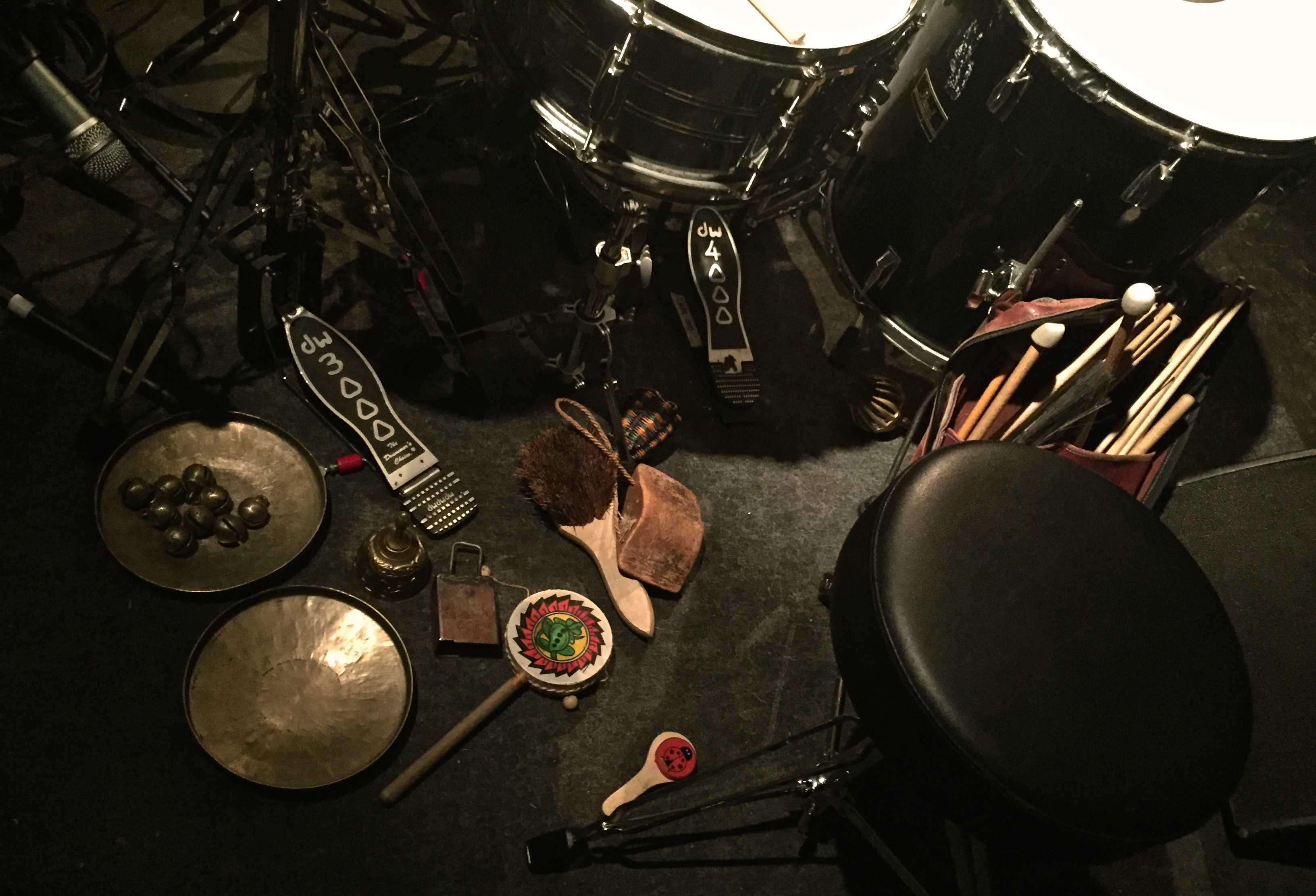
Ethnographic Percussion Set
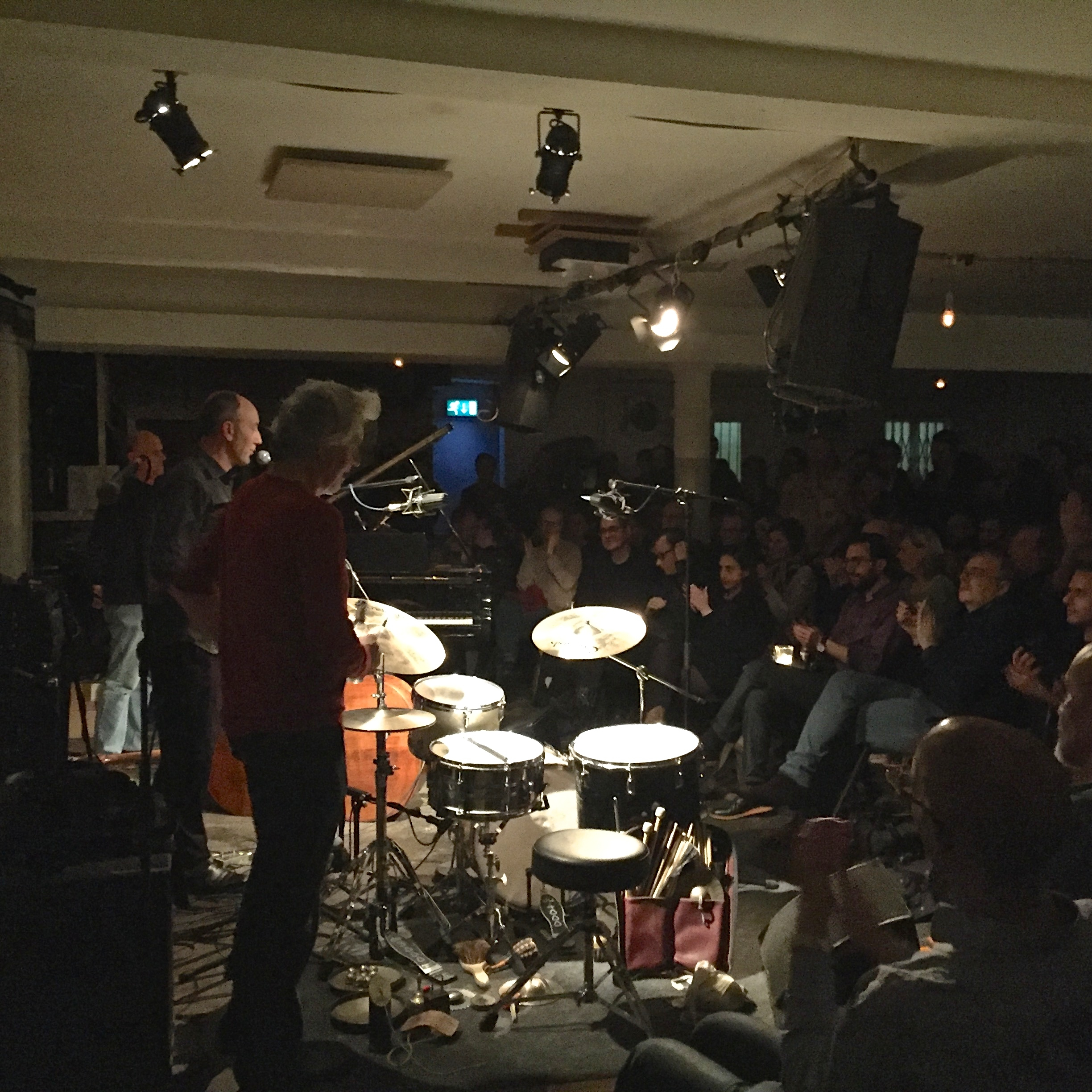
On the fourth night The Necks were joined by the legendary British free saxophonist Evan Parker. Their first set was the worst of the residency with Parkers squalling circular sax dominating in a much too saxophonic kind of way. Maybe words were said, but the second set was a revelation with the piano archly echoing the long lines of the sax which became just part of the movement and flux. It was over before we knew.
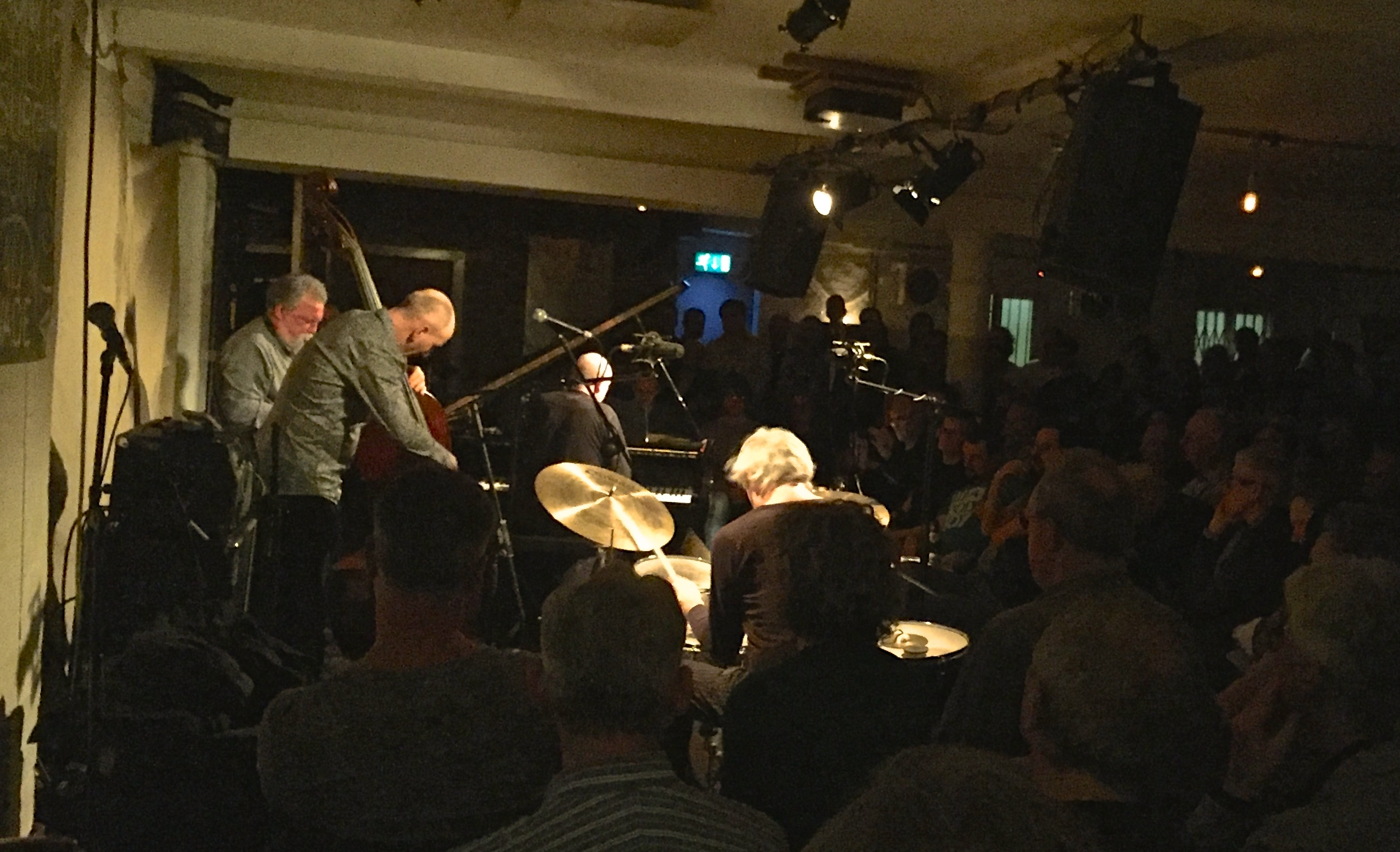
Evan Parker hiding at the back
Thank You and Good Night to The Necks…
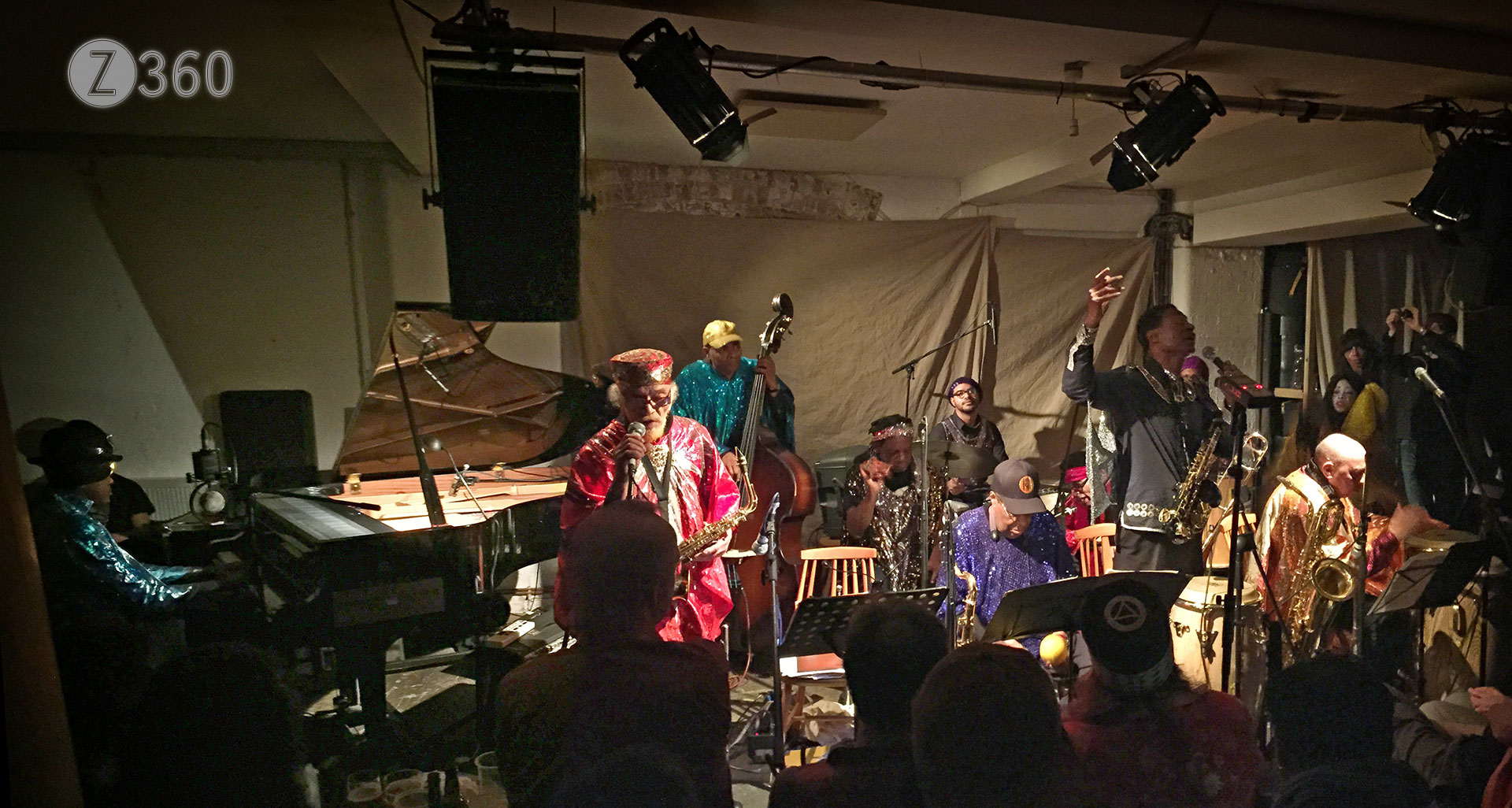
Edited iPhone Photo of Sun Ra Arkestra at Cafe Oto
Once again the Sun Ra Arkestra led by the dynamic 90 year old Marshall Allen graced the intimate confines of Cafe Oto with their vibrant presence. This was not one of their crazy barnstorming sets, but built slowly and very lyrically to a beautiful and charming moment at the end of the first set with the whole audience, virtually unprompted, chanting “Space is the Place” as the band wandered through them to take a well deserved interval.
A good part of the unique atmosphere of this show came from the commanding musical presence of Farid Barron playing grand piano, singing and unveiling the wonders of the Roli Seaboard. During the gig I could not understand where the new spatial sounds I was hearing emanated from. Of course I knew all about the wondrous use of synths Sun Ra had himself employed, having seen him with his Arkestra at The Venue, Victoria, back in the 80s, but this was something entirely new: both dynamic and luxuriant. There was none of the slight clumsiness and didacticism of the classic electronic keyboard – in fact I could not even see one. No, there was just a beautiful grand piano with what appeared to be 2 keyboards, one of which was taking me somewhere else entirely. If you look at the lo-res photo above you can just make out the light grey stripe (3cm deep) atop the piano, this is a Roli Seaboard GRAND Limited First Edition, with 88 keys which can be stroked, pushed, squeezed and pressed. I started hearing sounds and seeing playing which seemed impossible, but ok this was Sun Ra, so expect the unexpected!
During the second set, orchestrated carefully by Marshall, we had masked dancers, some great sax and EVI (electronic valve instrument) solos, yet the singing and the keyboards seemed to take us back in time to the grace and wonder of a 1930s spaceship, rather than the overheated modern version. This was in fact being accomplished by the unique rubbery and adaptive seaboard which “reimagines the piano keyboard as a soft, continuous surface” and allows “you to sound a note and then take it on a musical journey”. I was indeed transported…
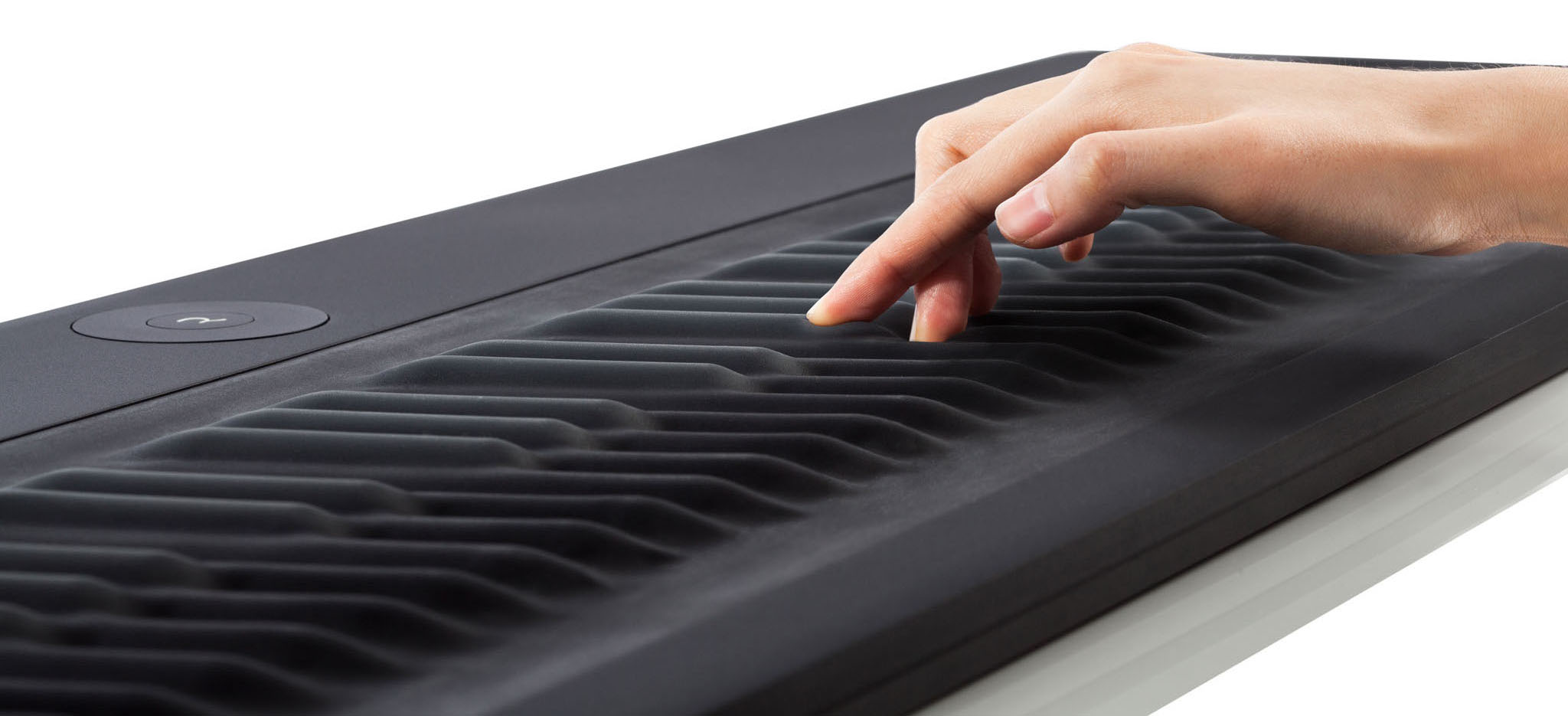
Roli Seaboard with continuous touch
After the gig I congratulated Farid and discovered the secret (and name) of this unique keyboard. It was a prototype made locally in Dalston which he had never seen before the gig and had only one hour to rehearse with. More information was forthcoming from one of the Roli technical team who was carefully putting away the seaboard, and yes this does indeed appear to be a revolutionary instrument which they intend to be a multi purpose interface with many different applications for music, gaming, you name it!
~
Meanwhile here’s the Arkestra in full infra swing at Cafe Oto in 2011 with an old synth
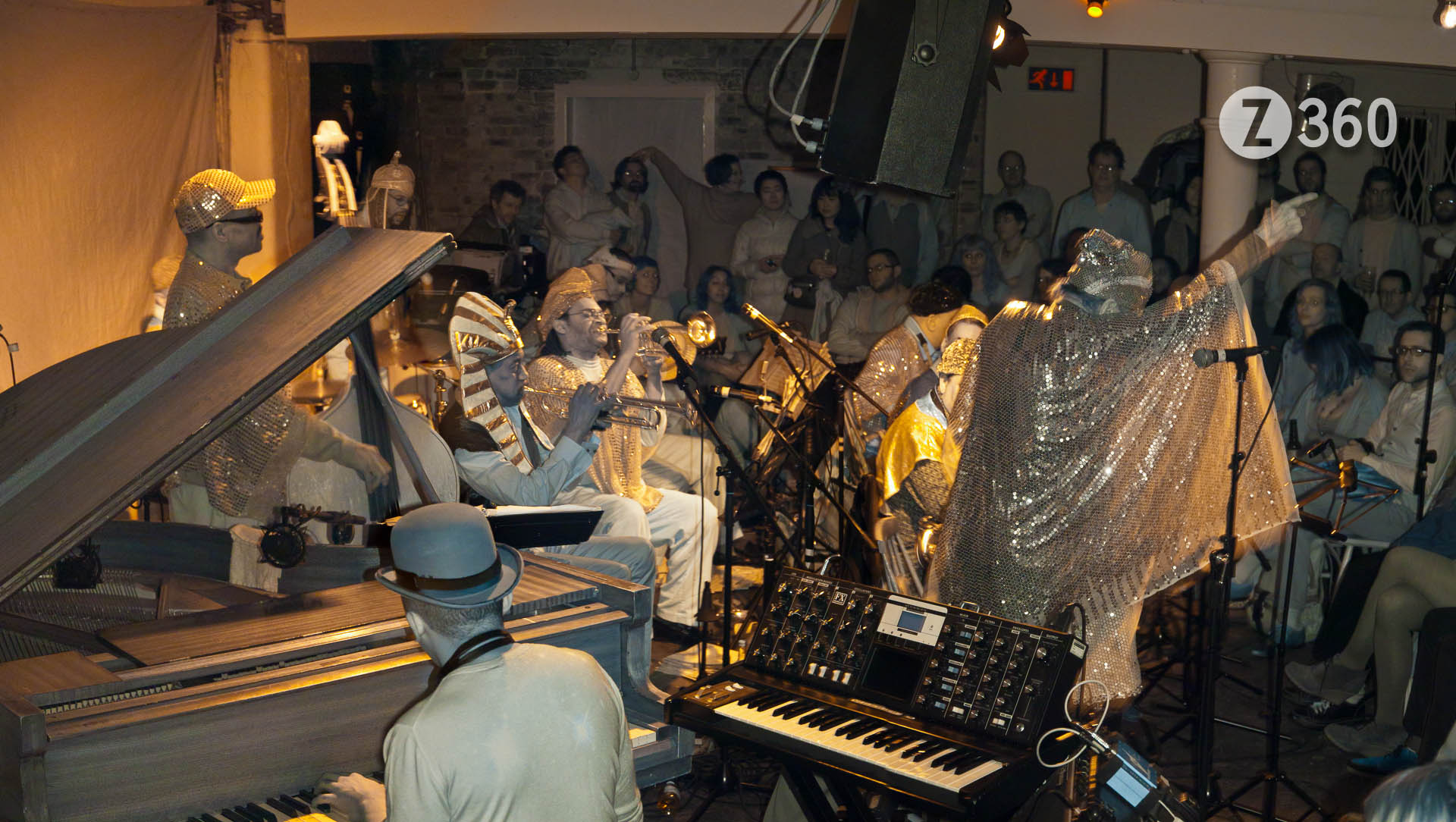
And an even older panorama at Cafe Oto on the actual Sun Ra website here
~
This scrolling music player will automatically scroll when the cursor is placed on the right (or left) hand side, and will pause with the cursor in the centre.
The speed is relative to the cursor placement and can be finely controlled.
Requires Flash for full control, but will play in HTML5 without auto scroll.
Right click or control click for a proper fullscreen experience.
To stop any jerkiness play through entire score before usage.
~
This Player was developed in conjunction with the Conductor John Landor. You can see it being used here at a rehearsal in St Martin Kentish Town, Gospel Oak, London.
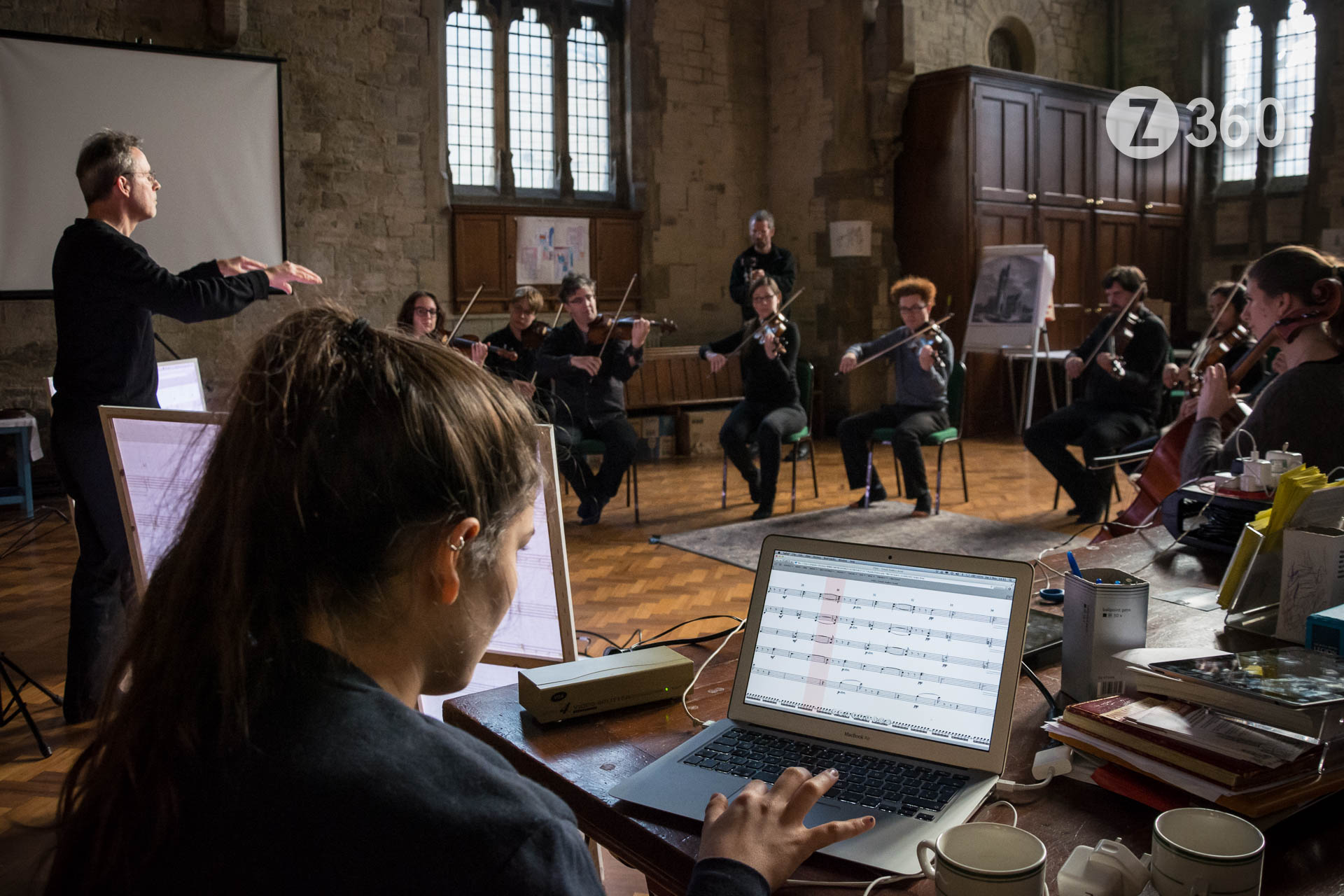
The musicians no longer need music stands as the scrolling music is projected onto moveable screens, here we are experimenting with 3 different screens.
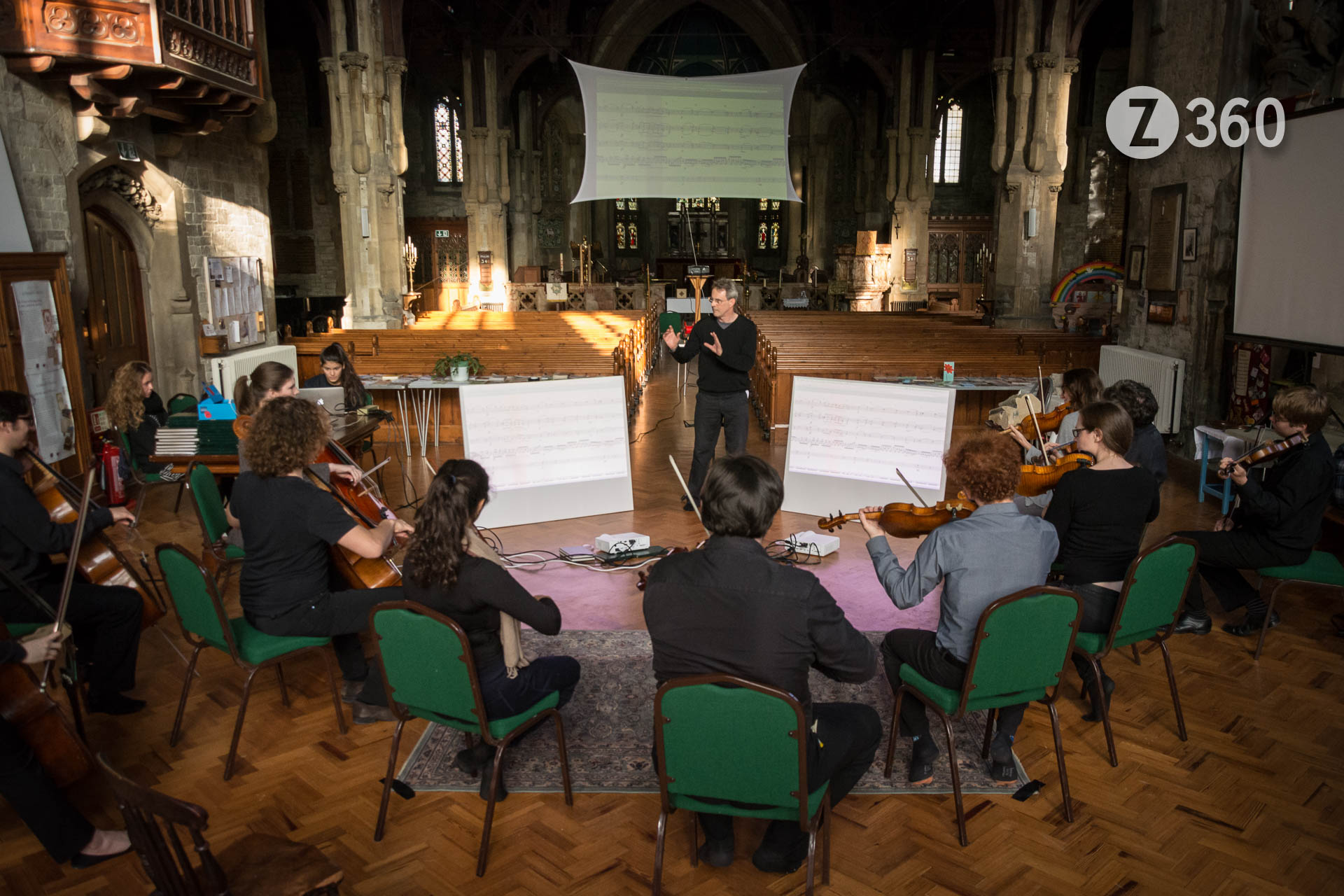
Potentially this allows free movement by the musicians during performance and brings up their eyeline to more directly connect with the audience.
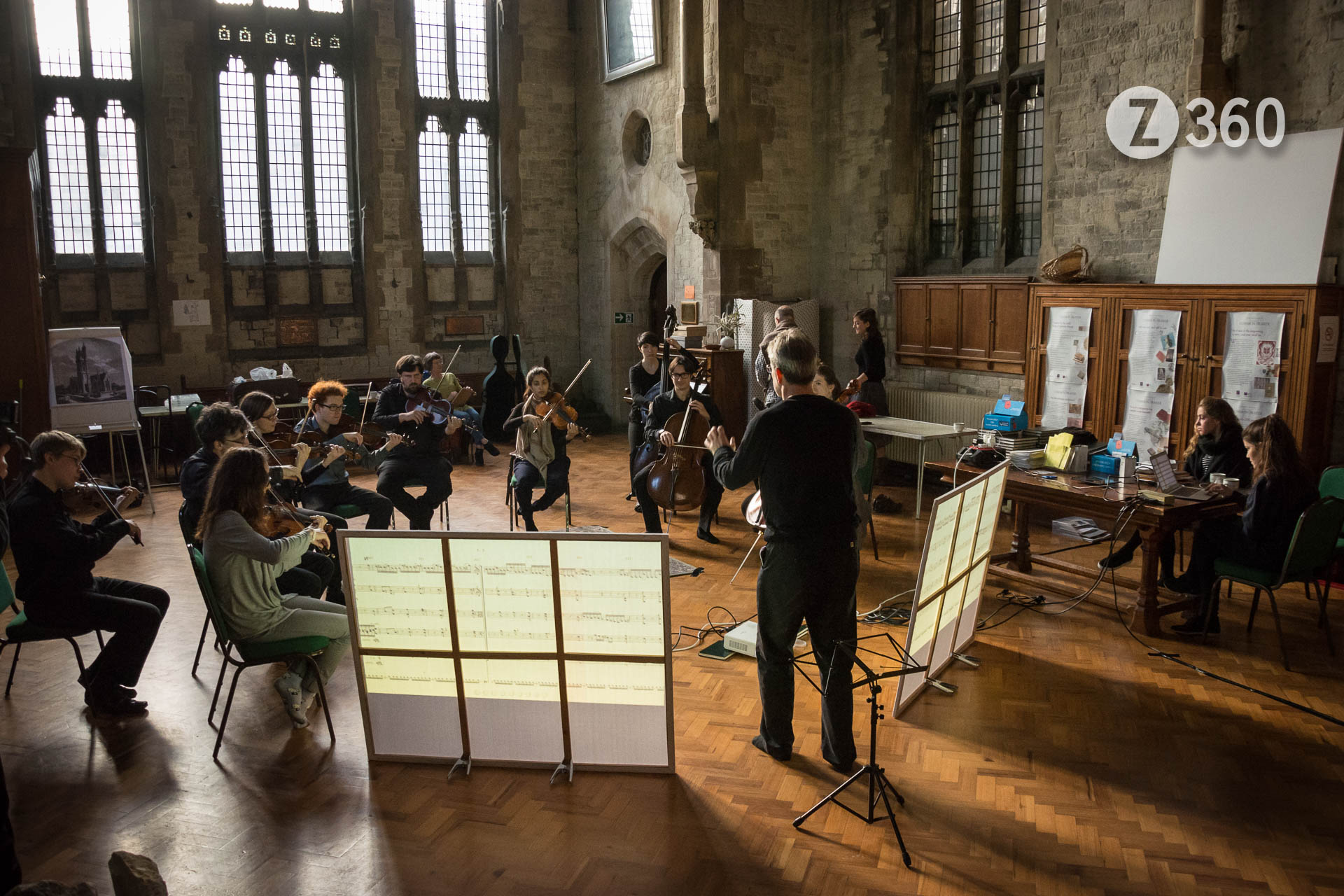
You can see more photographs here…
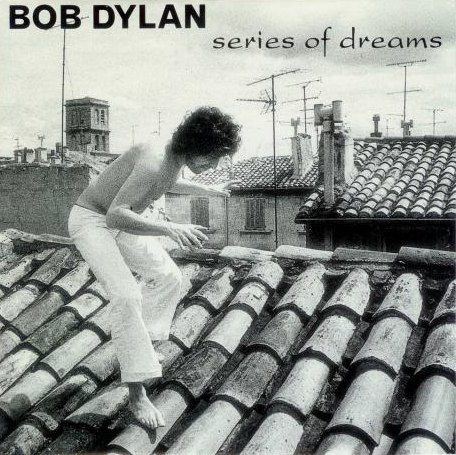 To think you could record a track such as this and then not release it for several years is staggering to me. It was recorded for the Oh Mercy album in 1989 and the producer, Daniel Lanois, believed it should have been the opening track of that album. It finally appeared at the end of 58 tracks on The Bootleg Series, Vol 1-3: Rare & Unreleased 1961-1991. As if to make up for this omission it has now appeared in various versions on at least another 4 compilation albums. However a song of this quality deserves a place at the centre of a great album, which perhaps Oh Mercy could have been if another famous track recorded at the same time, Dignity, had also been included along with classics such as Everything Is Broken and Most Of The Time.
Back to the song, its resonance comes from the way it updates the classic Dylan of the 60s and is one of his last songs to still rock as if he wanted to be a Beatle or even Bruce Springsteen rather than a gravel voiced bluesman. The galloping drums (Daniel Lanois also produced U2) promise a redemption which of course never quite arrives, but we are certainly hurled towards another world by the building, chiming guitars of Mason Ruffner. The vocal phrasing is particularly strong and dylanesque, constantly tripping you up with the unexpected meanings, and when he gets to the punchline (Into the path you are hurled) the music soars, and his voice rises to the occasion.
This is a song which takes his dazzling work of the 60s and refracts it to render a more modern and mature vision. The lyrics are neither verbose nor florid, as they could have been in the 60s, they are simply trying to accurately describe a state of mind. In a sense it is a summation of his career, which can indeed appear as a series of dreams given his chameleon like metamorphosis from folk, protest, rock, surrealism, country, troubadour and guignol into an elder statesman on a never ending tour. There is a sense of sadness and languor, an absolute belief in his refusal to be a spokesman with all the answers, yet the mystery of existence still haunts and the extra terrestrial cards are nearly within his grasp. The emotion of a life lived pours through this song, a joyous requiem to the mystery of the unconscious.
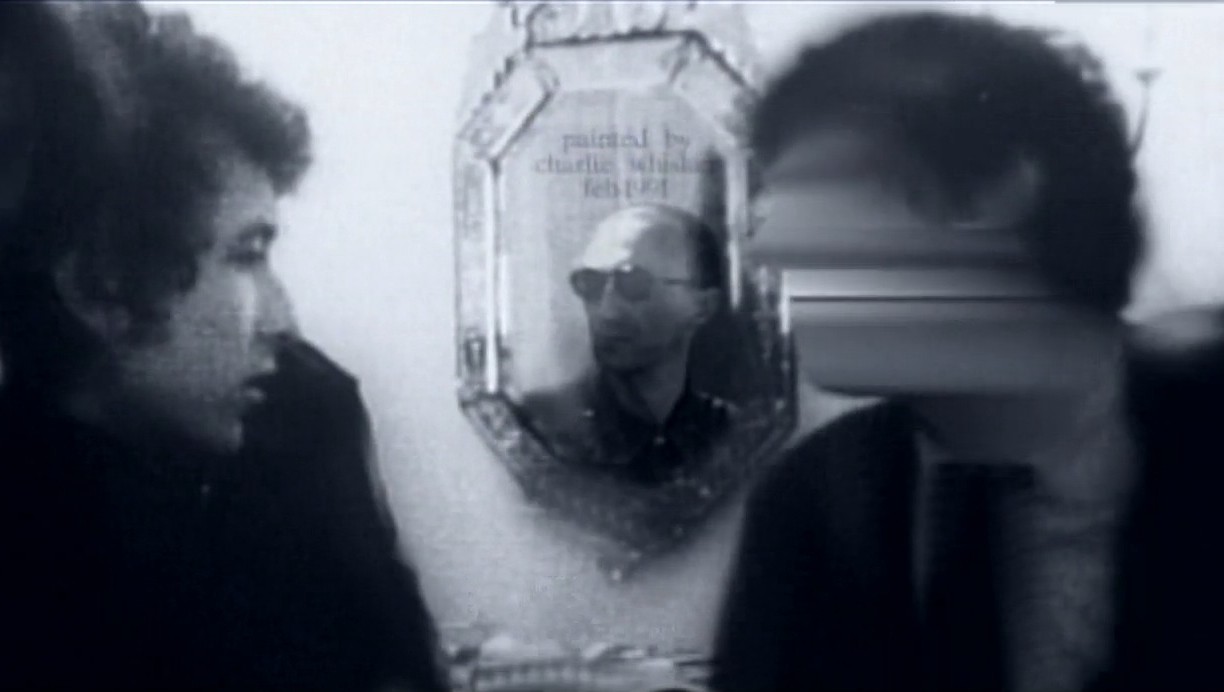
The point he is making – that life is seriously a never ending Sisyphean task and yet also a series of vignettes which repeat outside comprehension, that his dreams have constructed his reality and so it has come to be, reflect a desire we all recognise – to arrive at a moment where we are at peace with our own dreams. In their bare and graphic descriptions we understand these incoherent dreams, perhaps we feel we have shared them. (I certainly do.) This man is no longer haunted by the history of his vivid imagination and crazy life, nor his frightening dreamscape, it has all become one and he accepts it for the madness that it was and may still be. There is still wonder, but no longer any fear, he is an observer who does not have to understand everything in order to see the chance of redemption. Surely the sign of a man who has gone the distance, no more worries, just thinking.
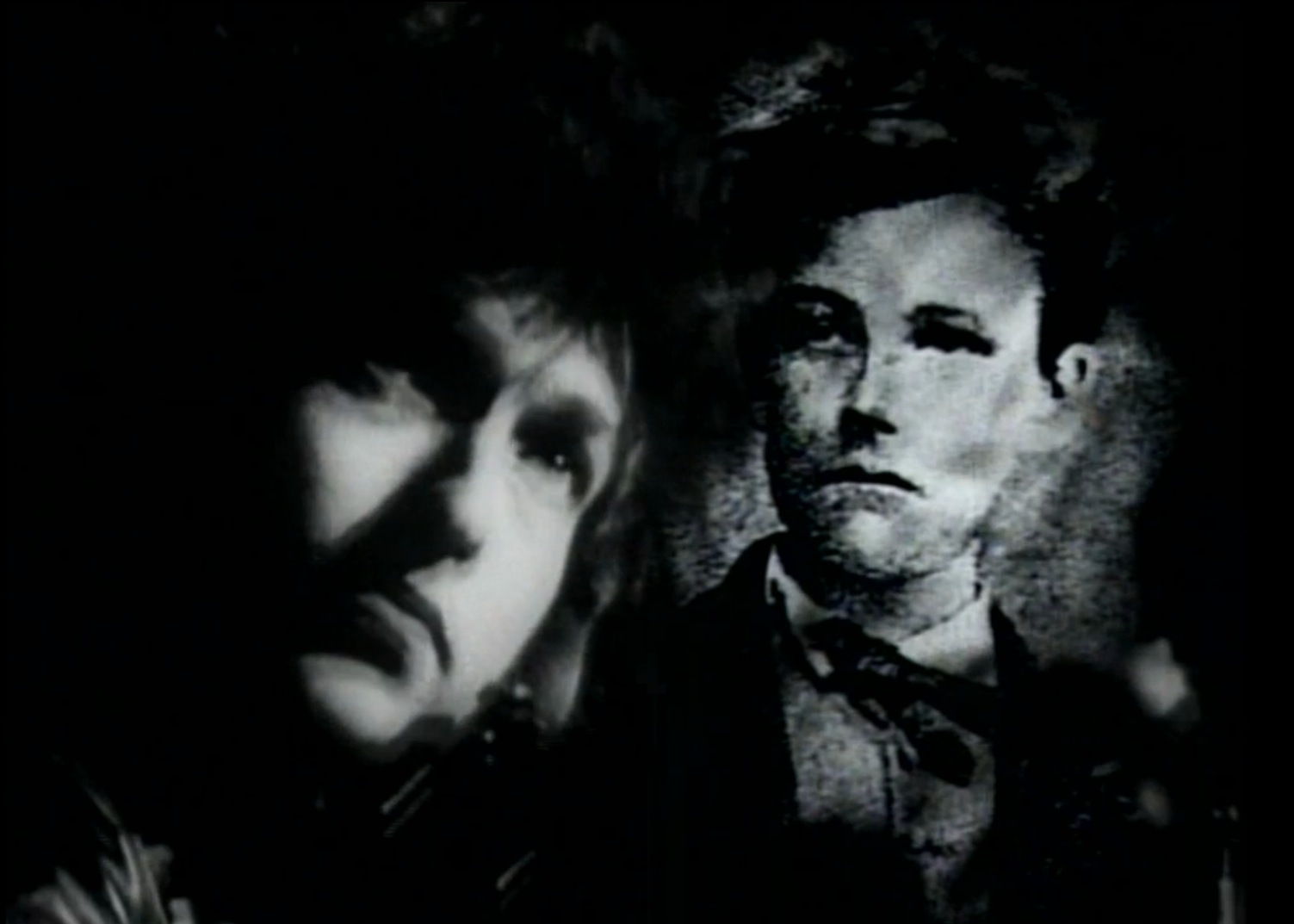
Bob Dylan thinking of Arthur Rimbaud (1854-1891), author of Illuminations.
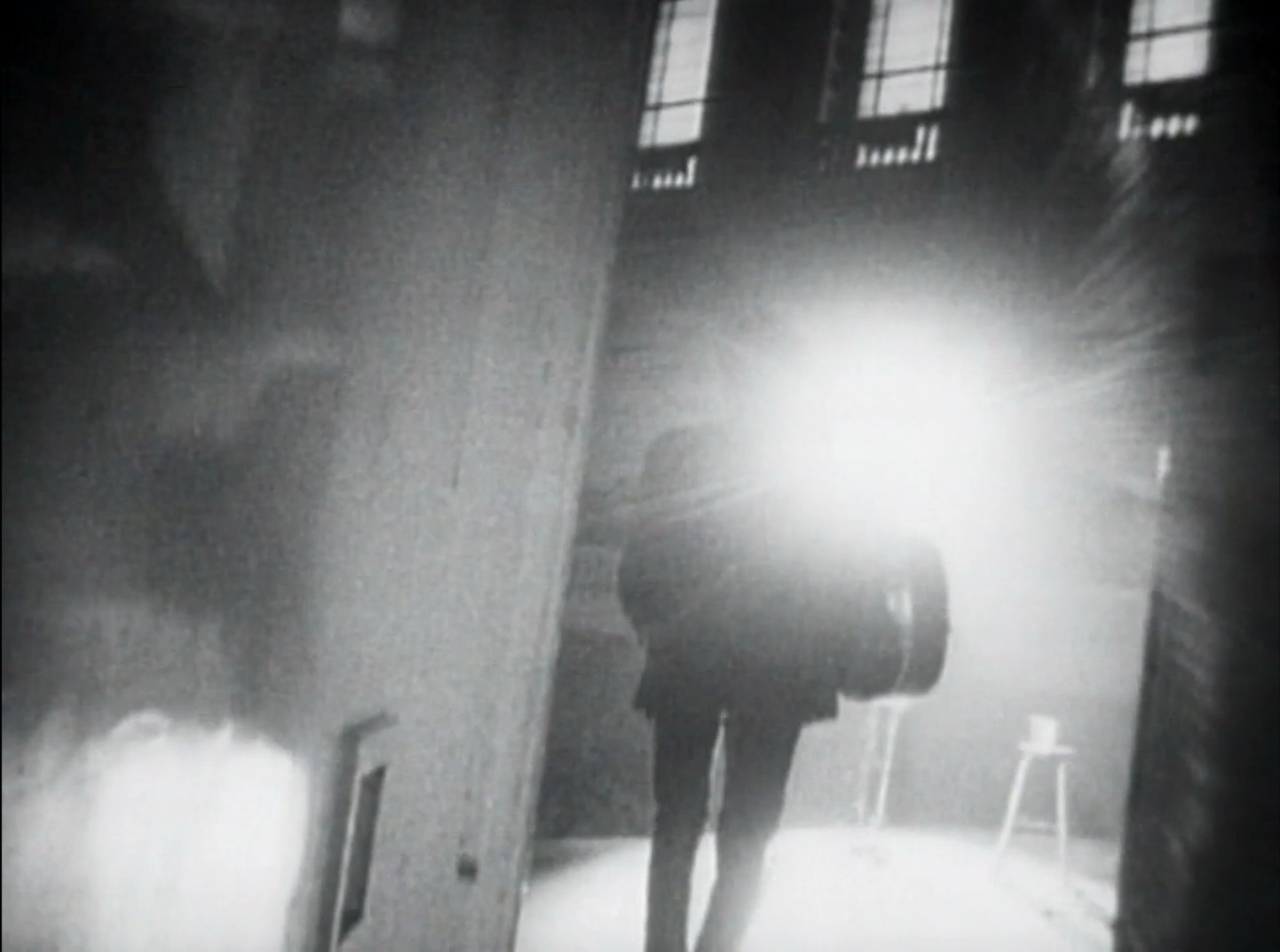
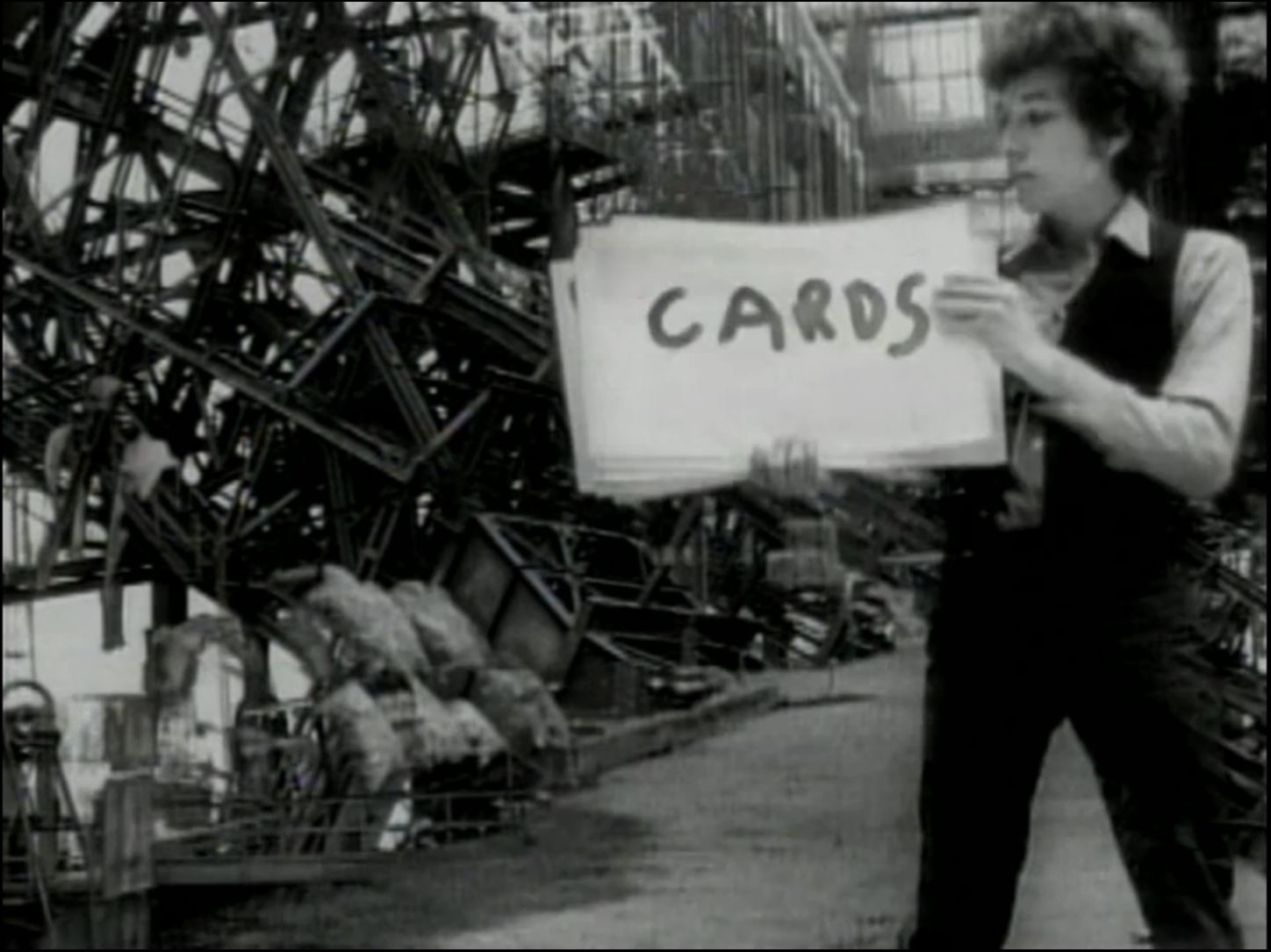
Stills from the official video for Series of Dreams 1991.
A sense of the series of dreams referred to in the song can be garnered from the official video, which quotes from many historical aspects of Bob’s life:
Original Release 1991 : The Bootleg Series, Vol 1-3: Rare & Unreleased 1961-1991.
This track also appears on : Greatest Hits Volume 3 (1994), The Bootleg Series, Vol 8: Tell Tale Signs (2008), The Real…Bob Dylan (2012), Side Tracks (2013).
The Official Lyrics
Some versions contain this extra verse:
Thinking of a series of dreams
Where the middle and the bottom drop out
And you’re walking out of the darkness
And into the shadows of doubt
Wasn’t going to any great trouble
You believe in it’s whatever it seems
Nothing too heavy to burst the bubble
Just thinking of a series of dreams
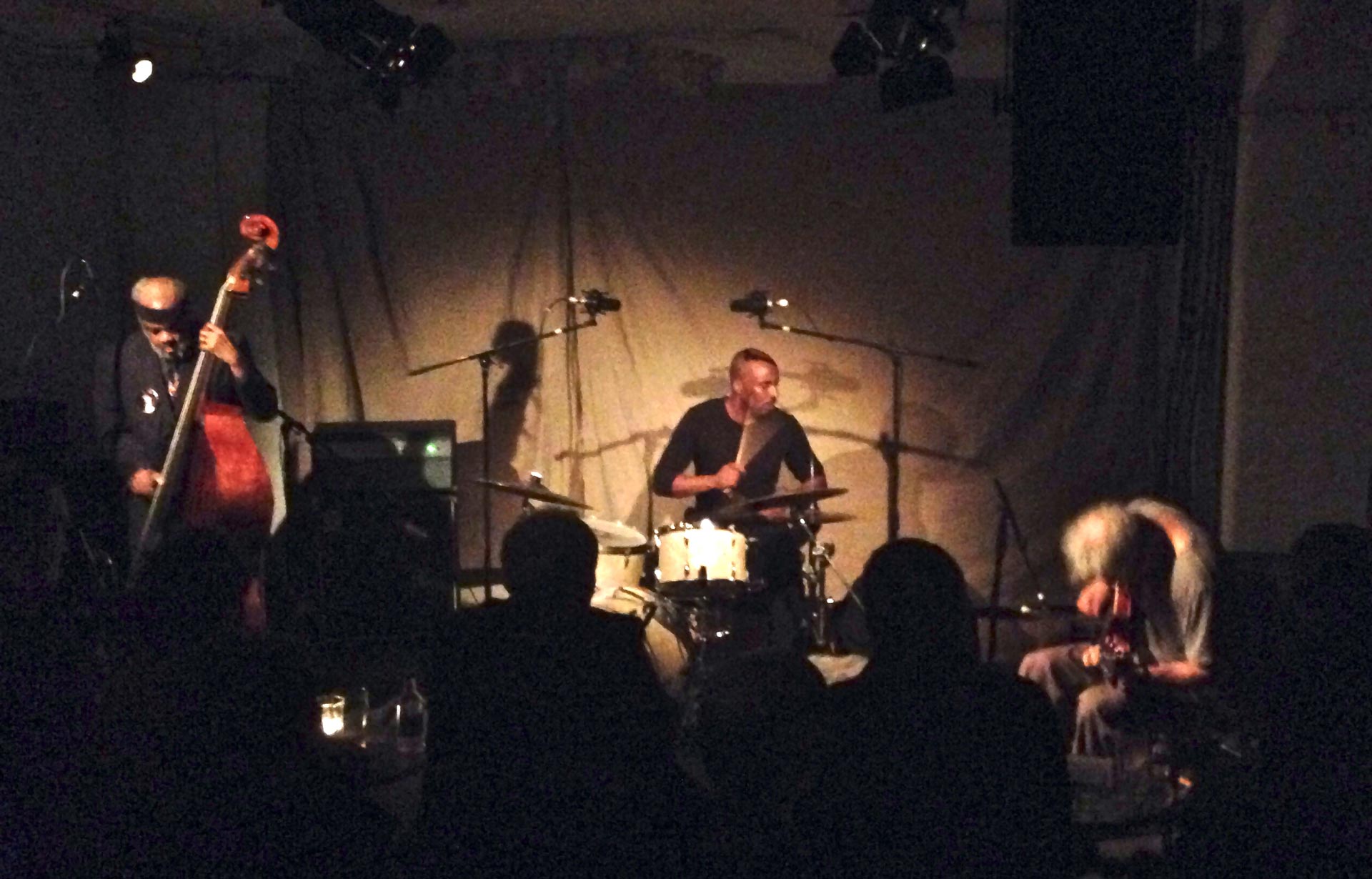
The Marc Ribot Trio dropped into a packed Cafe Oto with Henry Grimes on acoustic bass as the NY history man of 60s free jazz, and on drums the muscular Chad Taylor from Chicago. Just visible in the corner on his chair was a middle aged workman in a dirty T shirt, his body folded over his guitar. Marc played 2 seamless symphonic sets, with nary a word, just a few applause breaks, especially for the septuagenarian Henry. The music was free jazz but encompassed show tunes, cartoon breaks, marching songs, pop riffs, angular funk and metal shredding runs. It was a capsule history of 20th century American popular music, of which more later…
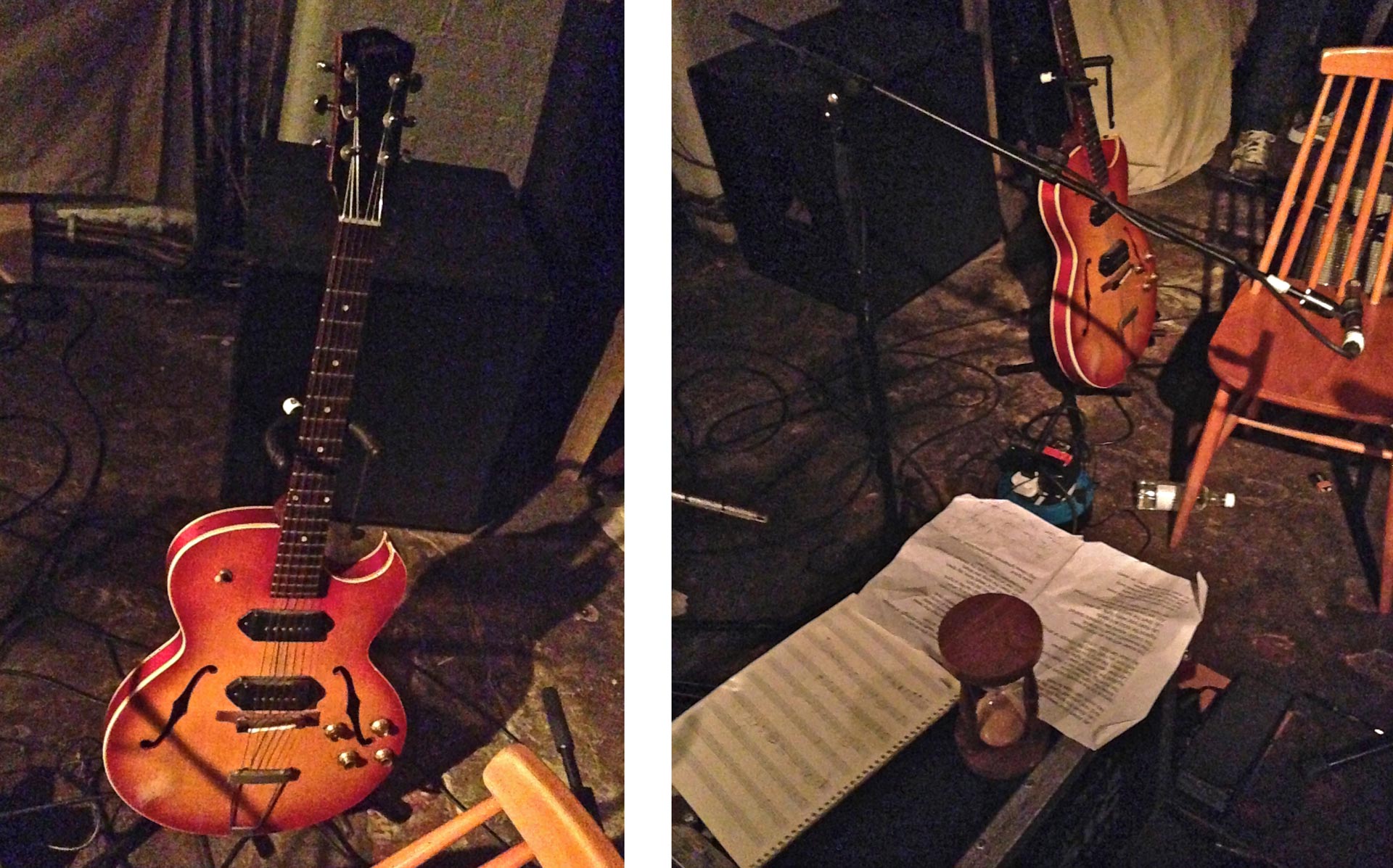
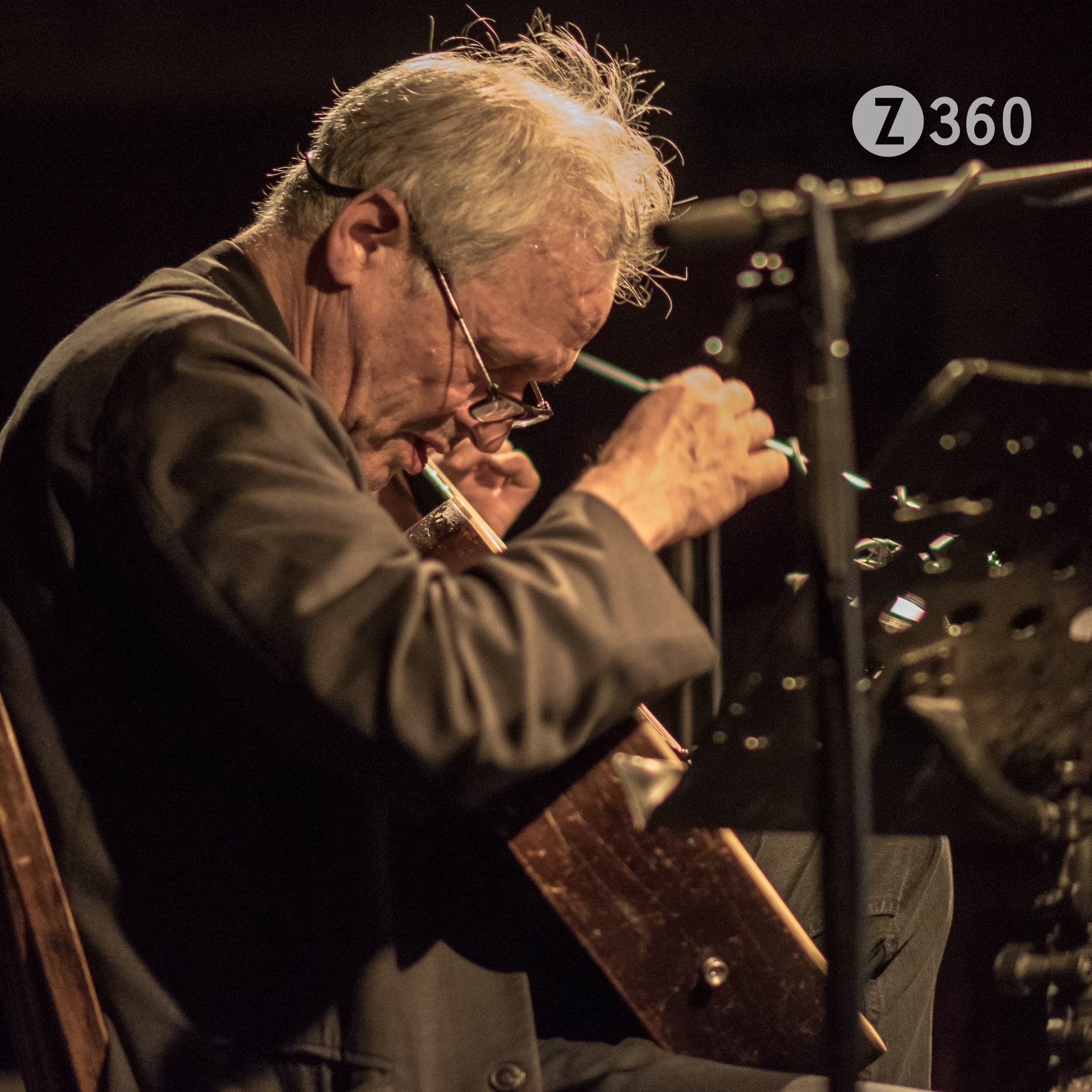
Marc Ribot plays a Gibson ES-125TDC circa 1962. This is a semi acoustic thin bodied dual pickup electric guitar (famously played by George Thorogood) which he used for every guitar style known to man. He accomplished this with a unique but simple setup of one pedal and one guitar mic, allowing full usage of the electro-acoustic qualities of the guitar. For the the riffing and the metal runs the guitar mic was pushed aside, but for most of the set the guitar mic was just a few inches from his guitar allowing a unique blend of sounds, and then suddenly a lever was flicked and we were back in the prairie with a steely acoustic country guitar whispering to us. Most remarkably he leant over his guitar, his chin appearing to rest on the body, the guitar mic a fraction away as screeds of notes poured out in concentrated flurries – completely hunched over but his arms flying up and down the guitar. At one point you could hear his gritted breath through the guitar mic, no doubt intentionally.
During the first set we went a from classic click-clack drumbeat into what sounded to me like Gabor Szabo’sThe Beat Goes On, well it was funky and Latin anyway! Marc’s cover versions often have a very remote relationship to the original and in no time the music had metamorphosed into angular 80s Bill Frisell style jazz funk, finishing with a chomping Stevie Ray Vaughan blues flourish. A lyrical show tune began the second set echoing the smooth classic jazz of Wes Montgomery and we sped through a catalogue of American styles rapidly coming apart at the seams, at one point sustained riffing drawing applause. As the music splintered, only lightened by bass and drum solos, we heard snatches of the American songbook being deconstructed, reaching its lyrical apogee with a version of Bob Dylan’s Lay Down Your Weary Tune. Yes he sang a song both appropriate and somehow elegiac, Marc’s tremulous voice following not the vocal but the guitar line:
Lay down your weary tune, lay down
Lay down the song you strum
And rest yourself ’neath the strength of strings
No voice can hope to hum
It felt like a Requiem for America…
Update 14 May 2019
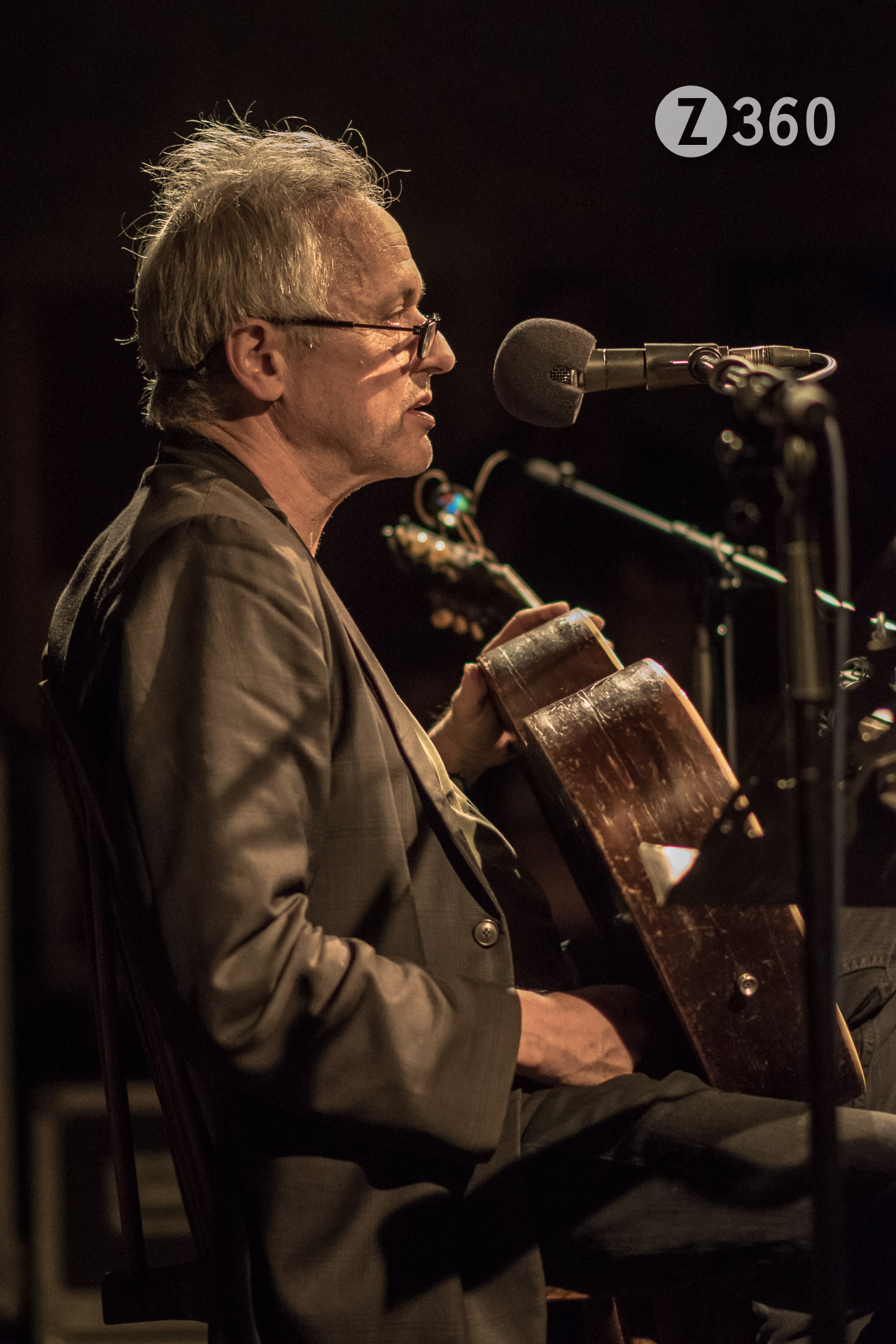
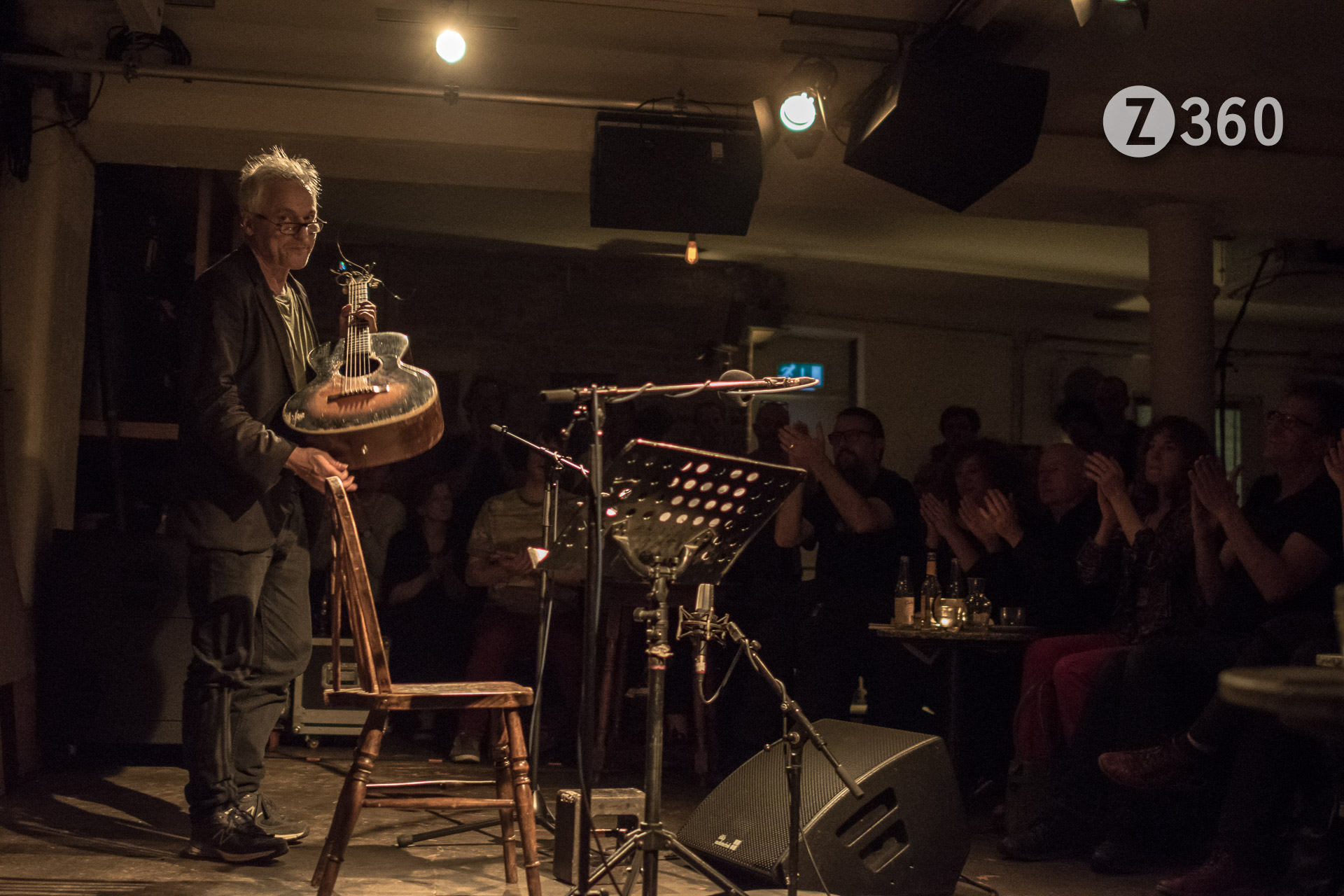
Marc played a solo acoustic gig at Cafe Oto
Magnificent and quieter tonight –
But better photos:
Everyone loved it
Thank You
∞
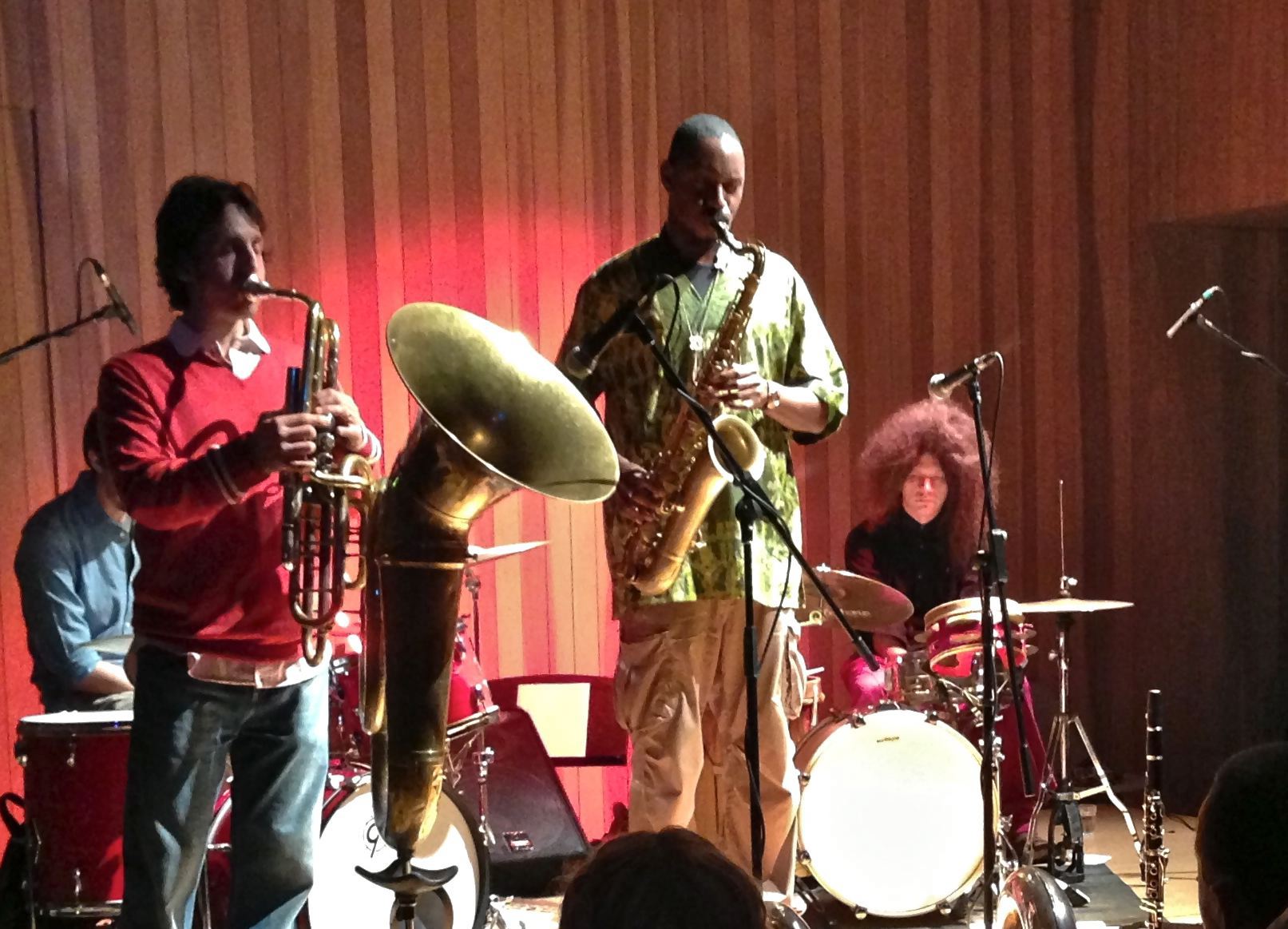
Well seen Shabaka a few times, always very impressed with his bass clarinet, but this was a revelation. Maybe all bands with 2 drummers are awesome (pace Nils Petter Molvaer and Khmer) but here we had 2 drummers, a tuba, and Shabaka. Wow! They are called The Sons of Kemet.
Of course it helps if one of the drummers is Seb Rochford, already a legend on the modern London Jazz scene with Acoustic Ladyland and the other, Tom Skinner, is highly experienced with Matthew Herbert. Meanwhile Oren Marshall is a tuba player to compete with the legendary Bob Stewart of Arthur Blythe‘s Lenox Avenue Breakdown – who was actually the last tuba player I saw really holding down the bass seat. But wait, the best was yet to come, since at several points there were 7 Tuba players, which as you can imagine was awesome!
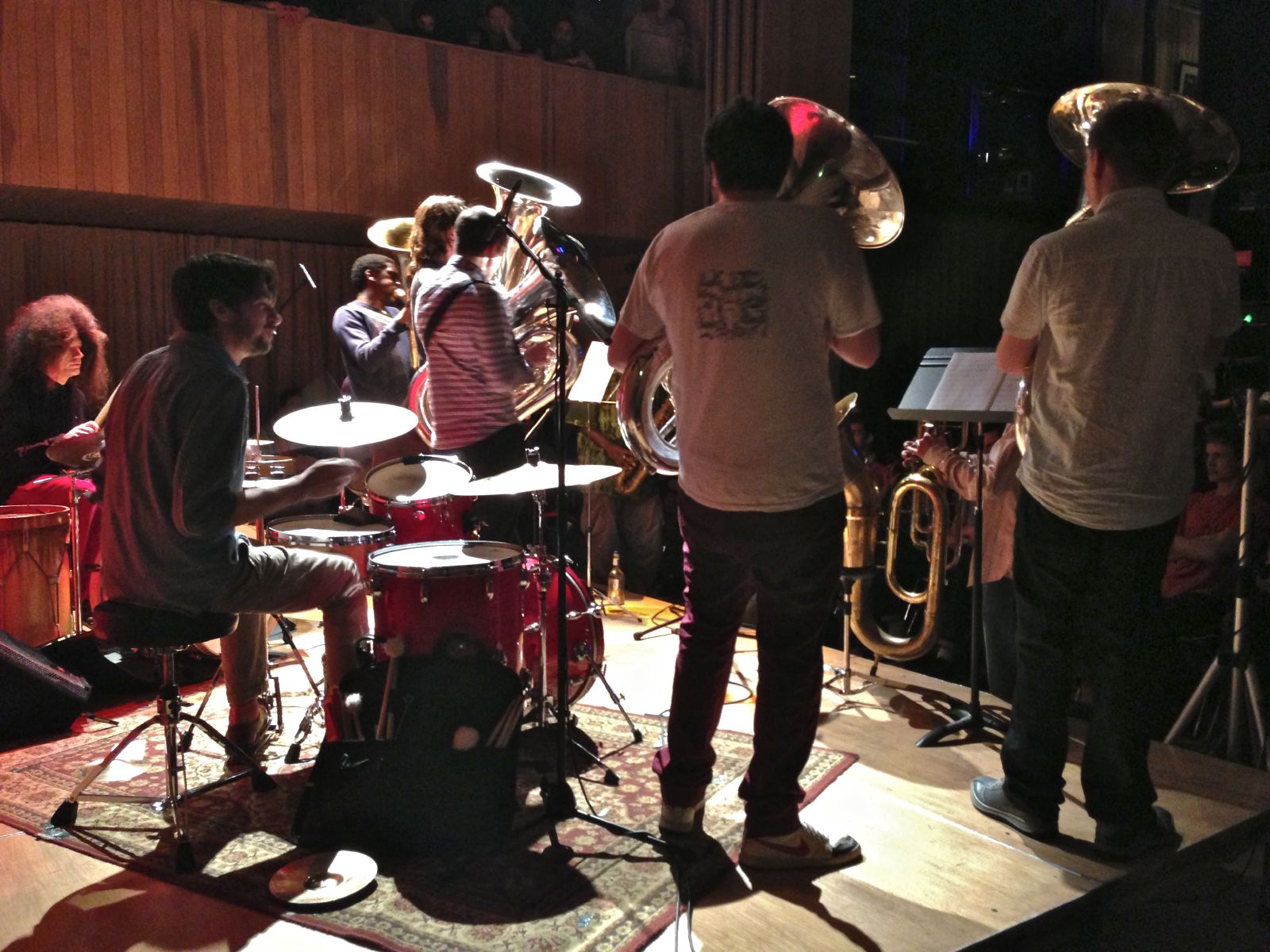
So in one overpowering sax moment (probably a version of Beware, from the yet to be released album) Shabaka went from the broken melody of Ornette to the wails of Coltrane, finishing on some bass notes from Hamiet Bluiett. Just on a Tenor, I believe. There is a remarkable sense of melody to his improvisations as he weaves like a snake and then chirrups like a bird, entrancing the listener. In the background there is a pulsating double drummer tuba rhythm shaking the foundations and at the front Britain’s new jazz master. I couldn’t ask for more.
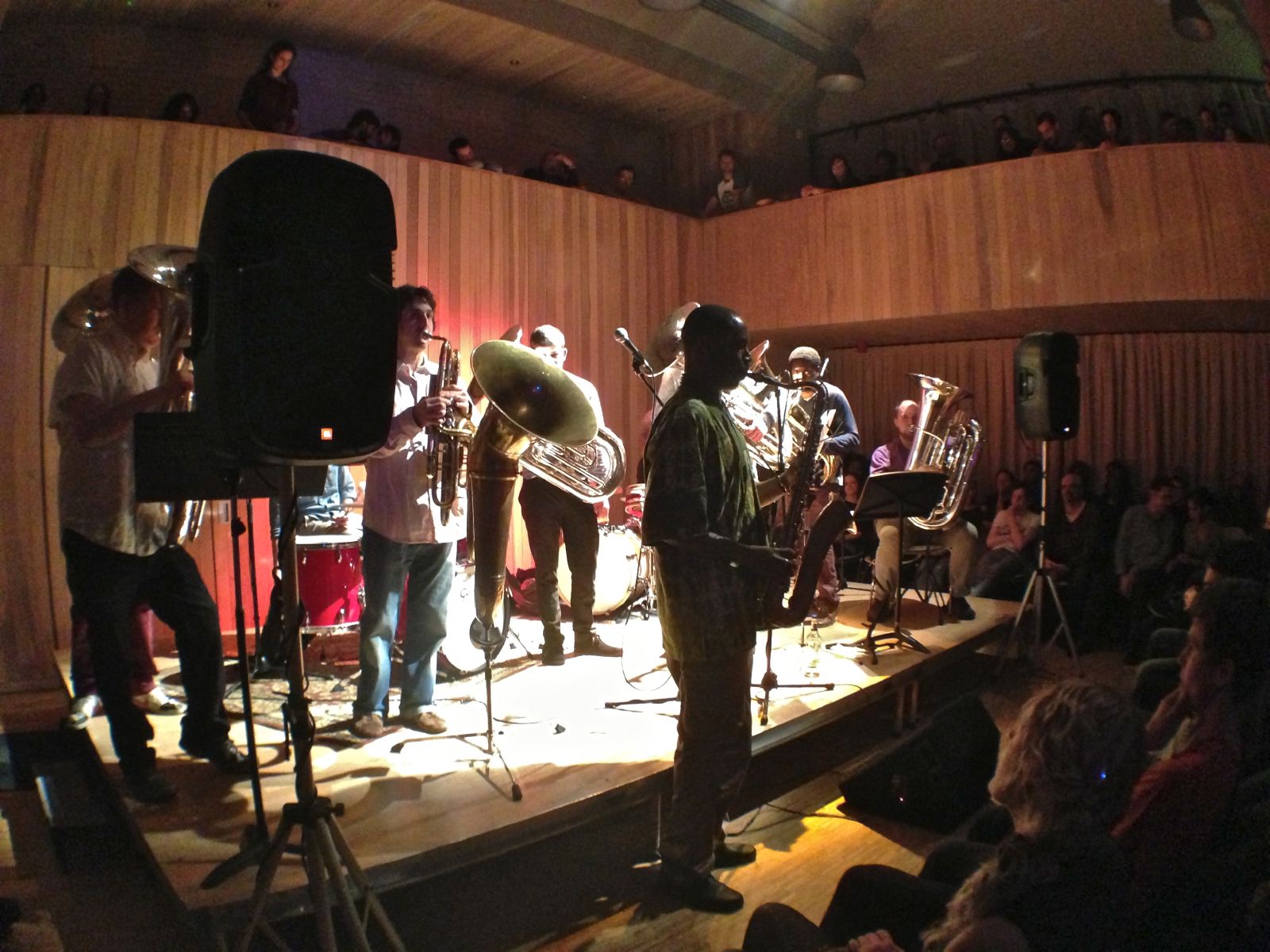
The Finale was with the 7 tubas (alumni of Oren) which swept us away on a crazy wave, followed by an improvised Rivers of Babylon with the tubas requested to drone an E Flat. Awesome!
All happened at The Forge, 3-7 Delancey Street, London, NW1 7NL
Photos taken on iPhone 5, next time I hope to use a proper camera…
UPDATE : Saw Shabaka at the great Boat-Ting and took some proper photos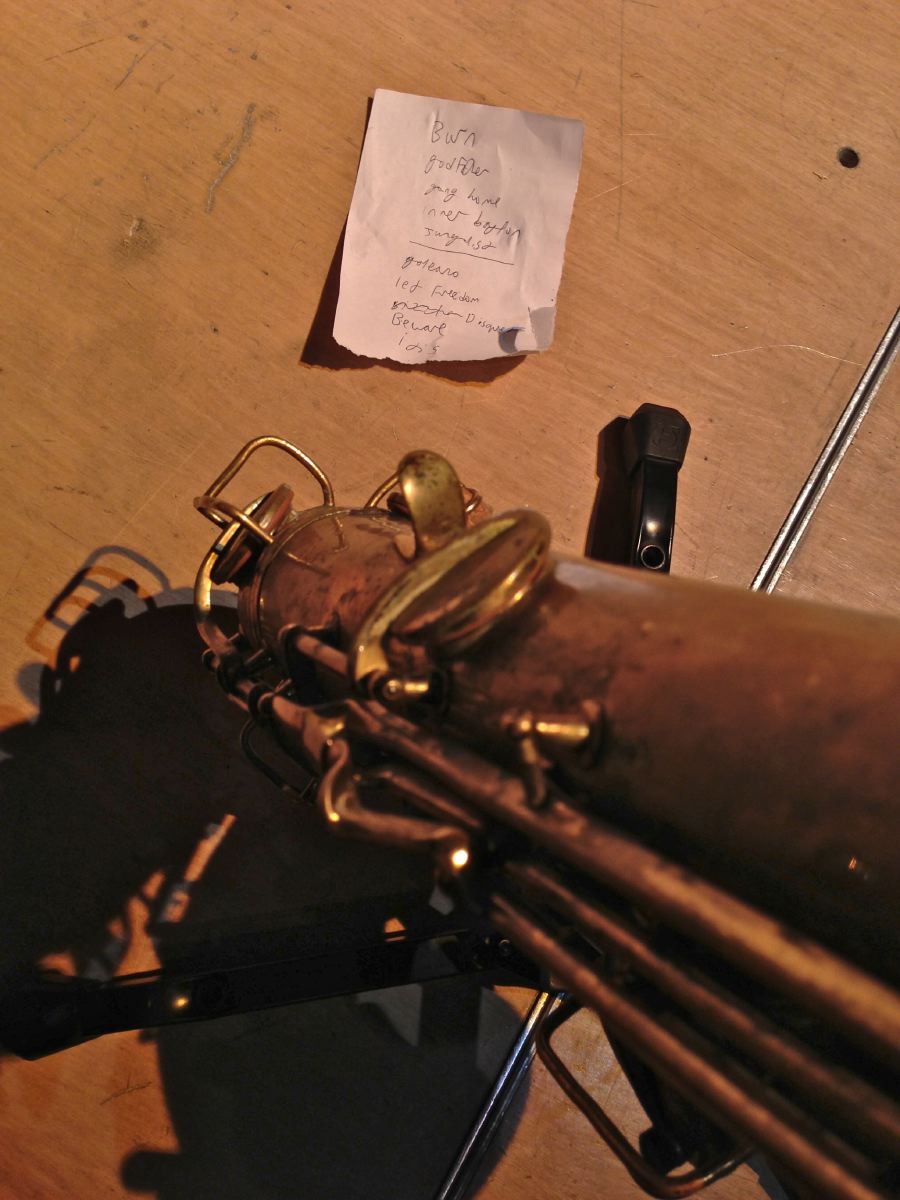
The Thing at Cafe Oto
Mats Gustafsson – alto, tenor, baritone and slide saxophone. live electronics
Ingebrigt Håker Flaten – bass and live electronics
Paal Nilssen-Love – drums
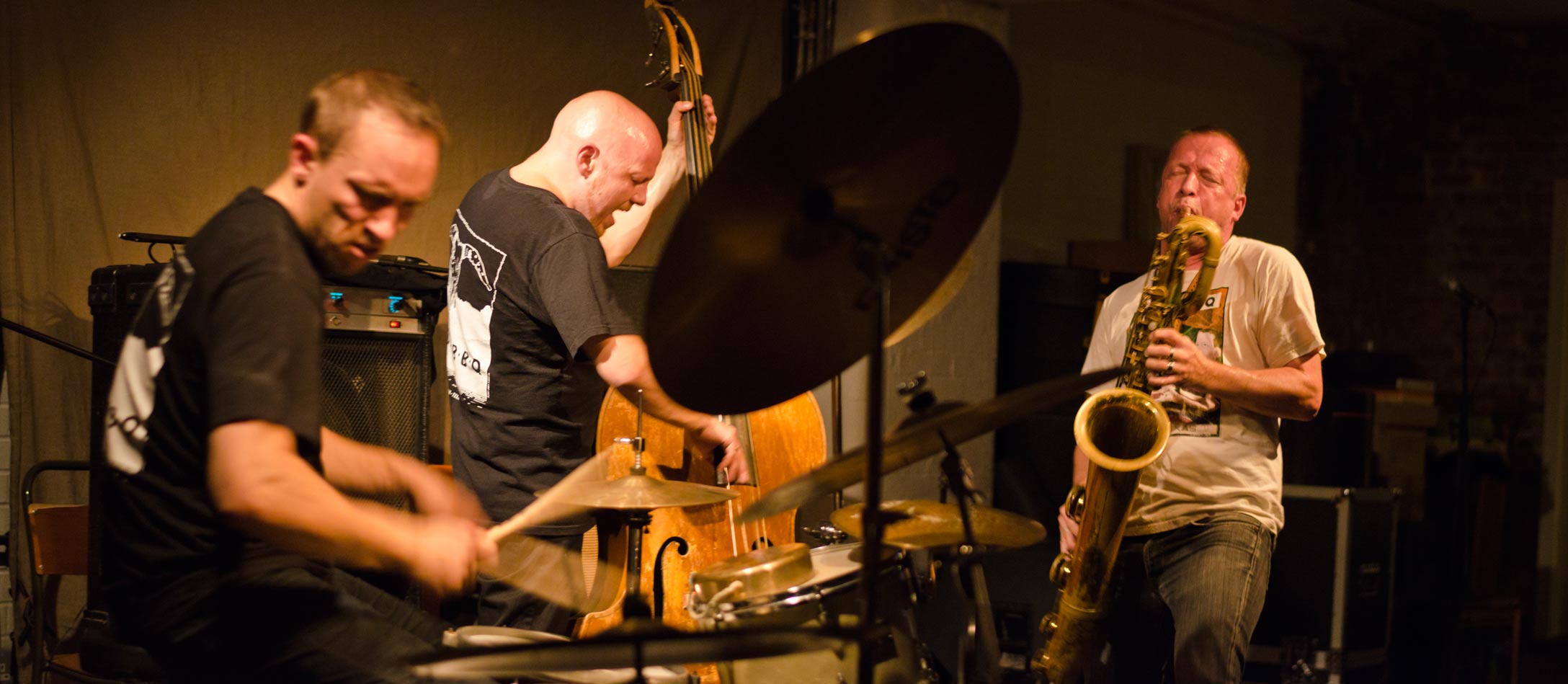
Now that’s Free Jazz flowing changing hitting moving melodies fresh at every moment
I Confess by K. D. Lang
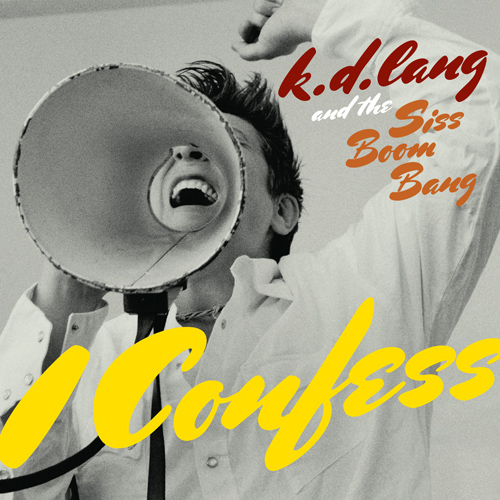
Again and again and again have I played this great simple sing-along love song.
Drenched in emotion, her voice booms and cracks, great waves of sound bounce me off the floor, the spirit of Roy Orbison crying and shouting into a dark country night leaves me exhausted and exhilarated.
From a great album, Sing it Loud, this harks back to her wondrous breakthrough Ingénue in 1992.
I confess
I need you badly
Hold me in your arms
Love me madly